 Reverse Osmosis
Service area · Broomfield / north-metro corridor
Water treatment in Broomfield for north-metro homes
Broomfield is Colorado's smallest county — roughly 75,000 people wedged between the Denver Metro, Westminster, and the wider north-metro belt, with US-36 and I-25 cutting through it. The water here is unusually soft for the Front Range, sourced from the city's own 20 MGD plant plus Denver Water purchases. Water treatment in Broomfield is less about hardness and more about chlorine residual, disinfection byproducts, and the plumbing story in pre-1986 homes. Acreage east of I-25 pulls from private wells along the South Platte alluvial aquifer — harder, with iron, manganese, and agricultural-edge nitrates.
- Municipal + WellsCity surface water inside the city-county, private wells east of I-25
- Soft city / Hard wellsSoft finished water, harder South Platte alluvial wells
The Broomfield water story
What Broomfield's city-and-Denver blend actually puts in your glass
Water treatment in Broomfield begins at the seam between the Denver Metro and the wider north-metro corridor. US-36 and I-25 cut through the city. Inside the city-county, the tap runs on the City and County's own 20 MGD Water Treatment Facility plus Denver Water purchases — both surface water, treated and disinfected before distribution, tested against federal and state standards, and published each year in the city's water-quality report.
What reaches the tap still carries the chlorine residual and byproducts of any treated surface water, and older homes in the historic neighborhoods pick up an additional plumbing story. First Filling and Broomfield Heights — 1950s-era homes with copper service lines — can leach lead and copper under corrosive conditions. Redleaf and Northmoor Estates sit in the same pre-1986 plumbing window. The chlorine residual holding in the distribution main overnight is where haloacetic acids (HAA5) and trihalomethanes build up — the EPA caps HAA5 at 0.060 mg/L and total trihalomethanes at 0.080 mg/L, and Broomfield reports both in its annual water-quality report. Chromium from the source water is the parameter the city tracks most closely.
- Disinfection byproducts — HAA5, trihalomethanes, chloroform, bromodichloromethane
- Lead and copper pickup in pre-1986 homes — First Filling, Broomfield Heights, Redleaf, Northmoor Estates
- Chromium from the source water in the city's annual report
- Hardness, iron, and manganese on private wells east of I-25
- Nitrates and coliform on acreage wells near agricultural edges
Broomfield treatment, matched to your supply
Water softeners, reverse osmosis, and whole-house filtration built around Broomfield's actual profile
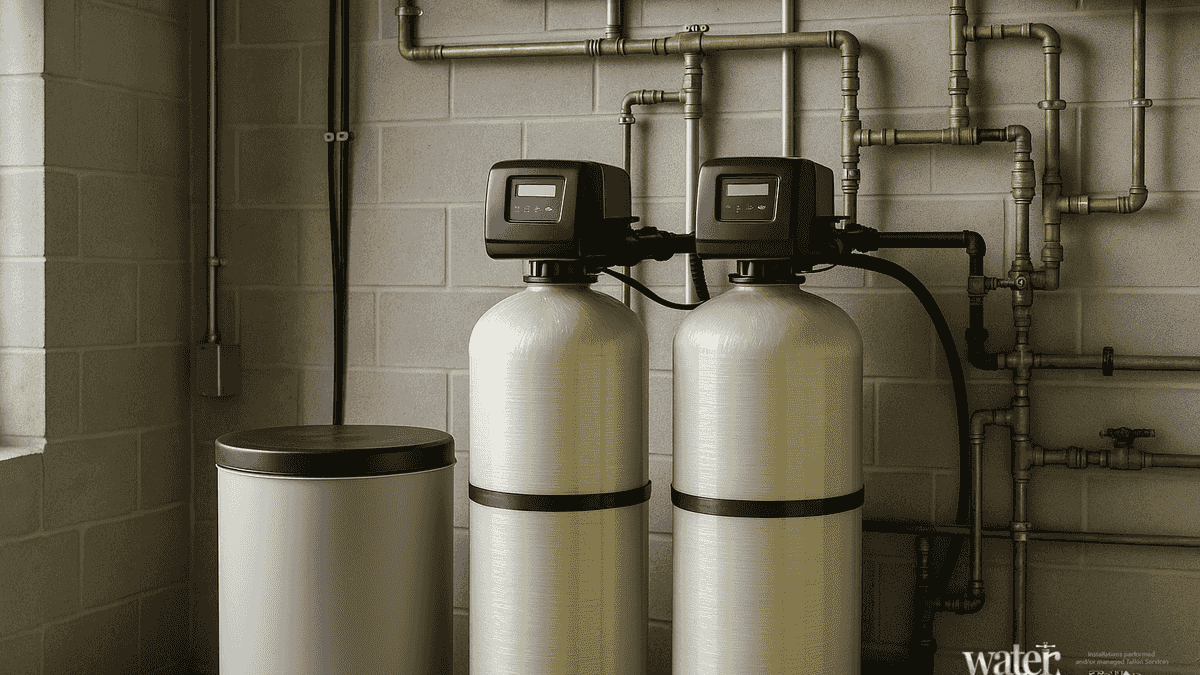
Most Broomfield homes on the city supply are sitting on water that's already soft — about 45.9 mg/L (2.7 gpg) on the finished-water side, well below the Denver Metro norm. That flips the usual softener conversation: a salt-based ion-exchange unit is often not the first thing your home needs here. What the city supply does carry is chlorine residual, the byproducts that ride with it, and — in older neighborhoods — lead and copper from pre-1986 plumbing. So the first layer on city supply is usually a whole house water filter with a carbon stage at the point of entry, paired with under-sink water filters at the kitchen tap for drinking water and any trace metals.
The acreage parcels east of I-25 flip that script. Private wells on the South Platte alluvial aquifer run hard and carry iron, manganese, occasional arsenic, and agricultural-edge nitrates. Out there a residential water softener sized to the actual well is back on the table, ahead of a greensand stage for iron and manganese, anion-exchange media for arsenic, and UV for coliform on shallow wells. Salt-free water conditioners are the pick for scale control without sodium exchange. We size, install, and verify at every tap, then keep the system on a water filtration maintenance cycle so a profile shift gets caught early.
- No-cost tap-side water testing
- Carbon filtration for chlorine and disinfection byproducts
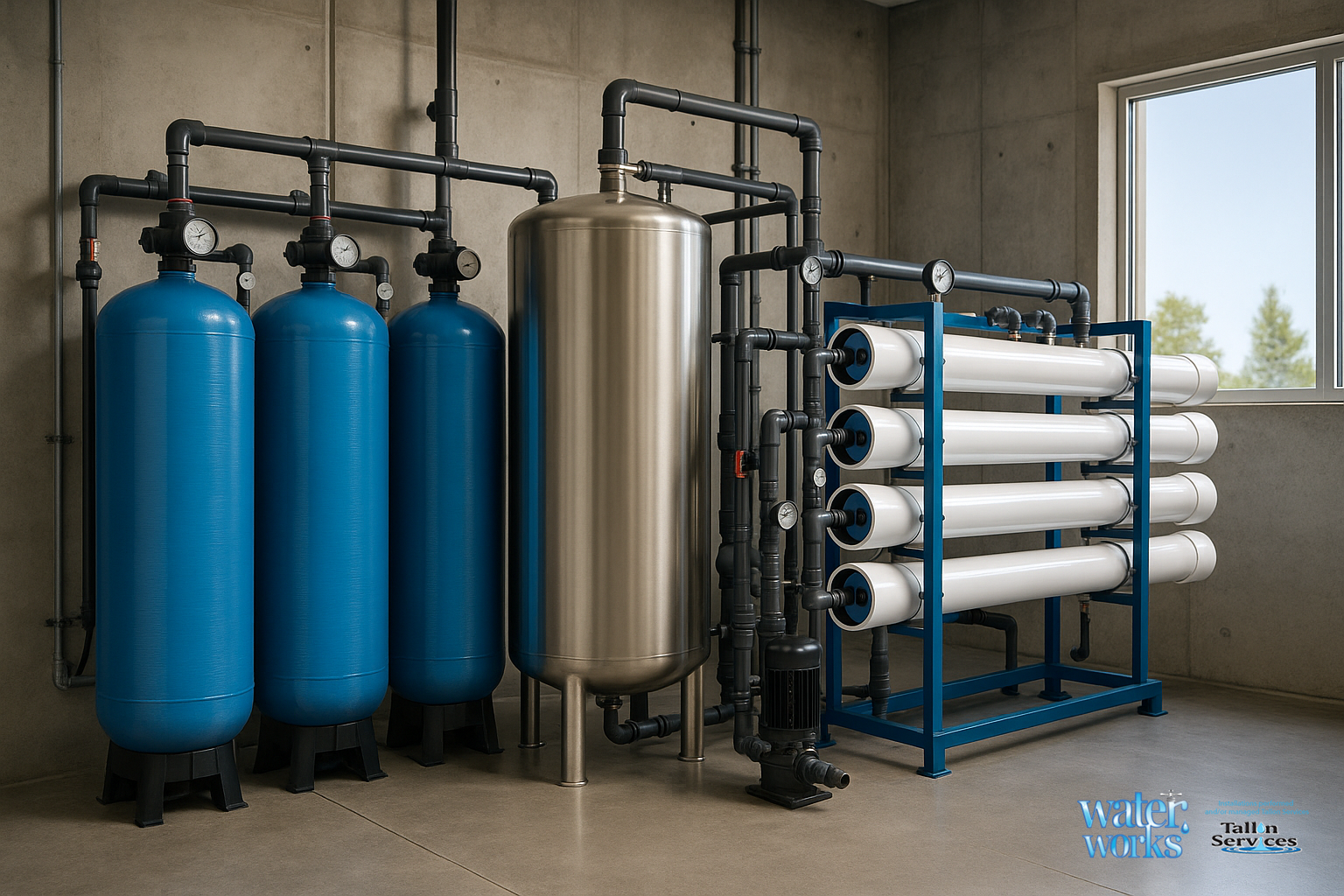
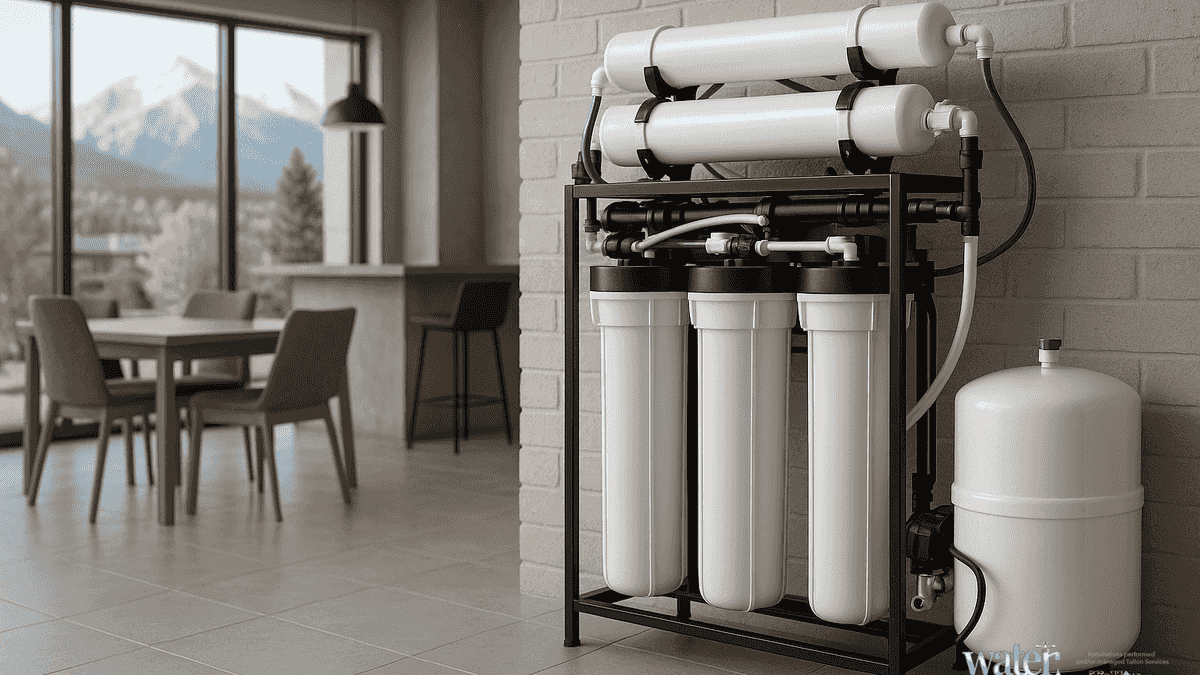
- Reverse osmosis for drinking-water taps (city and well)
- Ion-exchange softeners sized to acreage-well hardness
- Iron, manganese, arsenic, and UV for acreage wells

Coverage across the north-metro corridor
Service routes across the I-25 and US-36 corridors and the north-metro belt
Broomfield sits where the Denver Metro meets the wider north-metro belt, close enough to the Denver Metro office that the run out to a city-county tap or an acreage well east of I-25 is a routine scheduled stop — not a special trip. That matters because most acreage homeowners east of I-25 are on private wells the city supply does not treat. Coverage out of the Denver Metro office runs the I-25 corridor north through Broomfield and into the north-metro belt, with US-36 cutting west toward the Front Range. The immediate neighbors — Westminster, Thornton, Northglenn, and Denver — are routine stops, and on-site testing, softener and reverse osmosis installs, and filtration work on older in-fill homes are routine for that crew. We keep every install on an annual testing cycle — including water filtration maintenance and PFAS removal consultations. In April 2024 the EPA set a 4.0 ppt enforceable limit for PFOA and PFOS, and Colorado has logged PFAS contamination near industrial or firefighting-foam sites — a concern given Broomfield's proximity to former aerospace operations along US-36.
- Denver Metro office — I-25 and US-36 across the north-metro belt
- Statewide dispatch for anything outside the immediate corridor
- Scheduled routes to Westminster, Thornton, Northglenn, and Denver
- Well water treatment on acreage parcels east of I-25
Broomfield water questions, answered
Is Broomfield's tap water safe to drink?
Broomfield's tap water comes from a municipal surface-water supply. The City and County owns a 20 MGD Water Treatment Facility and also buys treated water from Denver Water, so all of the city's drinking water is treated surface water, disinfected before it reaches your tap. Water Resources tests against federal and state standards and publishes a yearly water-quality report. Treated at the plant and clear at the tap are two different standards, though: chlorine residual is on by design, the finished water runs soft, and older homes in First Filling, Broomfield Heights, Redleaf, and Northmoor Estates often still have plumbing that can leach trace metals. A tap-side test at your address is the only honest read on what your faucet delivers.
What contaminants are most common in Broomfield water?
On the municipal side, the city's annual report tracks the disinfection byproducts of the chlorine residual — haloacetic acids (HAA5), trihalomethanes, chloroform, and bromodichloromethane — plus chromium from the source water, copper and lead from pre-1986 plumbing, and residual chlorine taste and odor. On the acreage parcels east of I-25 on private wells, the list shifts to iron and manganese staining, occasional arsenic, hardness well above the city average, nitrates near agricultural edges, and coliform after heavy summer storms. Both sides need a single on-site test to sort out.
How often should I test my water in Broomfield?
For homes on the city supply, test yearly for hardness, chlorine residual, pH, TDS, lead and copper (especially pre-1986 homes), and any disinfection byproducts. For homes on a private well on the eastern acreage parcels, test annually for coliform, nitrates, arsenic, iron and manganese. Test again after any major storm or summer monsoon pulse, after work on the well, pump, or plumbing, and after remodeling in a pre-1980 home where you have disturbed solder or pipe joints. Once a year is the baseline — more often if your source or your plumbing changes.
Do Broomfield homes really need a water softener?
On the city supply, probably not. Broomfield's finished water comes out at about 45.9 mg/L (2.7 gpg) — soft on the USGS scale, and softer than most Denver Metro supplies. That flips the usual conversation: a salt-based softener is usually unnecessary on city supply, and the budget is better spent on chlorine and byproduct reduction. The acreage wells east of I-25 are a different story — South Platte alluvial groundwater runs hard, and out there a properly sized softener pulls the calcium and magnesium that leave scale on shower glass, film on glassware, and wear on water heaters and appliances. Salt-free conditioners help with scale but don't remove the minerals; on genuinely soft city water they're often overkill.
Can you service my home outside of Broomfield?
Yes. Our Denver Metro office at (303) 248-3390 covers Broomfield and the surrounding north-metro communities along the I-25 and US-36 corridors — Westminster, Thornton, Northglenn, and Denver across the metro line. Our techs run scheduled routes year-round with on-site testing, softener and RO installs, and filtration work on older in-fill homes. Statewide dispatch out of our four regional offices covers the Denver Metro region and the I-70 and I-76 corridors when needed.
Is reverse osmosis in Broomfield worth it for drinking water?
For most Broomfield homes, yes — and on the soft city supply the case is stronger, not weaker. The city meets federal and state standards at the plant, but chlorine residual, disinfection byproducts, and trace metals from older plumbing are still present at the tap. A reverse osmosis system at the one tap your family drinks from pulls those down to drinking-water levels; an under-sink unit with a carbon stage ahead of the membrane is the standard setup for city-supply homes. On the acreage wells east of I-25, RO also handles nitrates and any arsenic the well delivers.
Book your free Broomfield water test
See what your Broomfield tap carries — city supply, acreage well east of I-25, or older in-fill home with pre-1986 plumbing. We will test on-site and design a water purification system around your source. Schedule with our Denver Metro office at (303) 248-3390 for fast coverage across Broomfield and the north-metro communities.
Get a quote- Denver Metro(303) 248-3390
- Northern Colorado(970) 381-4493
- Colorado Springs Metro(719) 694-2650
- Pueblo & S Colorado(719) 836-8118
From the blog