
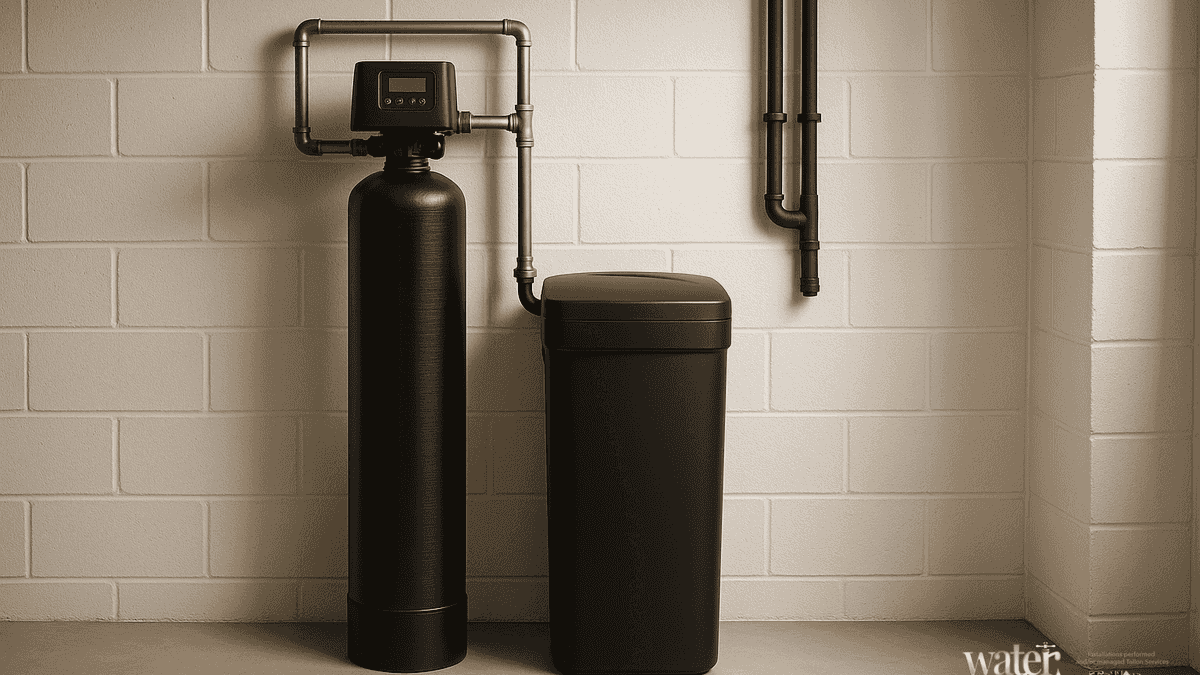
 Residential Water Softeners
Residential · Whole-home treatment
Water Softeners in Colorado
Colorado water picks up calcium and magnesium long before it reaches your tap. Water softeners for home use in Colorado remove both — protecting your plumbing and appliances, and leaving skin, hair, and laundry noticeably softer.
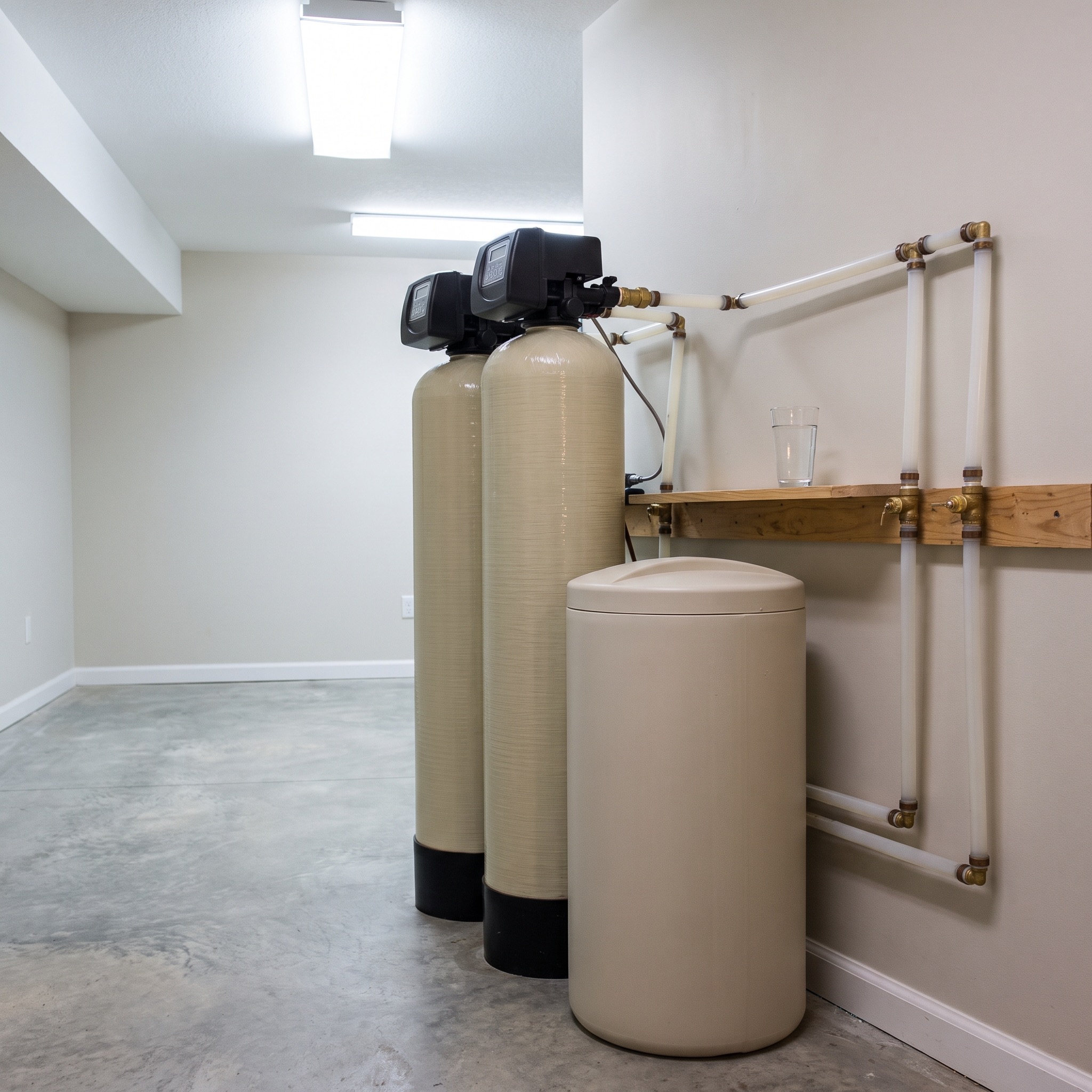
- Soft WaterEliminates hard water minerals
- Appliance ProtectionReduce scale buildup
- Softer SkinGentle on skin
How it works
How Water Softeners Work
A residential water softener removes hard-water minerals — mainly calcium and magnesium — from your home's supply. As water passes through the softener, those minerals are exchanged for sodium or potassium ions, leaving water that's gentler on everything it touches.
The EPA notes that hard water can cause scale buildup on plumbing fixtures and appliances — and that damage is cumulative. If you're seeing any of these signs around the house, hard water is the likely cause.
- Soap scum on tubs, tile, and fixtures
- Dry skin and dull hair after showering
- Dingy, stiff laundry
- Scale buildup in pipes and appliances
Why soften
Benefits of Soft Water
Hard water isn't dangerous, but it works against your home constantly. Softening reverses that.
Softer skin and hair
Without calcium and magnesium in the water, soap rinses clean instead of leaving a film — skin and hair feel noticeably softer.
Brighter laundry
Hard minerals dull fabric over time. Soft water keeps whites white and colors bright, wash after wash.
Longer appliance life
Washing machines, dishwashers, and water heaters last longer when scale isn't building up inside them.
Healthier plumbing
Mineral deposits slowly clog pipes, showerheads, and faucets. Softening stops scale at the source.
Less soap and detergent
Soft water lathers easily, so you use less soap, shampoo, and detergent to get the same clean.
Lower running costs
Appliances run more efficiently on soft water, and many customers see it reflected in their utility bills.
The technology
How Ion Exchange Works
Inside the softener's resin tank are thousands of tiny polystyrene beads charged with sodium ions. As hard water flows through, the calcium and magnesium ions — which carry a stronger positive charge — are attracted to the beads and swap places with the sodium. The sodium is released into the water, the hardness minerals stay on the beads, and soft water flows out.
When the beads are saturated, the system regenerates: a brine solution flushes the tank, recharging the beads with sodium and washing the calcium and magnesium to drain. The cycle repeats automatically based on your water usage — you just keep salt or potassium in the brine tank.
System types
Types of Water Softeners
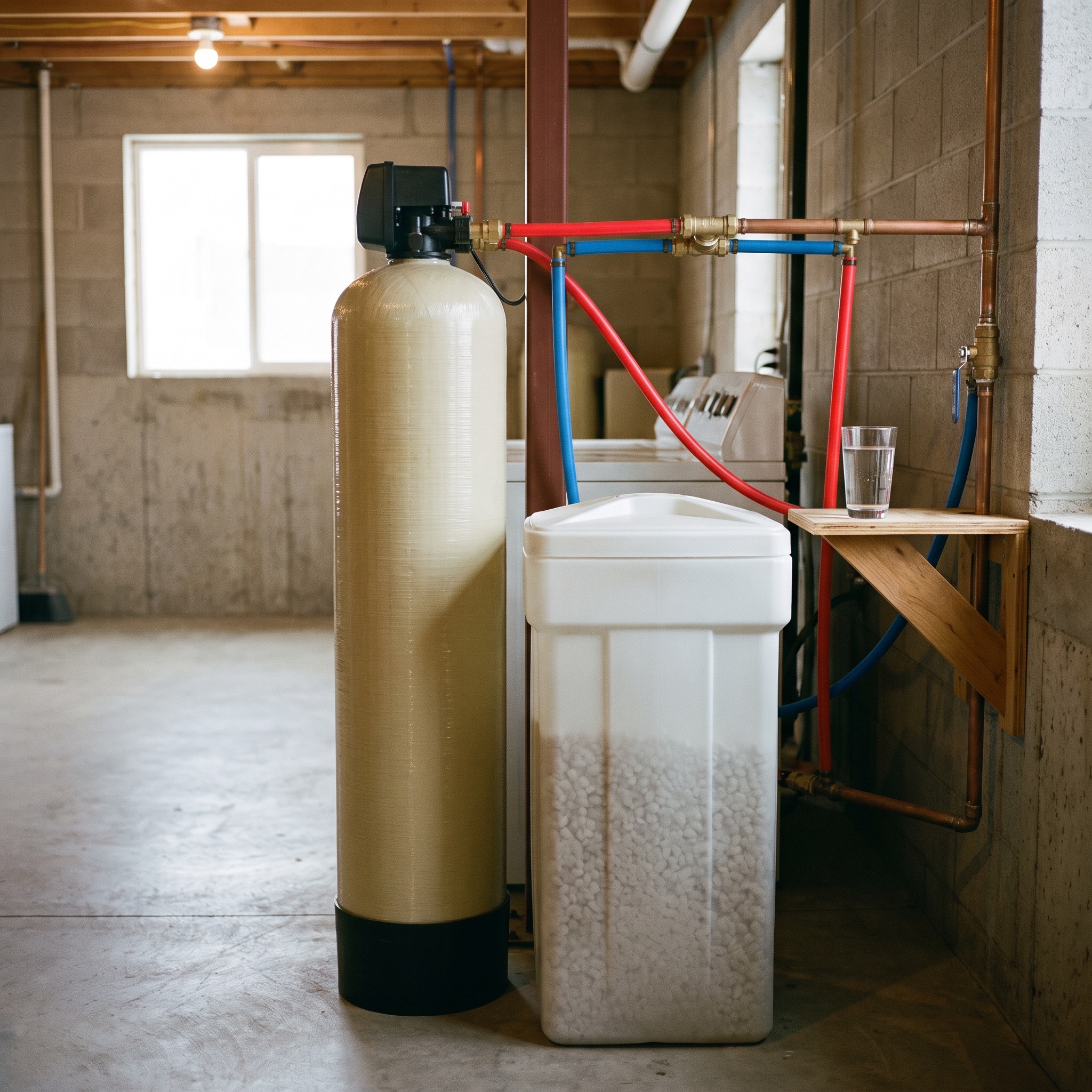
Salt-based systems
True Soft Water, 100% Scale Prevention
Salt-based ion exchange is the standard — and for most Colorado homes, the right choice. Resin beads physically swap calcium and magnesium for sodium or potassium, removing hardness minerals entirely. The result is truly soft water: no scale, no soap scum, no spots on glassware, and soap that lathers on the first pass.
The trade-off is maintenance — you need to keep salt or potassium in the brine tank, and the system regenerates periodically based on your water usage. But for 100% scale prevention and the full benefits of soft water — softer skin, brighter laundry, longer appliance life — there's no substitute.
Salt-free conditioners
Scale Prevention Without the Salt
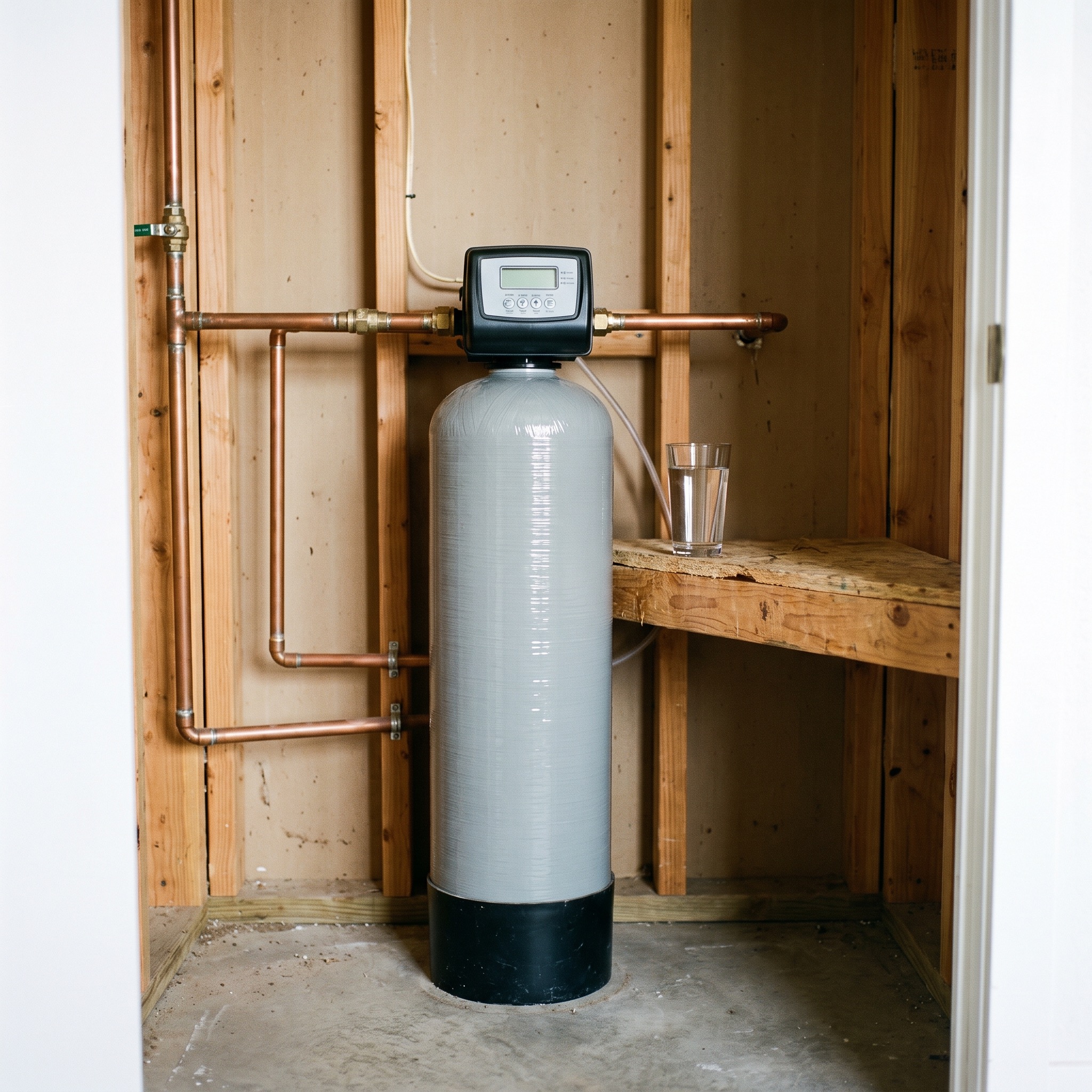
Salt-free conditioners use template-assisted crystallization (TAC) to transform hardness minerals so they can't form scale — without actually removing them from the water. No salt, no brine tank, no regeneration cycle, no sodium added to your water. It's the lowest-maintenance option we offer, and it's over 90% effective at preventing scale buildup.
The key difference: a salt-free conditioner doesn't produce truly soft water. The hardness minerals are still in the water — they just can't bond to surfaces. If your main concern is protecting plumbing and appliances from scale, a conditioner works. If you want the full benefits of soft water — softer skin, less soap, brighter laundry — a salt-based softener is the better choice.
Dual-tank systems
Soft Water That's Always On
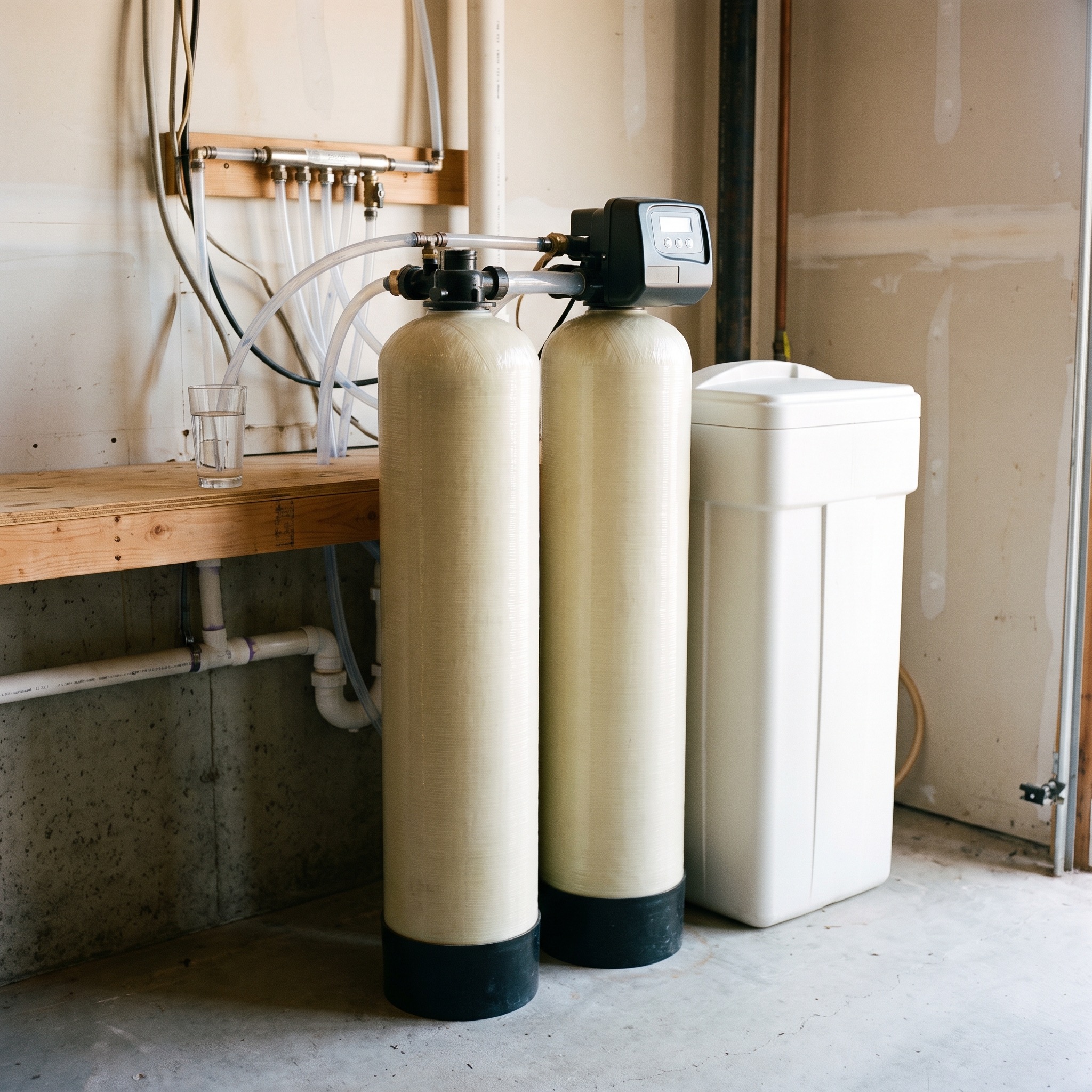
A dual-tank softener runs two resin tanks in alternation — one softens while the other regenerates. Soft water is always available, even during the regeneration cycle. For large households or families with high water usage, that means no one ever gets stuck with hard water in the shower.
We recommend dual-tank systems for homes with 4+ bathrooms, large families, or households where water usage is heavy and unpredictable. The upfront cost is higher than a single-tank system, but the peace of mind — knowing soft water never stops — is worth it for the right household.
More options
Additional Softener Configurations
Beyond the core technologies, we also install these configurations depending on your space and water usage.
Cabinet-style softener
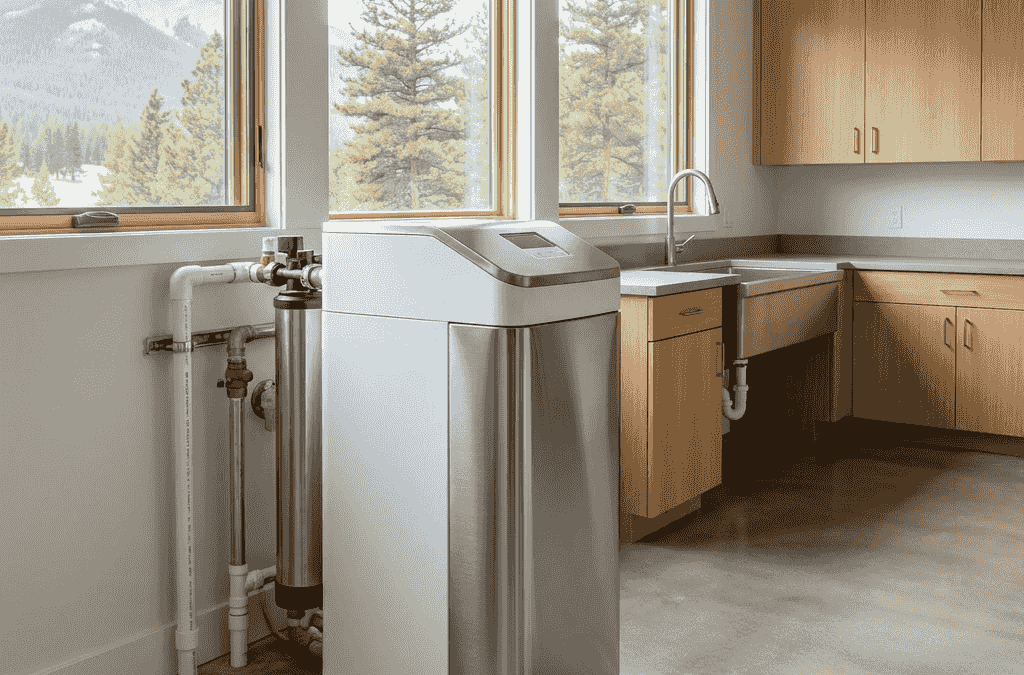
All-in-one unit with resin tank and brine tank in a single compact enclosure. Smaller footprint — fits in tight spaces. Best for condos and homes with limited installation space.
Two-tank softener
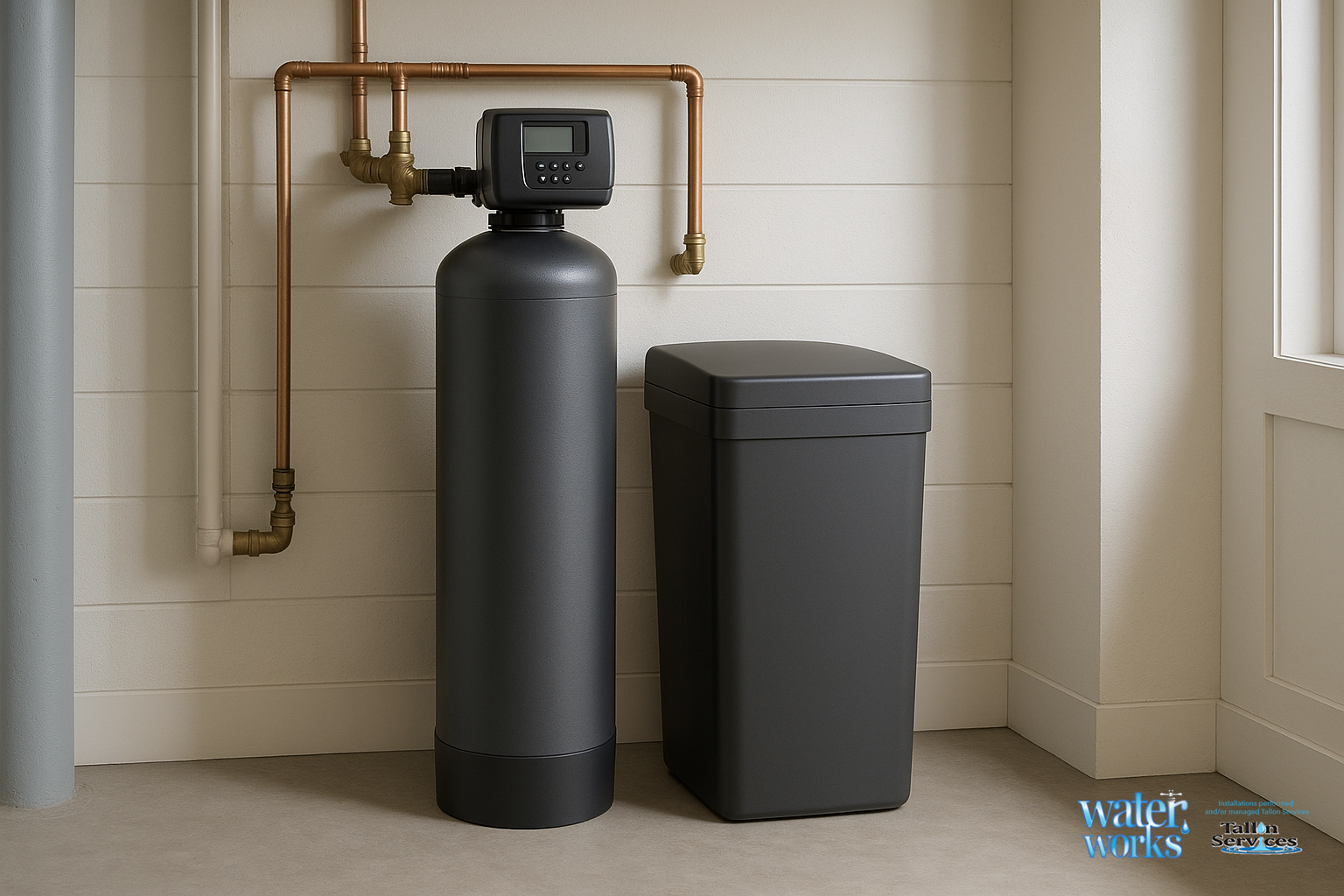
Separate resin tank and brine tank. Larger capacity, easier to service, and the resin tank can be sized independently of salt storage. The standard for whole-house installations.
Demand-initiated regeneration
Regenerates based on actual water usage, not a timer. More efficient — uses less salt and water than timer-based systems. Most modern softeners we install use demand-initiated controls.

The result
What Soft Water Feels Like
The difference shows up everywhere — no water spots on glassware, no scale on showerheads, soap that lathers on the first pass, and laundry that comes out bright and soft instead of stiff and dingy.
Colorado hardness
Colorado Water Hardness Levels
Colorado's water ranges from soft mountain snowmelt to very hard Eastern Plains well water. Here's where the major cities fall on the hardness scale.
Soft
0–60 mg/L (0–3.5 gpg). Mountain snowmelt communities — Longmont, Boulder, Colorado Springs. No softener needed.
Moderately hard
60–120 mg/L (3.5–7.0 gpg). Denver, Aurora, Lakewood, Westminster. Most of the Front Range. Softener recommended.
Hard
120–180 mg/L (7.0–10.5 gpg). Castle Rock, Pueblo, Cañon City. Softener strongly recommended — scale visible.
Very hard
180+ mg/L (10.5+ gpg). Brighton, Fountain, Security-Widefield. Softener essential — rapid scale buildup.
Our process
From Water Test to Soft Water
Every installation starts with your actual water — not a guess. Here's how it works from first call to finished system.
Test your water
Before we recommend anything, we test your home's water to measure hardness and see exactly what's in your supply.
Size and select the system
Based on the results, your household size, and daily water use, we match you with the right system — salt-based or salt-free.
Professional installation
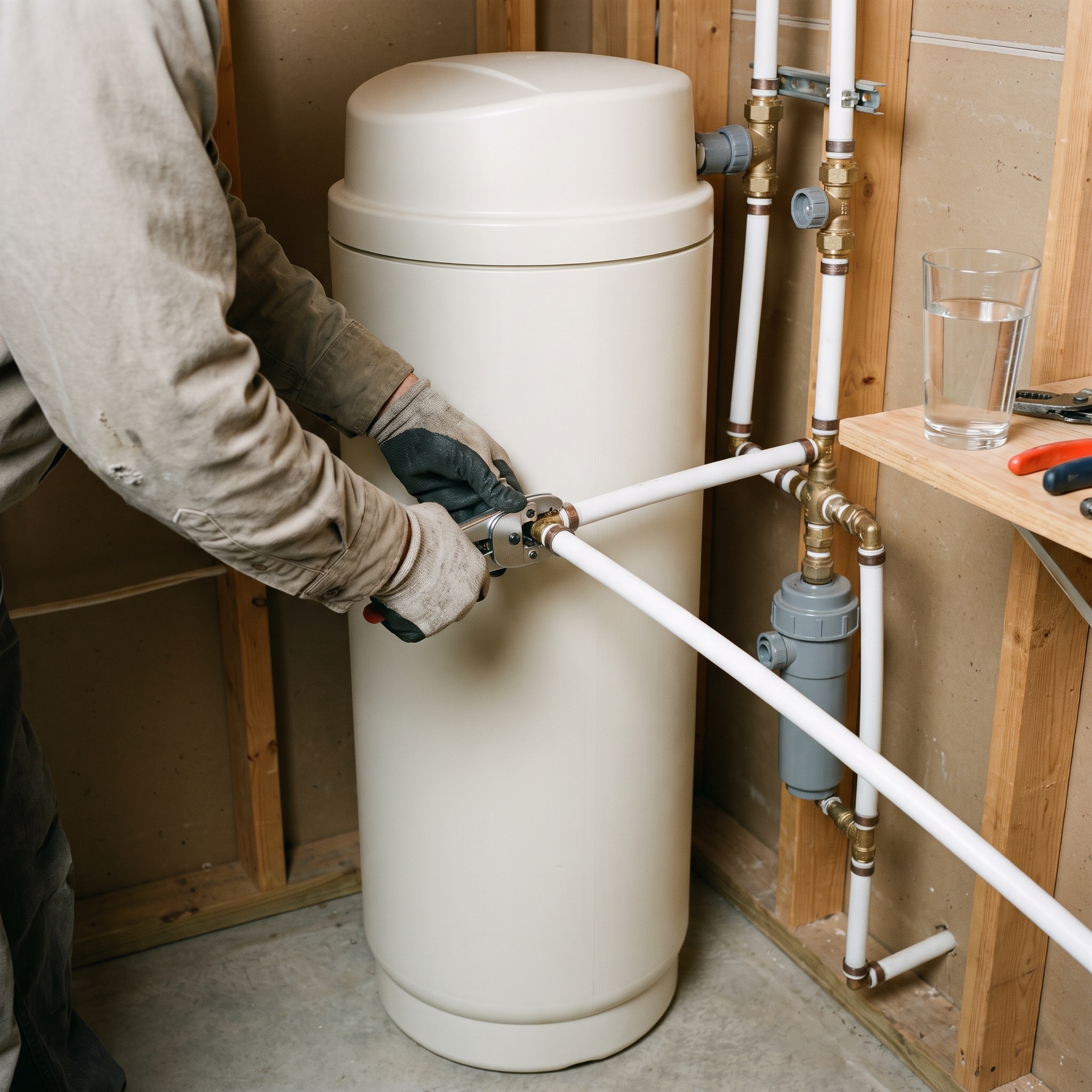
We connect the softener to your main water supply and drain line, set up the brine tank, and verify everything is working.
Simple ongoing maintenance
Keep salt or potassium topped up, and we'll handle resin cleaning, filter replacement, and periodic water quality checks.
The maintenance
Water Softener Maintenance
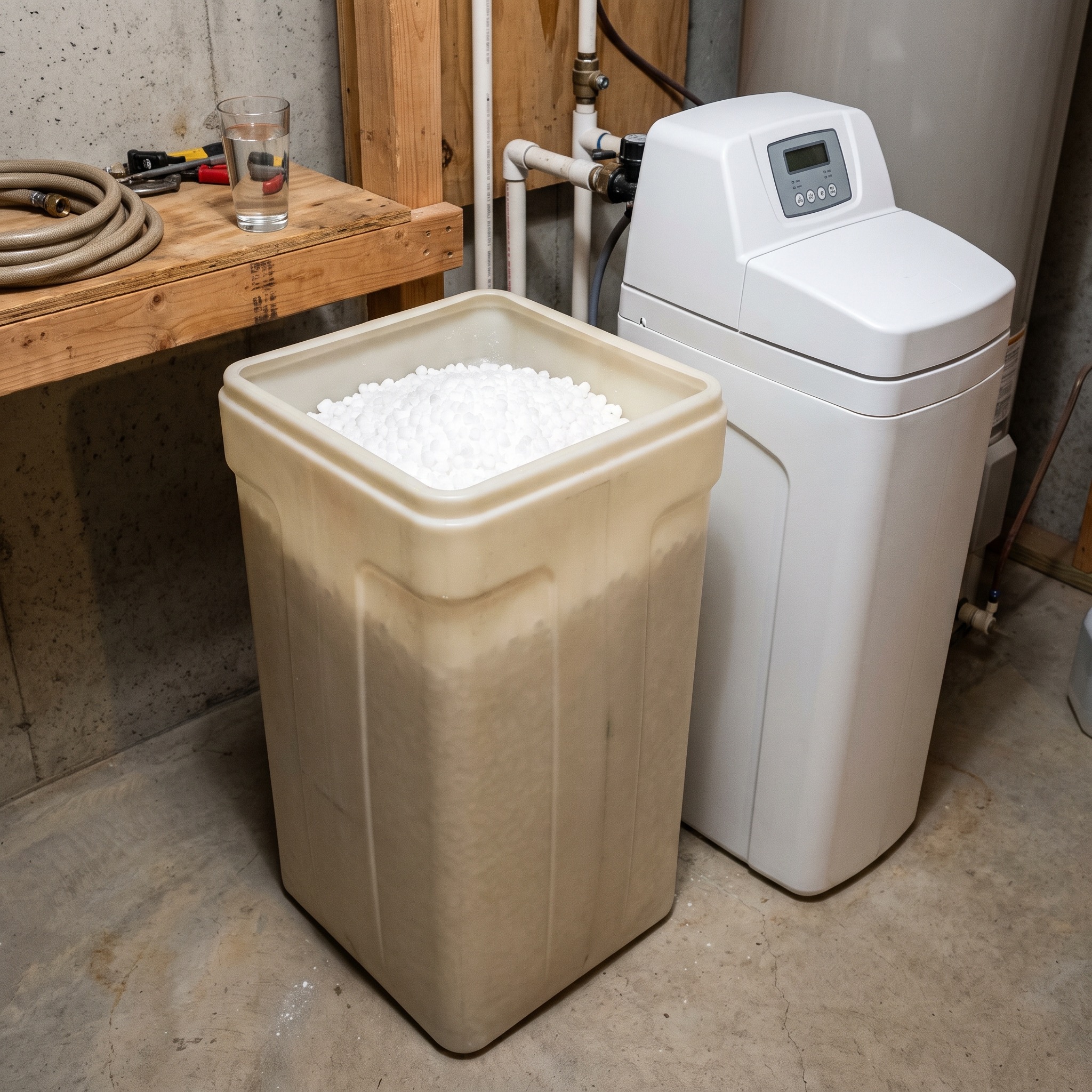
Keep salt or potassium in the brine tank — that's the main upkeep. The system regenerates automatically based on your water usage, flushing the resin beads with brine to recharge them and wash the hardness minerals to drain. We handle resin cleaning, filter replacement, and periodic water quality checks.
Salt and potassium
Types of Water Softener Salt
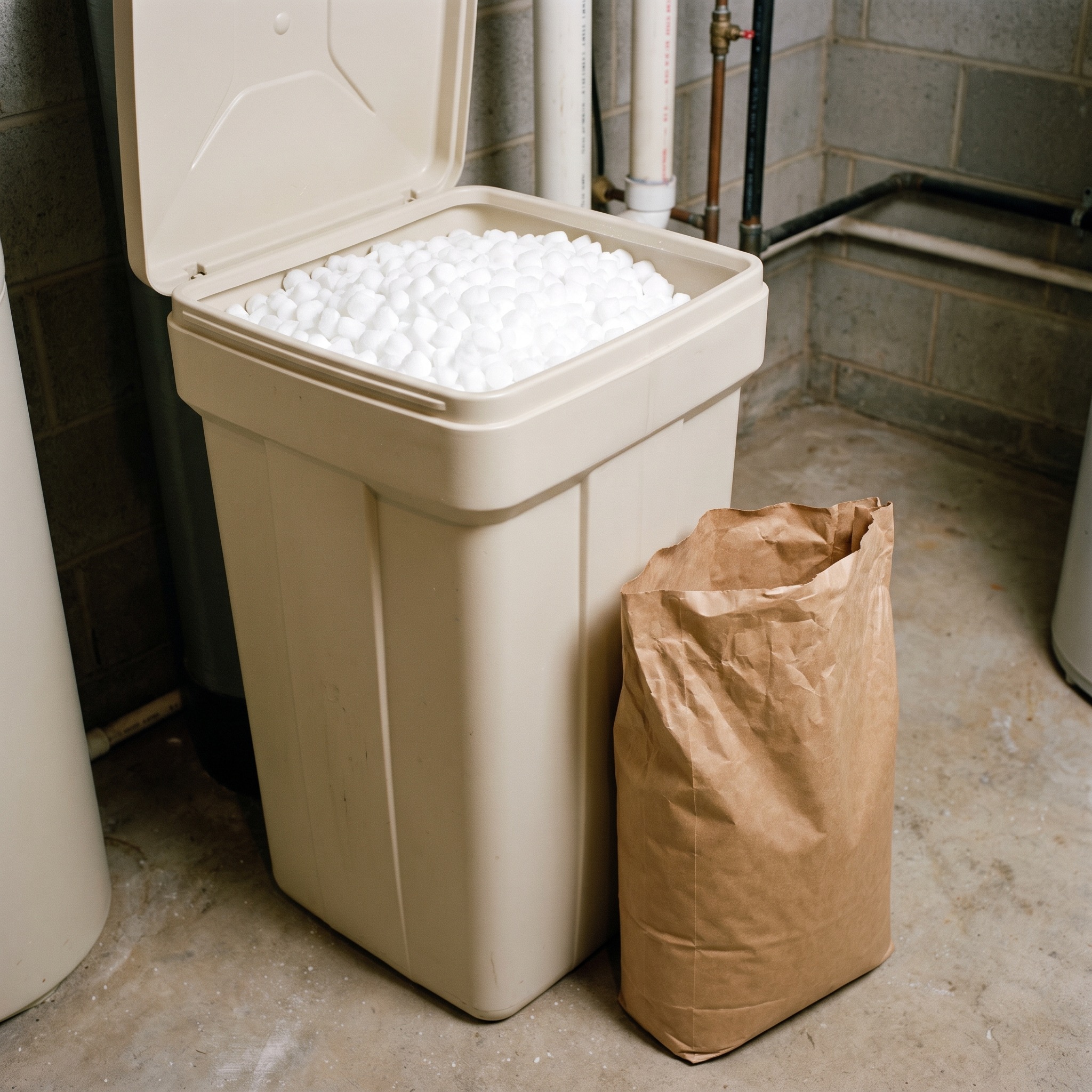
The salt you use in your brine tank affects how well the system runs and how often it needs cleaning. Higher-purity salt leaves less residue and reduces bridging — the situation where salt sticks together and blocks water from reaching the bottom of the tank. Here are the options we recommend:
Salt options
Salt and Potassium Options
Evaporated salt pellets
The highest-purity option — mined and evaporated to remove impurities. Leaves the least residue in the brine tank and reduces bridging (where salt sticks together and blocks water flow). What we recommend for most systems.
Solar salt
Evaporated by sun and wind, mid-range purity. A good budget option that works well in most softeners. May leave more residue than evaporated pellets over time.
Potassium chloride
A sodium-free alternative that works the same way as salt but adds potassium instead of sodium to your water. The right choice for low-sodium diets — costs more than salt but eliminates the sodium concern entirely.
Sizing & selection
Choosing the Right Water Softener
Choosing a softener can feel daunting — systems vary in capacity, technology, and upkeep. We've installed residential water softeners in Colorado homes for over 40 years, and we weigh the same factors on every job.
- Household size and daily water use
- Hardness level from your water test
- Cabinet-style vs. two-tank footprint
- Upfront cost and ongoing maintenance
Resources
Water Softener Spec Sheets & Equipment Data
The spec sheets below are from Aldex and Clack — two of the manufacturers we work with. All have certified performance data. Download the spec sheets below to compare resin capacity, valve specs, and service requirements.
- Water Softener Resin Spec SheetAldex C-800 sodium-form softening resin — capacity, particle size, and operating specifications.
- Control Valve Service ManualClack WS1/WS1.25 service manual — maintenance, repair, and programming for water softener valves.
- Control Valve Spec SheetClack WS1.25 valve specifications — flow rates, connections, and operating parameters.
- Low-Temp Softening Resin Spec SheetAldex C-800 LT resin for cold-water softening — designed for Colorado's colder incoming water temperatures.
Water Softener FAQs
Are water softeners safe for the environment?
Most residential water softeners are safe for the environment — they don't use harmful chemicals or produce hazardous byproducts. Salt-based systems can add some sodium to wastewater; if that's a concern, we also install salt-free alternatives.
Will a water softener make my water taste salty?
No. While salt is used in the regeneration cycle, it isn't present in the water that comes out of your taps. The salt brine cleans the resin beads and flushes to drain — it doesn't enter your water supply.
Can a water softener damage my plumbing?
No — a properly installed and maintained water softener won't damage your plumbing. It protects it by preventing scale buildup. The only risk is from a system that's set too aggressive (over-softening to zero hardness), which can be addressed with a blending valve.
Do I need to add chemicals to my system?
Salt-based systems need salt or potassium added to the brine tank on a regular schedule. Salt-free systems don't require any additives. We'll explain which approach fits your water and your preferences.
How often do the resin beads need replacing?
Resin beads typically last 8–12 years before needing replacement, depending on your water hardness and how well the system is maintained. Iron fouling, chlorine exposure, and high sediment can shorten resin life. We check resin condition during routine maintenance visits.
How much does a water softener cost in Colorado?
Most residential water softener installations in Colorado run between $1,200 and $3,500 fully installed, depending on system size, salt-based vs. salt-free, and whether you need a bypass or blending valve. The only honest answer comes after a water test — we'll explain exactly what you're paying for and why. No pressure, no upselling. If you're on a tight budget, an under-sink filter might be enough for now.
What's the difference between a water softener and a salt-free conditioner?
A water softener uses ion exchange to physically remove calcium and magnesium from the water. A salt-free conditioner uses template-assisted crystallization to prevent scale without removing the minerals. Softeners produce truly soft water; conditioners prevent scale but leave the hardness minerals in.
How do I know if I need a water softener in Colorado?
The EPA notes that hard water can cause scale buildup on plumbing fixtures and appliances. If you're seeing white spots on dishes, scale on showerheads, stiff laundry, or dry skin after showering, those are the signs. The only way to know for sure is a water test — which we do for free.
What's the difference between salt and potassium for my softener?
Both regenerate the resin beads the same way. Sodium chloride (salt) is cheaper and more common. Potassium chloride costs more but adds potassium instead of sodium to the regenerant — a good option for homeowners on sodium-restricted diets or those concerned about sodium in wastewater. Either works in any standard softener.
How does ion exchange actually work?
Inside the softener's resin tank are thousands of tiny polystyrene beads charged with sodium ions. As hard water flows through, the calcium and magnesium ions — which carry a stronger positive charge — are attracted to the beads and swap places with the sodium ions. The sodium is released into the water, the calcium and magnesium stay on the beads, and soft water flows out. When the beads are saturated, the system regenerates by flushing them with brine to recharge the sodium and wash the hardness minerals to drain.
From the blog
Water Softener Articles
Water Works can be accessed at one of our four convenient locations:
Denver Metro:
Northern Colorado:
Colorado Springs Metro:
Pueblo and S Colorado:
Talk to a Water Expert About Softening Your Home's Water
We've provided Colorado homeowners with water softener installation for over 40 years. When we install a system in your home, we test the water first to determine which system will work best for you.
Get a quote- Denver Metro(303) 248-3390
- Northern Colorado(970) 381-4493
- Colorado Springs Metro(719) 694-2650
- Pueblo & S Colorado(719) 836-8118