 Commercial Water Softeners
Commercial · Statewide
Commercial Water Softeners in Colorado
Hard water isn't dangerous — but it's expensive. It scales up equipment, clogs fixtures, drains slower, and makes soap and detergent work harder. Commercial water softeners in Colorado protect your equipment, lower your operating costs, and keep your business running clean.
- Equipment ProtectionReduce costly scale
- Operational EfficiencyImprove system performance
- Lower MaintenanceFewer service issues

The business case
How Commercial Water Softeners Save Money
Hard water works against your operation every day — scaling up equipment, clogging fixtures, and making every cleaning task harder than it needs to be. A commercial water softener stops that damage at the source, protecting the equipment you depend on and the bottom line that depends on it.
- Dishwashers and laundry machines run more efficiently
- Less soap and detergent to get the same clean
- No thick films left where water dries
- Fewer clogged showerheads, faucets, and lines
The technology
How Commercial Water Softeners Work
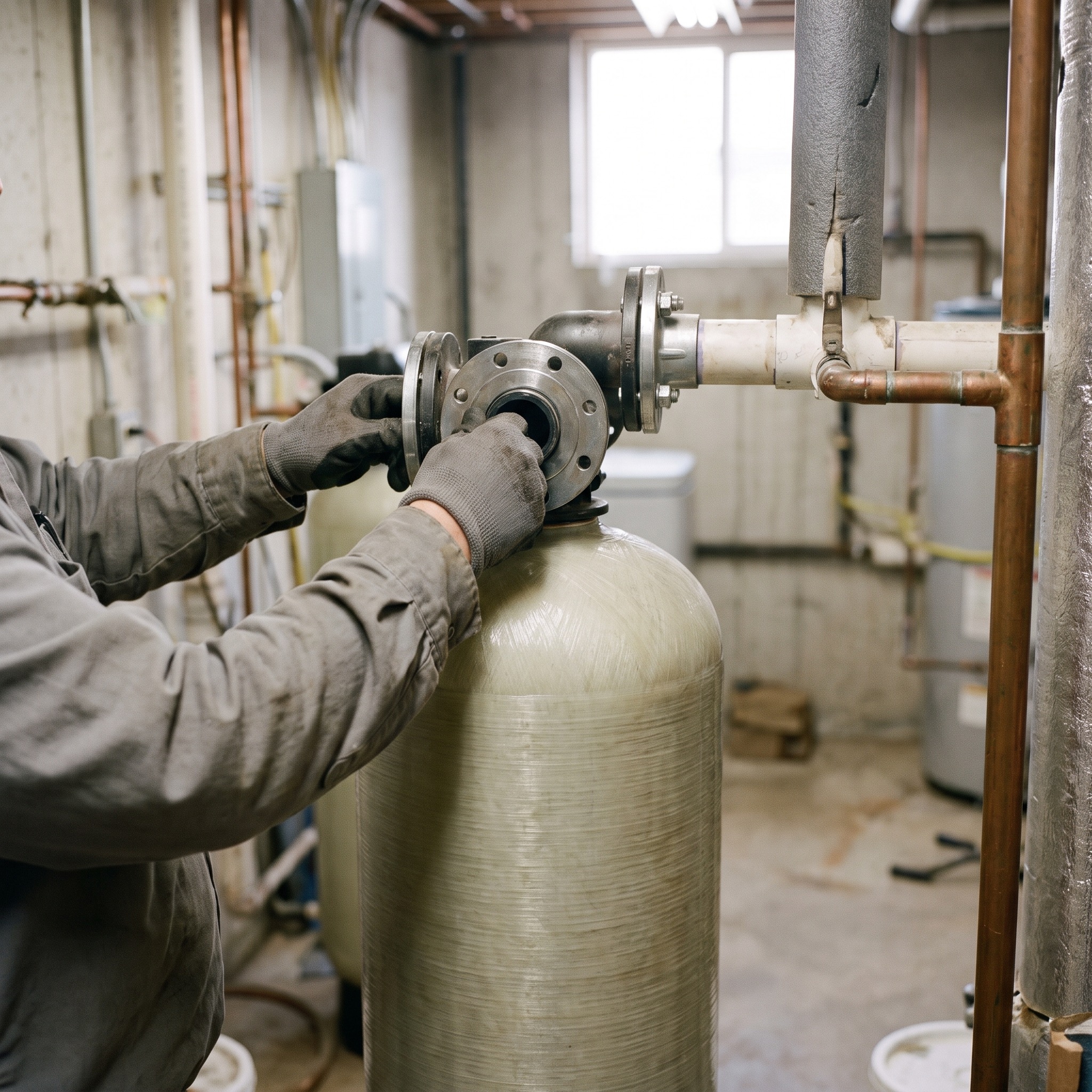
Commercial softeners use the same ion exchange process as residential water softeners — resin beads swap calcium and magnesium for sodium or potassium — but at a much larger scale. The resin tank is sized to your daily water volume, the valve is rated for commercial flow rates, and the regeneration cycle is programmed around your operation's schedule.
That's why every installation starts with a water test and a look at how your operation actually uses water. We specify from measurements, not from a catalog page.
System configurations
Types of Commercial Water Softeners
Commercial water softeners come in three main configurations, distinguished by how many resin tanks they use and how they handle regeneration. The right one depends on your daily water volume, your operating hours, and whether you can tolerate any downtime during regeneration. Here's how the three compare:
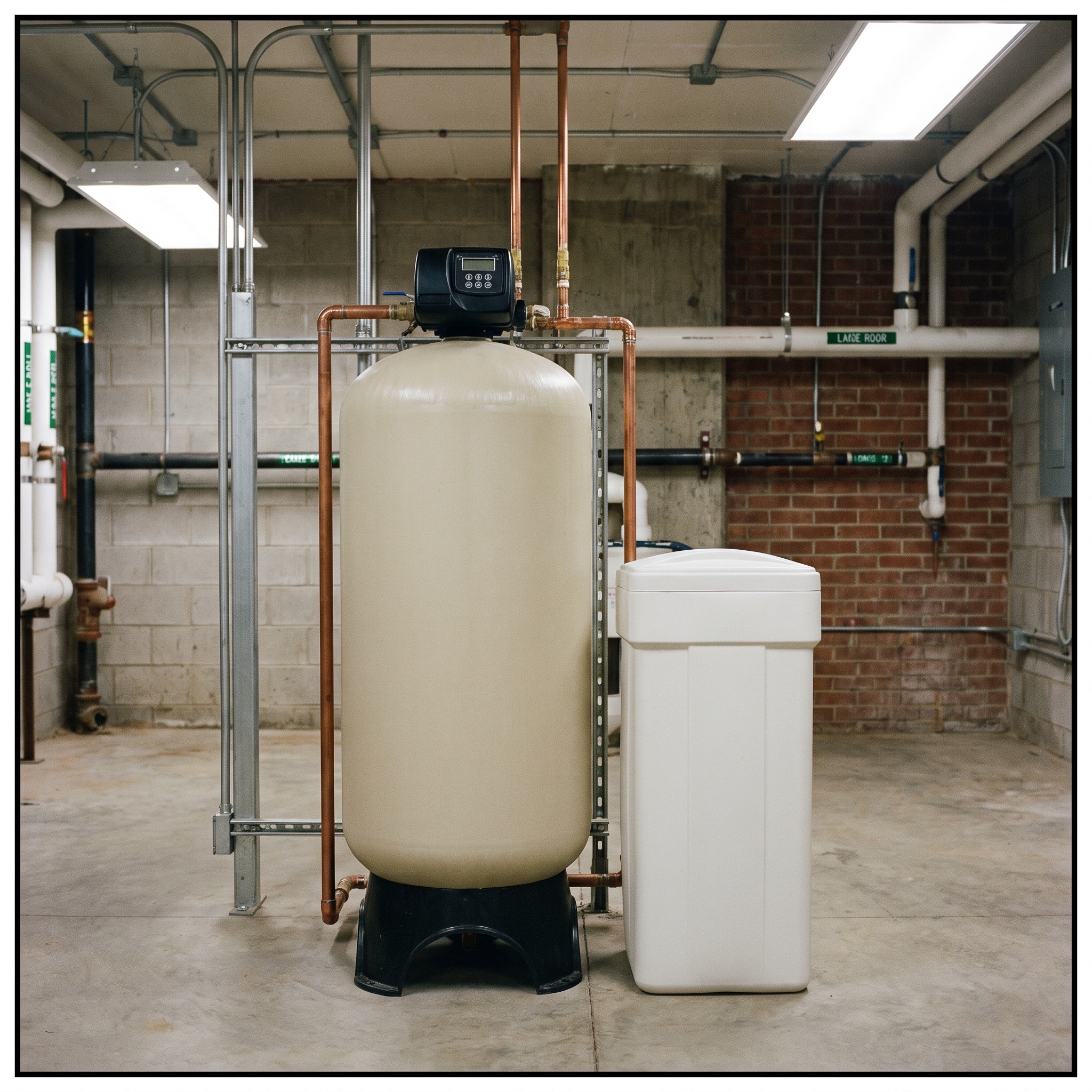
One tank, sized to your volume
Single-Tank Systems
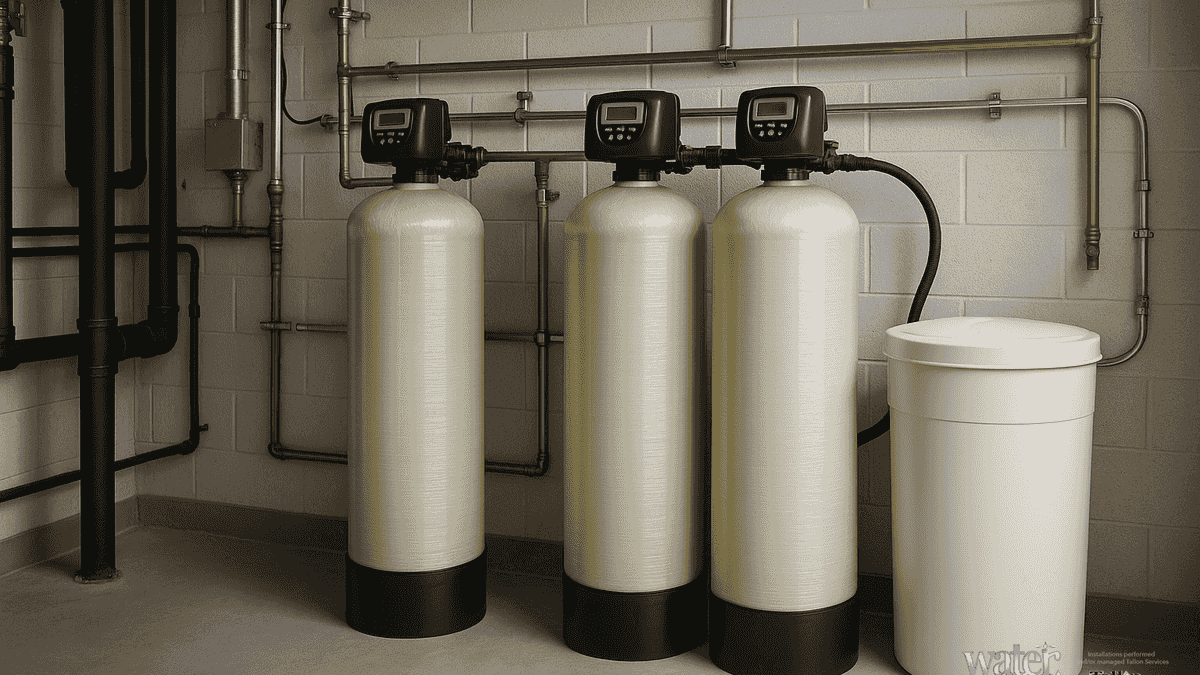
A single-tank commercial softener is exactly what it sounds like — one resin tank, one brine tank, and a control valve programmed to your operation's water volume. It's the most common commercial setup we install, and for good reason: it's efficient, affordable, and handles the daily demand of most single-location businesses.
We size the tank capacity to your peak demand and schedule regeneration during your off-hours — so soft water is ready when your doors open. For restaurants, offices, and small-to-mid-size operations with predictable water usage, a single-tank system is usually the right call.
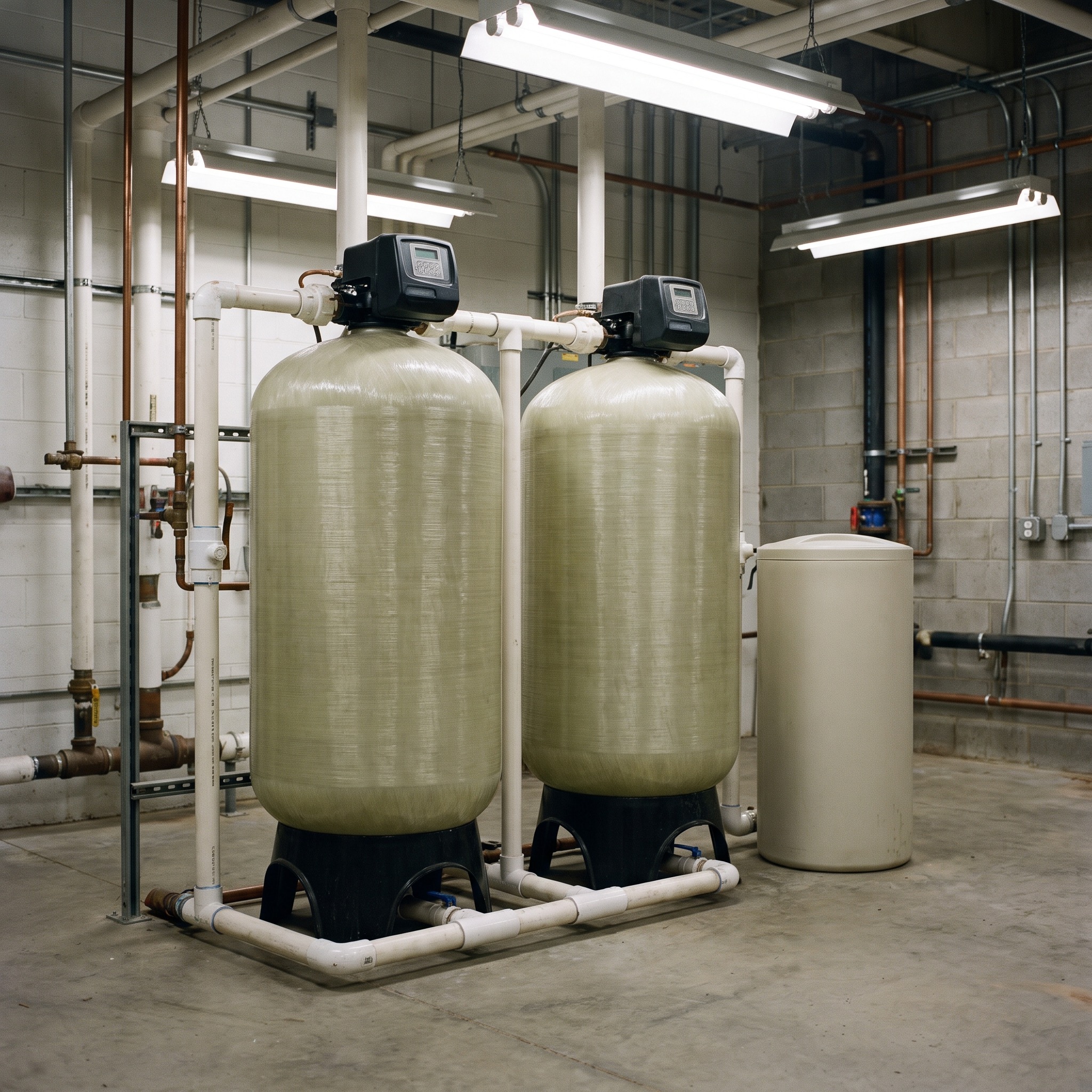
Soft water that never stops
Dual-Tank Systems
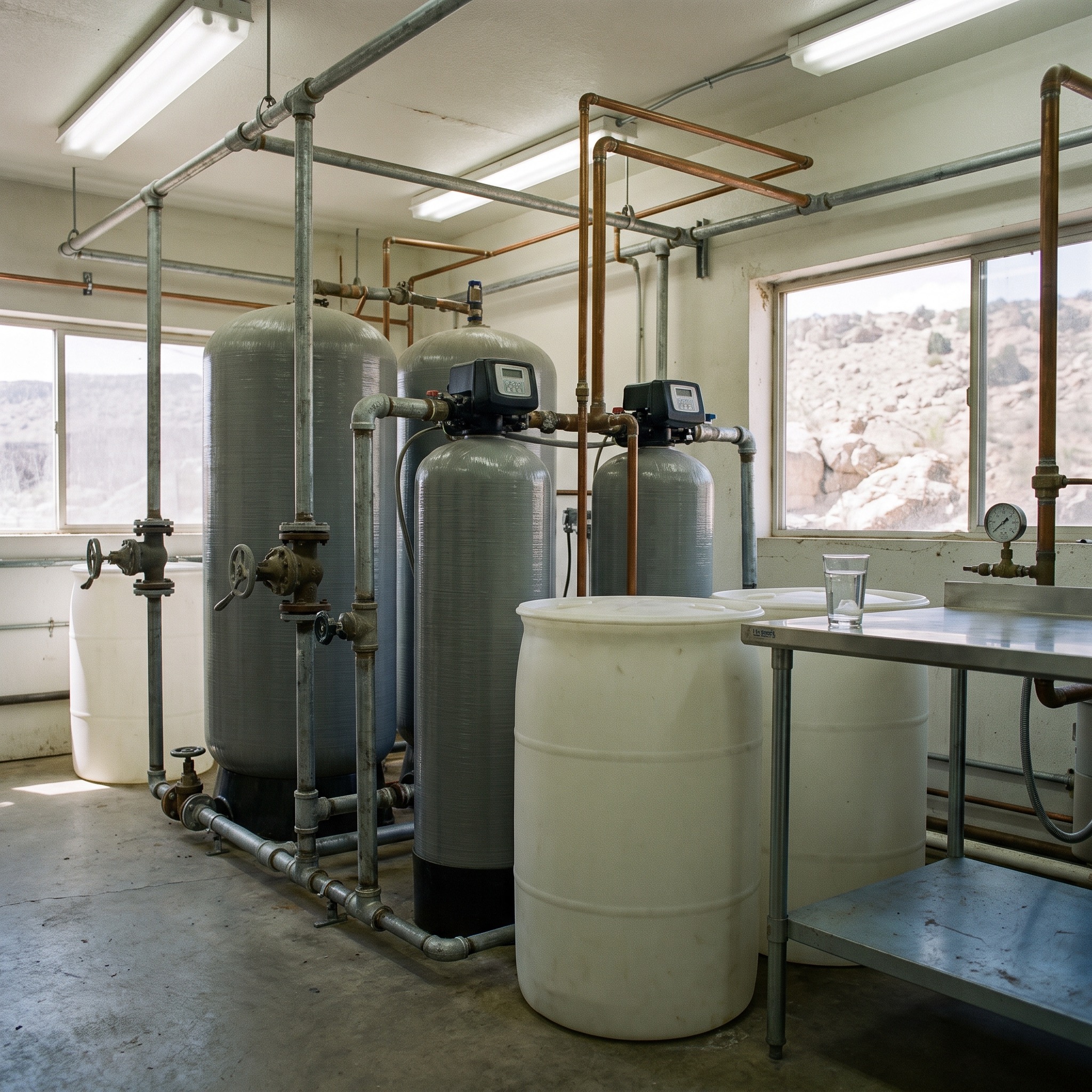
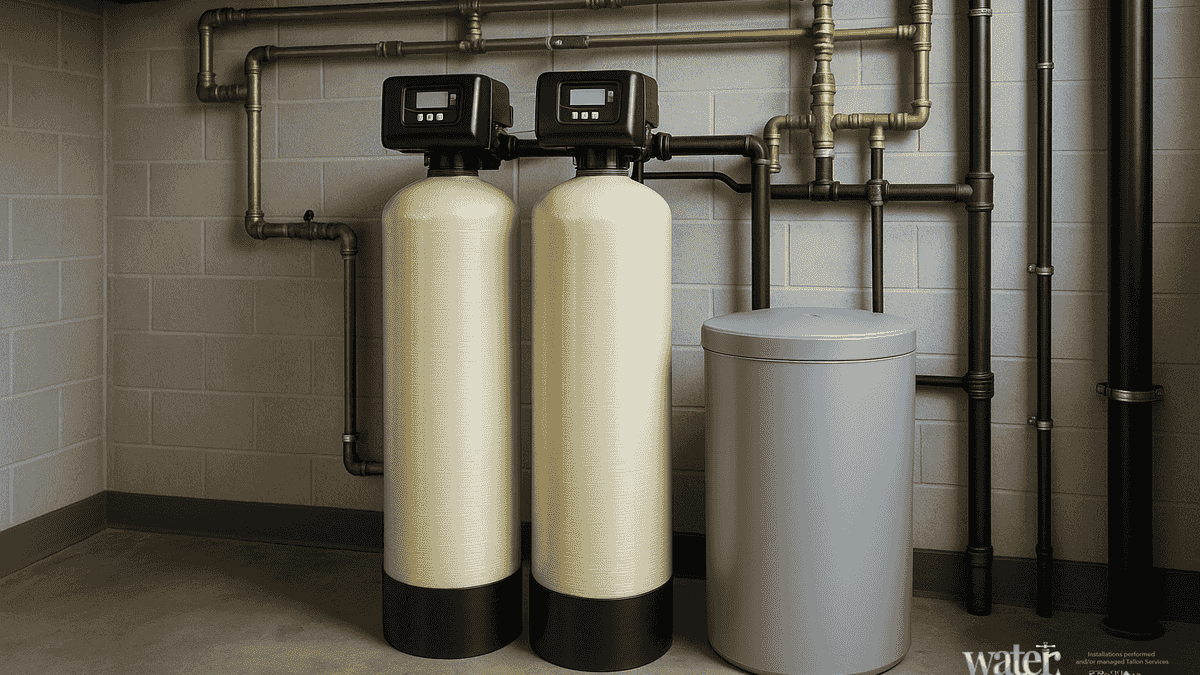
A dual-tank system runs two resin tanks in alternation — one softens while the other regenerates. That means soft water is always available, even during the regeneration cycle. No downtime, no hard-water window, no compromise.
We recommend dual-tank systems for restaurants, hotels, and any business where downtime means lost revenue. If your operation runs 24/7, or if you can't afford even an hour of hard water during a regeneration cycle, dual-tank is the configuration that eliminates that risk.
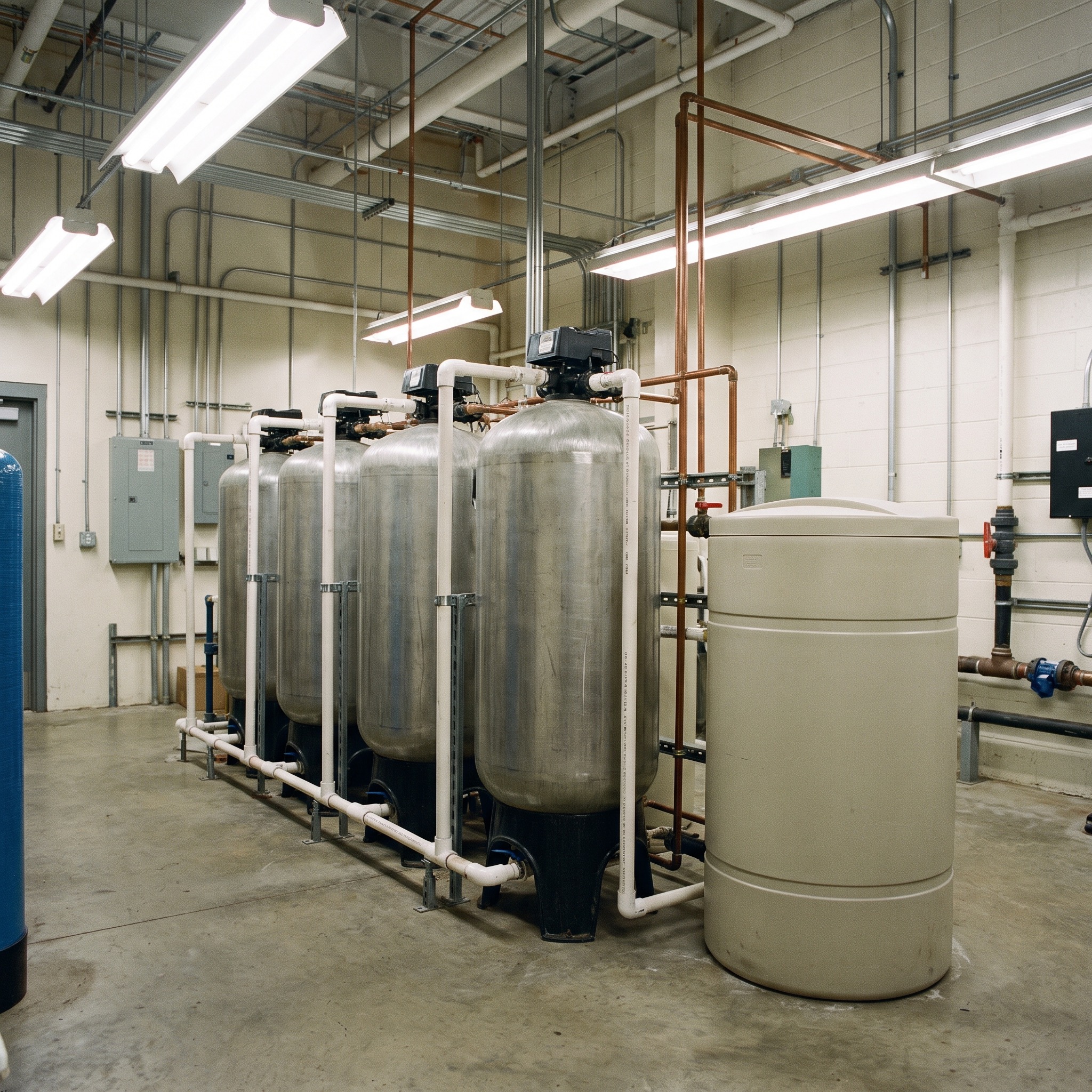
High-volume softening at scale
Multi-Tank Systems
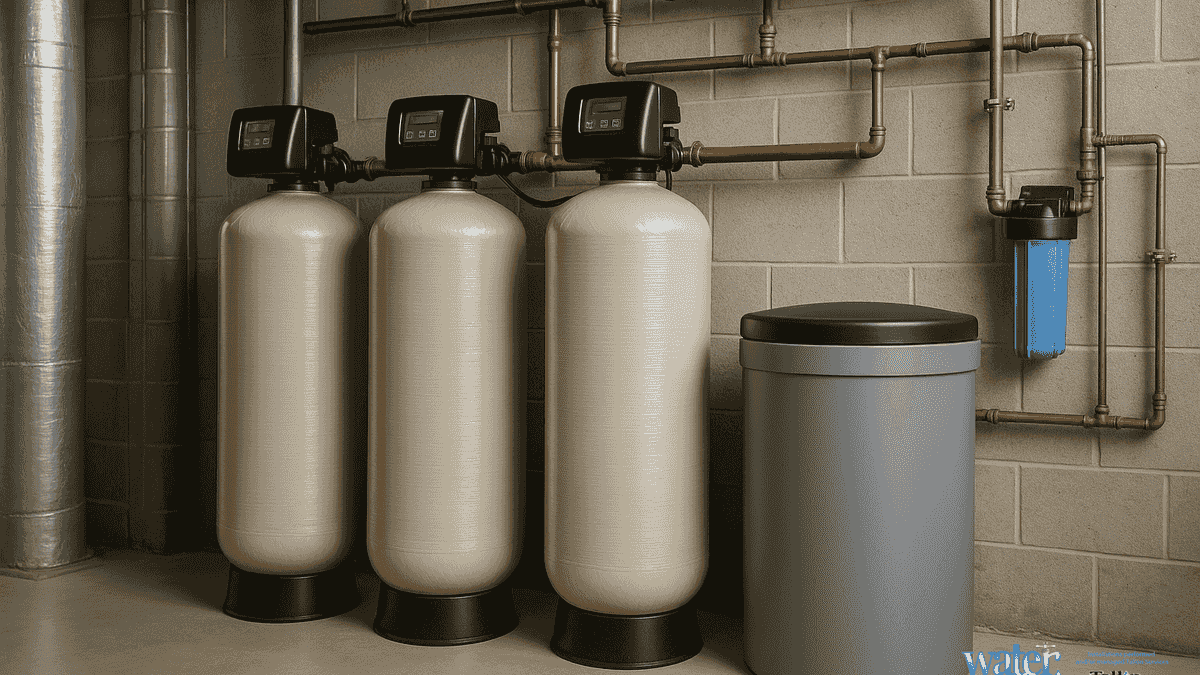
Multi-tank systems use three or more resin tanks for high-volume operations — hotels with hundreds of rooms, manufacturing plants, agricultural facilities with continuous demand across multiple buildings. Each tank is sized independently, and regeneration is staggered so the system always has capacity.
We design multi-tank systems from your actual water usage data: daily volume, peak demand, and duty cycle. The result is a system that scales with your operation without over-specified capacity that wastes salt and water.
Additional system features
More Commercial Softener Options
Beyond the tank configuration, we specify the right control valve, resin type, and regeneration strategy for your operation.
Demand-initiated regeneration
The system regenerates based on actual water usage, not a fixed timer. More efficient for businesses with variable demand — uses less salt, less water, and never regenerates unnecessarily. Most of the systems we install use demand-initiated controls.
High-capacity resin systems
For operations with very hard water or high daily volume, we use 10% cross-linked resin (like ResinTech CG10) that handles higher flow rates and lasts longer than standard 8% resin. The right resin extends system life and reduces maintenance frequency.
Pilot-operated valve systems
For large commercial and industrial applications, pilot-operated valves (Clack WS1.5P, WS2P) handle higher flow rates than standard electronic valves. We specify these for buildings where water demand exceeds what standard commercial valves can handle.
The payoff
Benefits of Commercial Water Softening
Lower utility bills
Scale acts as an insulator on heating elements — soft water lets water heaters, boilers, and dishwashers run at rated efficiency.
Less soap and detergent
Soft water lathers on the first pass. Commercial kitchens and laundries use significantly less product to get the same clean.
Longer equipment life
Scale buildup is the #1 cause of premature failure in commercial water-using equipment. Softening stops it at the source.
Spot-free results
No mineral spots on glassware, dishes, or cleaned surfaces. Less rework, less hand-polishing, better presentation.
The result
What Soft Water Looks Like in Your Business
Soft water is one of those investments your staff and customers notice without knowing why — things simply stay cleaner, work better, and wear out slower.
- Spot-free glassware and fixtures
- Soap and sanitizer that lather and rinse properly
- Surfaces that stay clean after they dry
- Equipment that lasts closer to its rated life
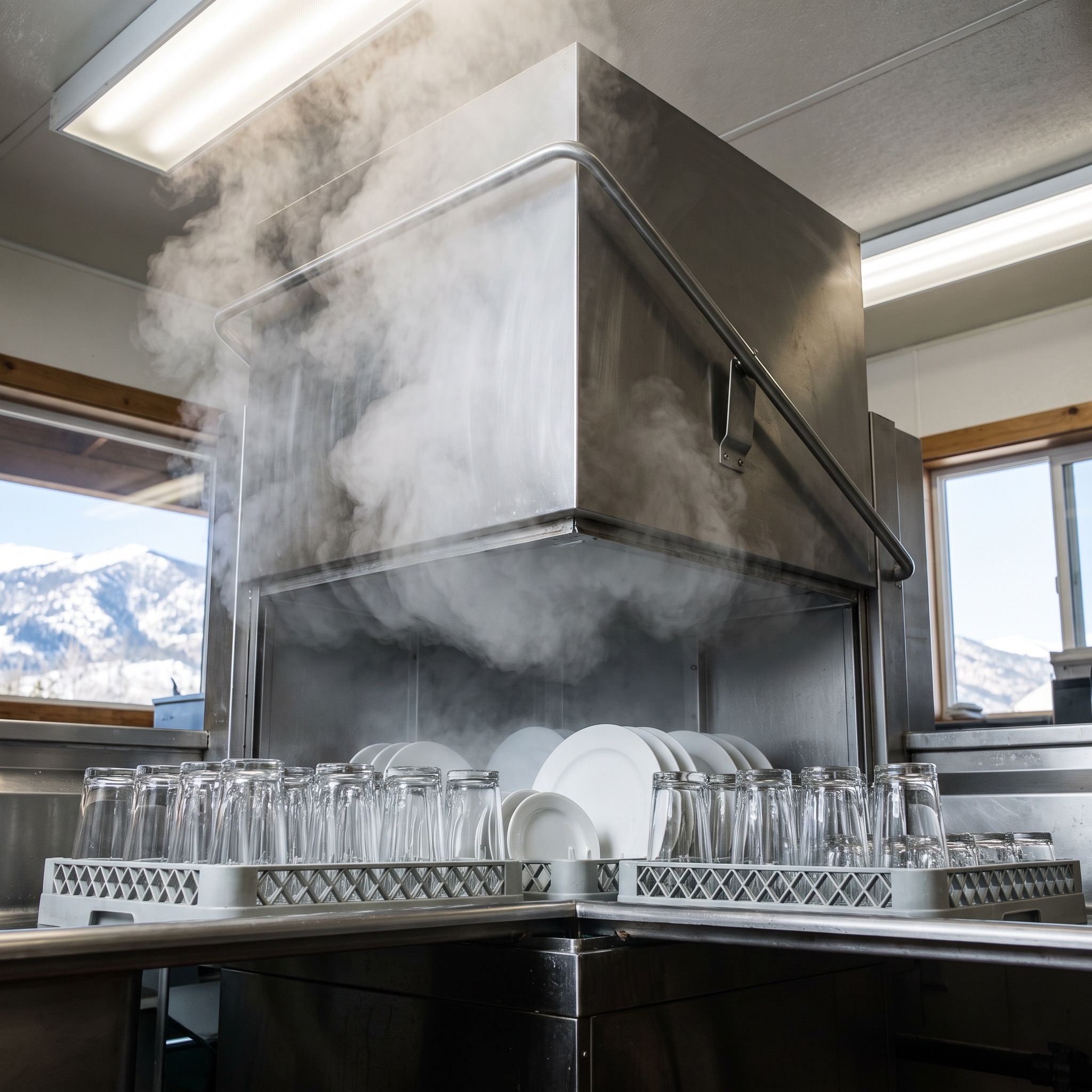
Restaurants & food service
Spot-Free Glassware and Cleaner Dishes
Every glass of water, every plate, every ice cube tells your customers clouds your ice, and builds scale inside dishwashers and ice machines that shortens their life and drives up your maintenance costs.
A commercial softener delivers spot-free results on the first pass, keeps your equipment running clean, and cuts your detergent and chemical usage — because soft water lathers on contact, your staff uses less product to get the same clean.
Laundry facilities
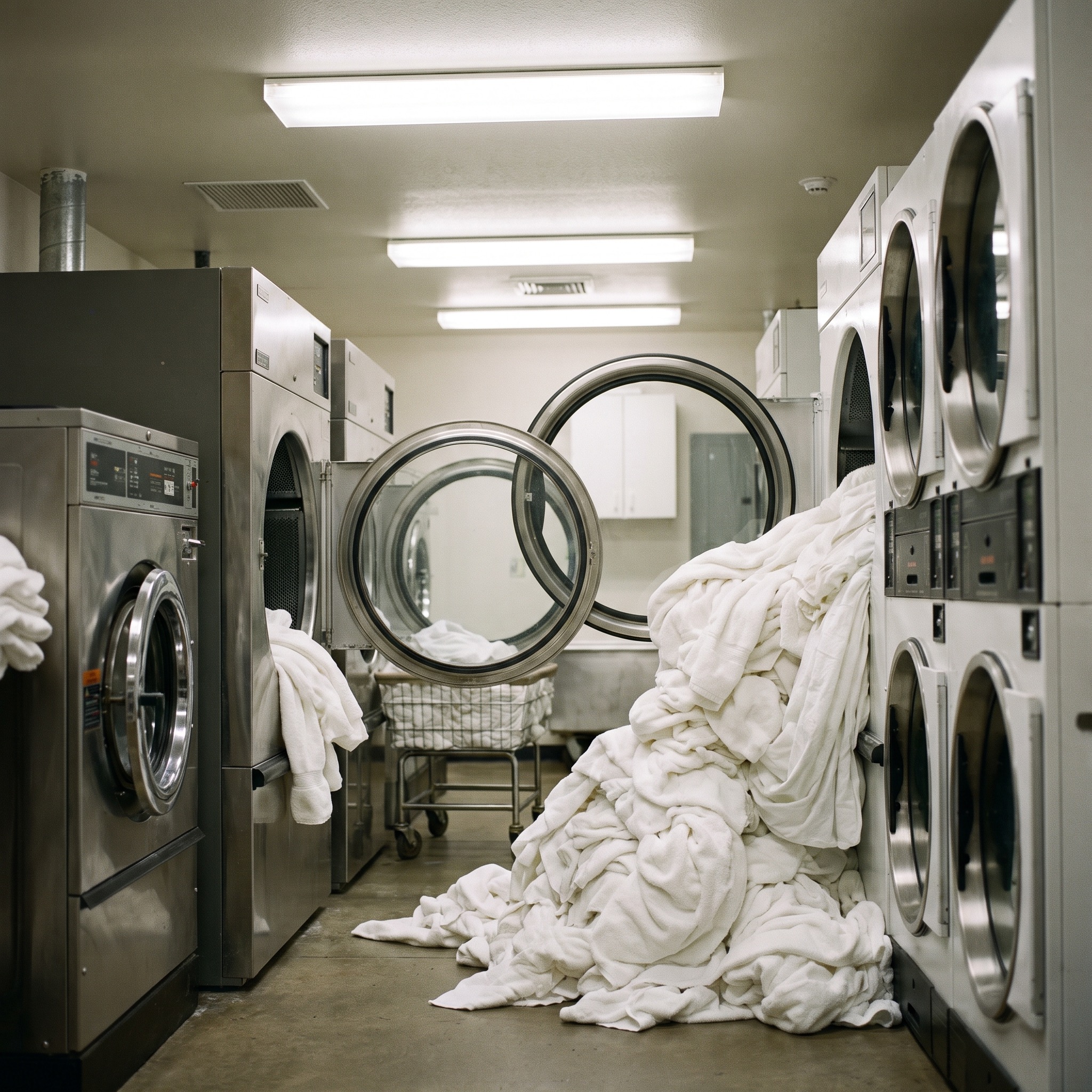
Brighter Linens, Less Detergent
Commercial laundries feel hard water faster than almost any other business. Hard minerals bond with detergent and form soap scum, which means you need more product, hotter water, and longer cycles to get the same result. Linens come out stiff and dingy instead of soft and bright.
Soft water changes the math. Detergent lathers immediately, linens rinse clean, and washing machines run without scale buildup — which means fewer service calls, longer equipment life, and lower utility bills. Most commercial laundries see a return on softening within the first year.
Agricultural facilities
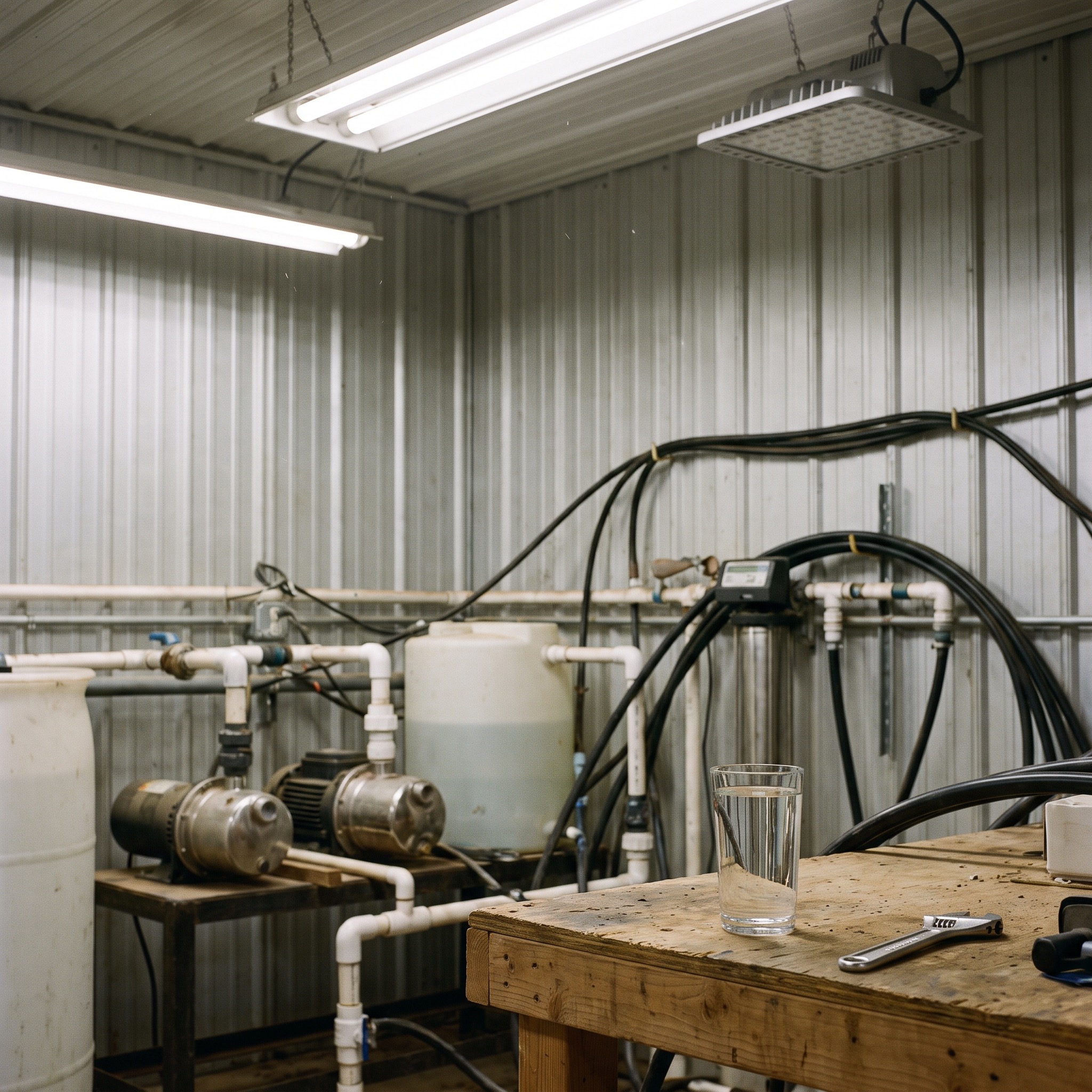
Scale-Free Equipment, Less Downtime
Agricultural operations can't afford downtime — and hard water causes it. Scale builds up in irrigation lines, cooling systems, and livestock watering equipment, restricting flow and damaging pumps. On large operations, that means higher energy costs, more frequent equipment replacement, and water that doesn't deliver efficiently to where it's needed.
We size agricultural softening systems to your daily volume and peak demand, with regeneration scheduled around your operation's cycle — so soft water is always available when your equipment and livestock need it.
Other industries
More Industries We Serve
Any business that uses water feels hard water first. Here are other operations where we install and service commercial softeners.
Spas & health care facilities
Gentler water for businesses where how the water feels is part of the service — and the reputation.
Hotels & lodging
Guest showers, laundry, and kitchen operations all benefit from consistent soft water across every room.
Manufacturing & processing
Scale-free water for boilers, cooling towers, and production lines where equipment efficiency is critical.
Our process
Commercial Water Softener Installation Process
From hardness test to soft water — and the last step never really ends, because we stay on for maintenance and repair.
Test and assess
We test your building's water hardness and look at how much water your operation moves each day — peak demand, duty cycle, and points of use.
Size and specify
Commercial softeners are sized to your volume and duty cycle — a system that regenerates on your schedule, not against it.
Install
Our technicians install the system and verify soft water at the points that matter to your operation.
Keep it running
We handle ongoing maintenance and repair, so soft water stays off your list of things to manage.
Resources
Commercial Water Softener Spec Sheets & Equipment Data
The spec sheets below are from Aldex and Clack — two of the manufacturers we work with. All have certified performance data. Download the spec sheets below to compare resin capacity, valve specs, and service requirements.
- Commercial Softener Resin Spec SheetAldex C-820 high-capacity softening resin — flow rates, capacity, and operating specs for commercial applications.
- Commercial Valve & Fittings CatalogClack international valve catalog — fittings, accessories, and flow configurations for commercial softener systems.
- High-Capacity Resin Spec SheetAldex C-800x10 high-flow resin for high-volume commercial softening — capacity and pressure specs.
- Commercial Softener Service ManualClack WS1.5/WS2/WS2QC service manual — maintenance, repair, and programming for commercial softener valves.
Commercial Water Softener FAQs
How is a commercial water softener different from a residential one?
A commercial softener isn't just a bigger home unit — it's sized to your daily volume, peak demand, and duty cycle. Commercial systems use larger resin tanks, higher-flow valves, and heavier-duty components designed for continuous operation. They also need to regenerate without interrupting your business, which is why dual-tank and multi-tank configurations are common.
How much does a commercial water softener cost in Colorado?
Commercial softener systems range from $3,000 to $15,000+ installed, depending on your water volume, hardness level, building size, and whether you need a single-tank, dual-tank, or multi-tank configuration. The only honest answer comes after a water test and a site assessment — we'll explain exactly what you're paying for and why.
How often does a commercial softener need maintenance?
Commercial softeners need salt refills on a regular schedule (usually weekly or monthly depending on volume), resin cleaning annually, and valve service every 1–2 years. We offer ongoing maintenance contracts so it never falls on your staff.
Can you service a commercial softener we didn't install?
Yes. Commercial water softener service and repair is one of our core services — we work on all major brands, whether we installed it or not. We can assess your existing system, identify issues, and get it back to full performance.
Will installation disrupt my business operations?
We plan the installation with you before any work starts. Most commercial installations can be scheduled during off-hours or in phases to minimize disruption. Our technicians install and commission the system, then verify water quality at every point of use before the job is done.
What's the ROI on a commercial water softener?
Most businesses see a return through reduced energy costs (scale-free heaters run more efficiently), lower detergent and chemical usage, fewer equipment repairs, and longer appliance life. The EPA's WaterSense program notes that water efficiency in commercial buildings saves water, energy, and operating costs — and softening is a core part of that equation.
From the blog
Commercial Softener Articles
Water Works can be accessed at one of our four convenient locations:
Denver Metro:
Northern Colorado:
Colorado Springs Metro:
Pueblo and S Colorado:
Get Soft Water Working for Your Business
Talk to a water expert at any of our four regional offices. We'll test your building's water, assess your operation, and recommend a commercial softener sized to the way you actually use water.
Get a quote- Denver Metro(303) 248-3390
- Northern Colorado(970) 381-4493
- Colorado Springs Metro(719) 694-2650
- Pueblo & S Colorado(719) 836-8118