
 Well Water Treatment
Residential · Well water
Well Water Treatment in Colorado
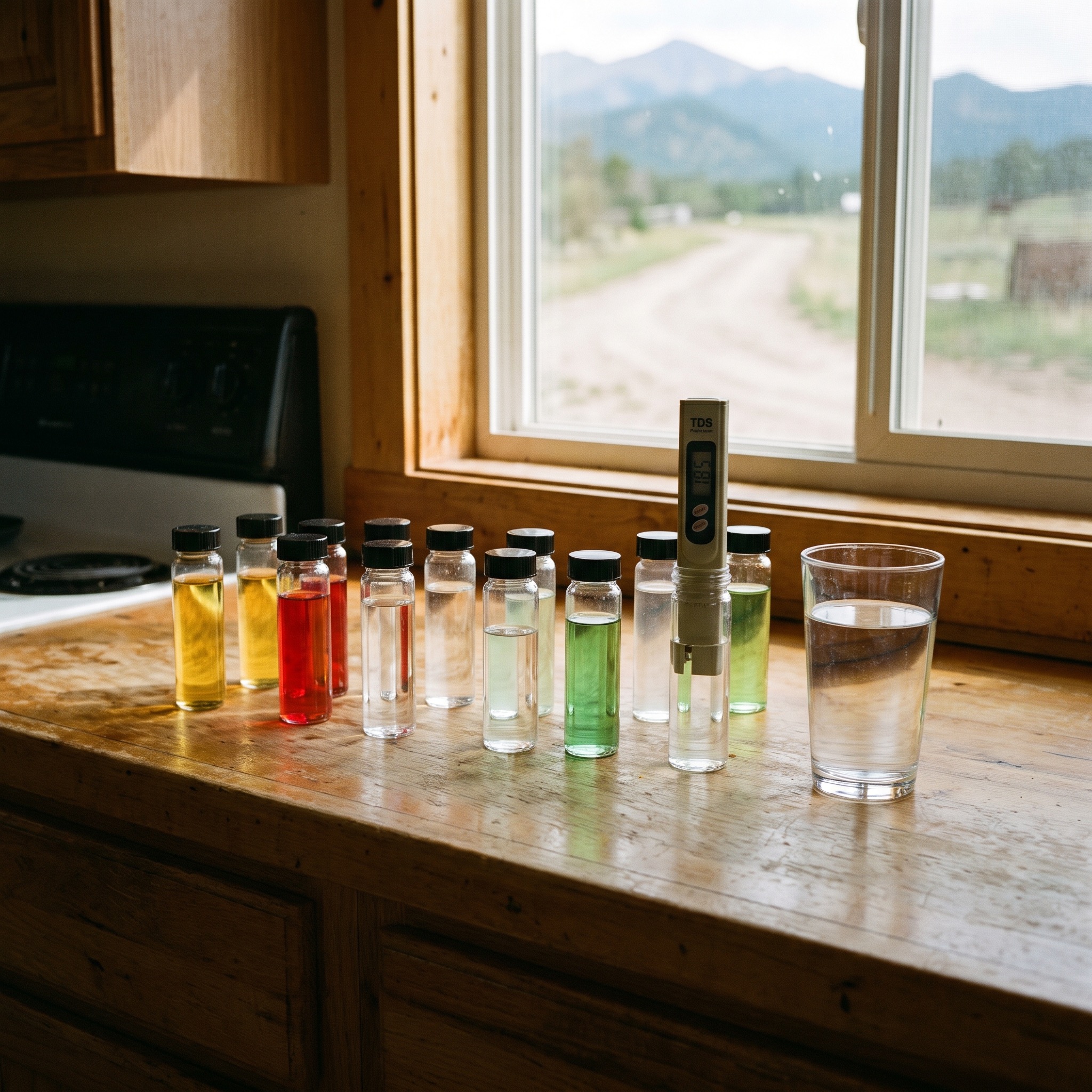
Well water can be excellent water — but it's untreated groundwater, and the only way to know what's in yours is to test it. Well water treatment in Colorado means removing iron, bacteria, nitrates, arsenic, and the minerals that stain fixtures and damage appliances. Every system we install starts with a real water test.
- Iron RemovalReduce staining minerals
- Bacteria ProtectionUV disinfection
- Odor ControlEliminate sulfur smells
The problem
Why Well Water Needs Treatment
Well water comes straight from the aquifer — no municipal treatment plant in between. As groundwater moves through soil and rock it picks up minerals, and it can absorb contaminants along the way. Unlike city water, private wells aren't regulated under the Safe Drinking Water Act — you're responsible for testing and treating your own water.
That's not a burden. It's an opportunity. Treated well water can be cleaner, softer, and better-tasting than anything from a municipal supply — but only if you know what's in it and treat accordingly.
- Iron and manganese staining
- Hydrogen sulfide (rotten egg smell)
- Hardness minerals causing scale
- Nitrates from fertilizer runoff
- Coliform bacteria and pathogens
- Naturally occurring arsenic
The contaminants
Common Well Water Contaminants in Colorado
Colorado's geology and agricultural activity create specific well water challenges. Here's what we test for and treat most often.
Iron
Causes orange and brown staining on fixtures, laundry, and dishes. Also gives water a metallic taste. Common in Colorado well water — removable with specialized iron filtration media.
Manganese
Leaves black stains on fixtures and laundry, and can cause a bitter taste. Often found alongside iron in Colorado groundwater. Removed with the same specialized media.
Hydrogen sulfide
The rotten-egg smell. Produced by sulfur-reducing bacteria in the well. Not dangerous at typical levels, but makes water unpleasant to drink and bathe in. Removed with oxidation filtration.
Hardness
Calcium and magnesium from the aquifer cause scale buildup in pipes, fixtures, and appliances. Treated with a water softener sized to your well's hardness level.
Nitrates
From fertilizer runoff in agricultural and residential areas — common in El Paso County well water (Black Forest, Falcon). EPA MCL is 10 mg/L. Dangerous for infants. Removed with nitrate-selective resin.
Bacteria & microorganisms
Coliform bacteria, E. coli, and other pathogens can enter wells through surface water, cracked casings, or sewage spills. Treated with UV disinfection or chlorination.
Arsenic
Naturally occurring in Colorado's geology — EPA MCL is 0.010 mg/L, and long-term exposure is linked to cancer. Removed with specialized arsenic adsorption media.
Radon
Colorado is classified as Zone 1 for radon — the highest risk category. This radioactive gas dissolves into groundwater and is released into the air when you shower or run water. Removed with aeration systems.
Uranium
Naturally present in Colorado's geological formations, especially the Denver Basin aquifer. Long-term exposure is linked to kidney damage. Removed with reverse osmosis or ion exchange.
PFAS
Man-made 'forever chemicals' that don't break down in the environment. Found in Colorado well water near military bases and airports from firefighting foam. Removed with activated carbon or reverse osmosis.
Sediment & turbidity
Sand, silt, and particulate matter common in wells — clogs fixtures and damages downstream equipment. Removed with sediment filtration as a first stage.
The solution
How Well Water Treatment Systems Work
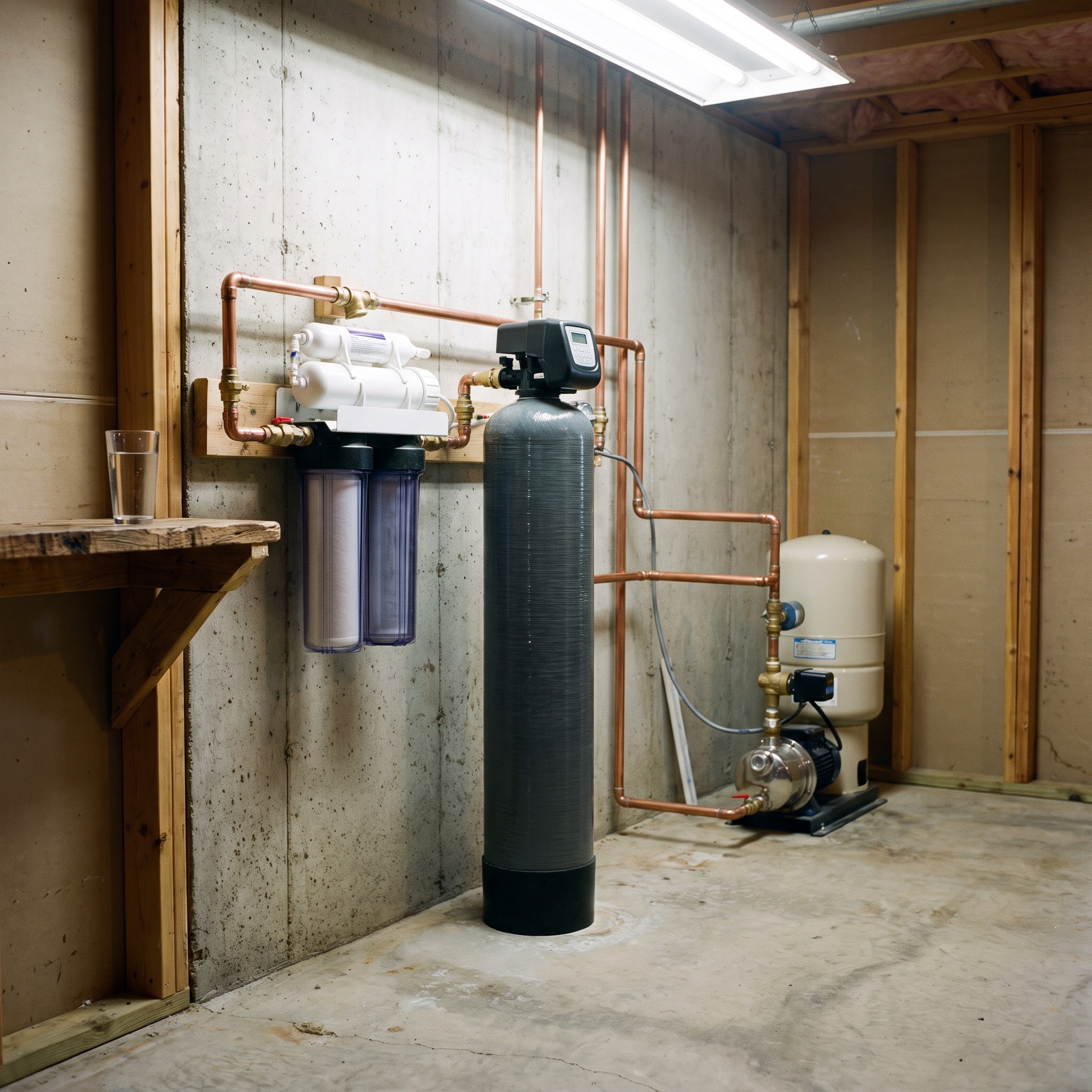
Most wells need a combination of treatment methods — what yours needs depends entirely on what the analysis finds. A typical well water filtration system might start with sediment filtration, followed by iron and manganese removal, a water softener for hardness, and UV disinfection for bacteria. If you want drinking-water-grade purity, a reverse osmosis system at the kitchen tap handles dissolved contaminants like arsenic and nitrates.
The key is that the system is designed around your water — not assembled from a catalog. We test first, then specify.
Treatment options
Types of Well Water Treatment Systems
Most well water setups combine multiple technologies — what yours needs depends on what your water test finds. Here are the three most common treatments we install for Colorado well owners, followed by additional options for specific contaminant issues.
Filtration for iron, manganese, and sediment
Water Filtration Systems
Sediment filters, activated carbon, and specialized media for iron, manganese, and hydrogen sulfide removal. This is the foundation of any well water treatment setup — the first line of defense that catches the particulates and dissolved metals that stain fixtures, clog plumbing, and affect taste and odor.
For Colorado well owners, filtration typically starts with a sediment pre-filter to catch sand and silt from the well, followed by a specialized media tank targeting iron and manganese. If your water has hydrogen sulfide (the rotten egg smell), we add catalytic carbon to the mix. The result is clear, clean water that doesn't leave orange stains on your sinks and toilets.
Softening for hard well water
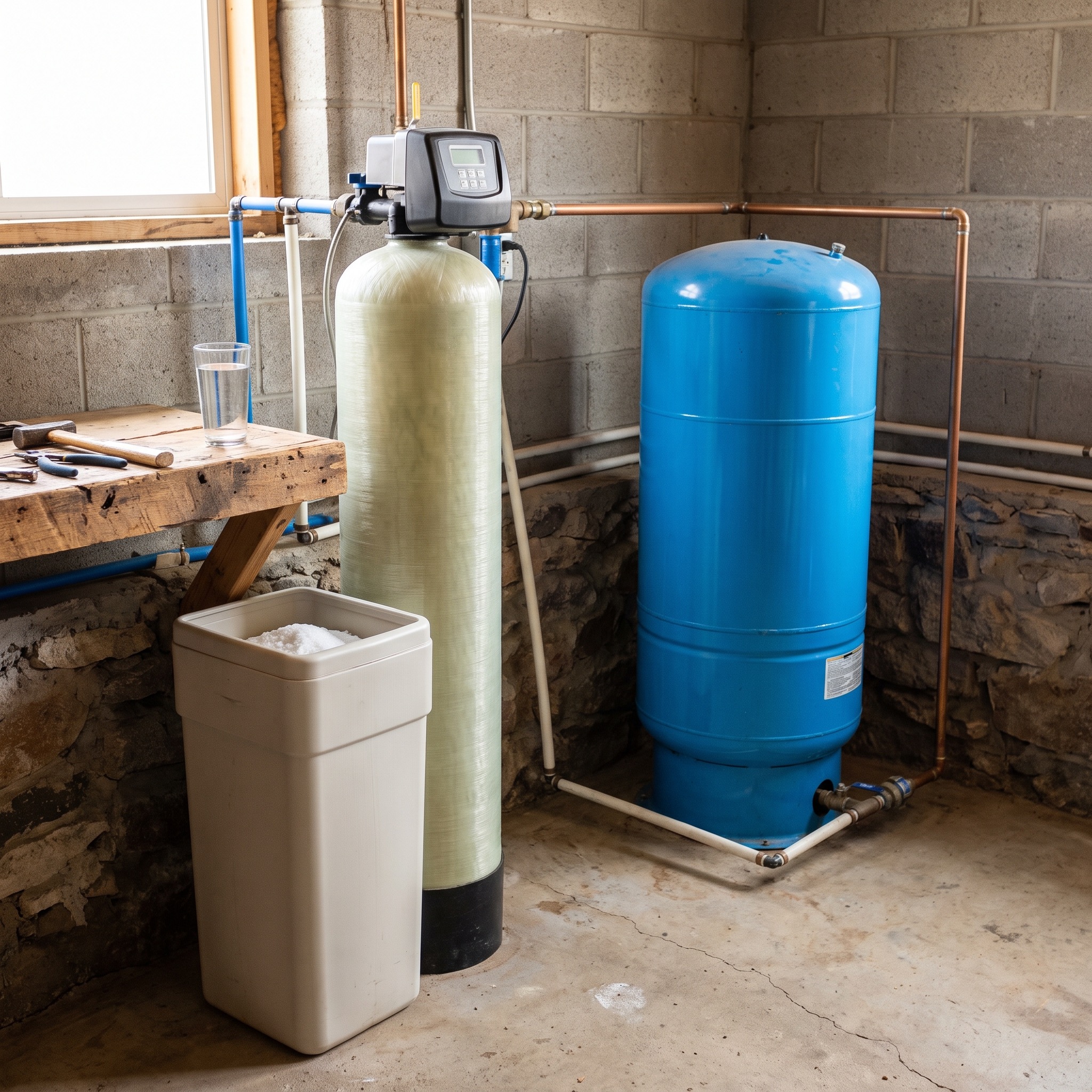
Water Softener Systems
Ion exchange removes calcium and magnesium that make well water hard — reducing scale, staining, and appliance damage. Well water in Colorado is often harder than municipal water because it picks up minerals directly from the aquifer without any treatment before it reaches your home.
A softener protects your water heater, dishwasher, washing machine, and plumbing from scale buildup. It also makes soap and detergent work better, which means you use less of them. For well owners with very hard water, a softener is usually the difference between fixtures that stay clean and fixtures that need constant scrubbing.
Bacteria and virus protection
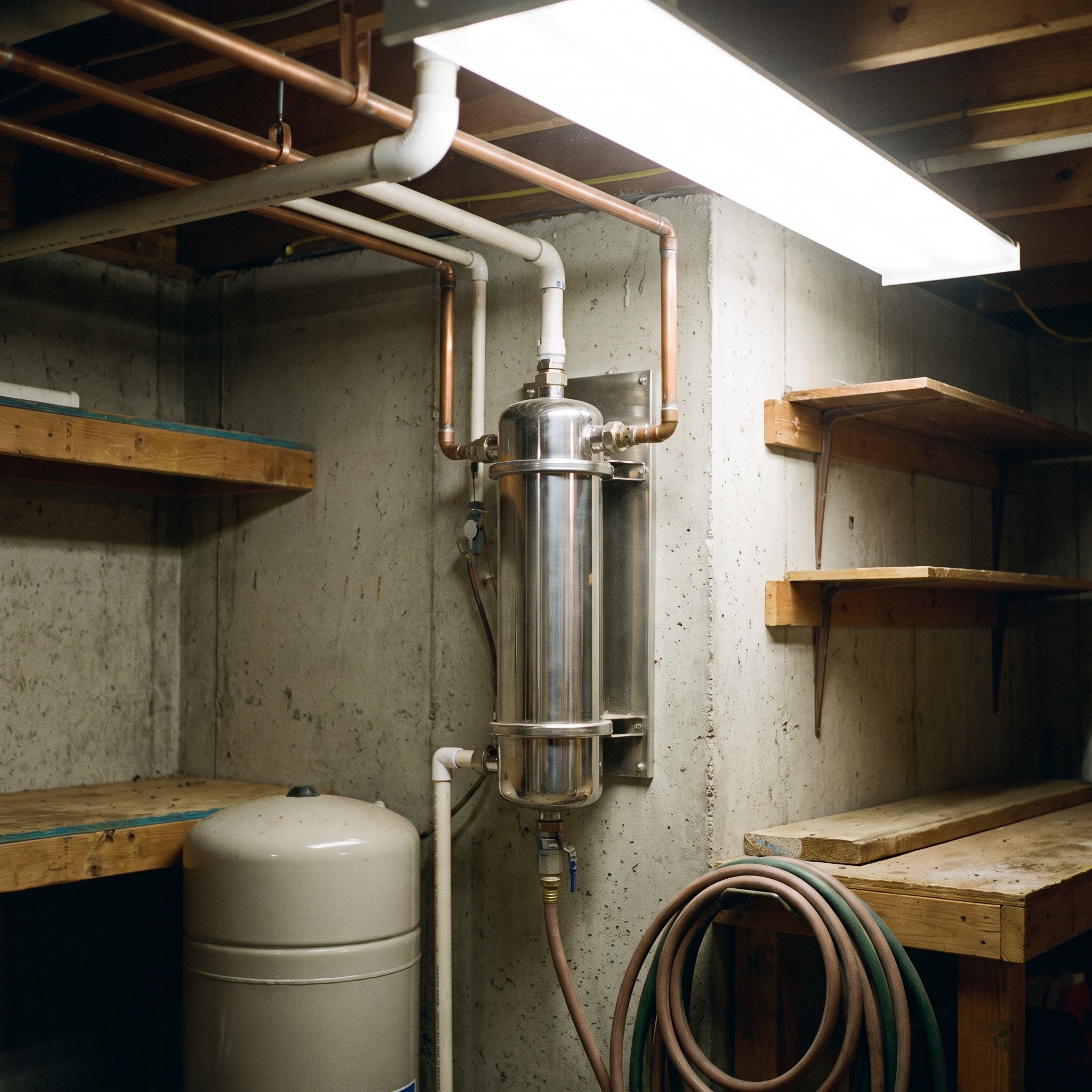
UV Disinfection
Ultraviolet light neutralizes bacteria, viruses, and other microorganisms without chemicals — critical for well water not protected by municipal disinfection. If your well water test shows coliform bacteria or E. coli, UV is the most reliable way to make it safe without adding chlorine or other chemicals.
UV doesn't leave any residual protection after the treatment point, which means it needs to be installed at the right location in your system — typically after filtration and softening but before any storage tank. The UV lamp needs annual replacement to maintain its dose, and the quartz sleeve that protects the lamp needs periodic cleaning.
Additional treatment options
More Well Water Treatment Technologies
Beyond the three most common treatments, these technologies address specific contaminant issues that some Colorado wells face.
Chlorination
Chemical disinfection that kills bacteria and provides residual protection throughout your plumbing. Used for shock disinfection after contamination events or as continuous treatment. An alternative to UV for persistent bacterial issues.
Aeration
Exposes water to air to oxidize dissolved iron, manganese, and hydrogen sulfide — converting them to solid particles that filtration removes. Also effective for removing dissolved radon gas.
Reverse osmosis
Membrane filtration removes dissolved contaminants — arsenic, nitrates, heavy metals — at the molecular level. Often installed at the kitchen tap for drinking water.
Explore reverse osmosis
Colorado areas
Where Well Water Treatment Matters Most in Colorado
Colorado's geology and history create specific well water challenges depending on where you live. Here are the areas where we see particular contaminants most often.
Denver Basin (Front Range)
Naturally occurring uranium and radon in the bedrock aquifers. Declining water levels can concentrate contaminants. Covers Denver, Aurora, Castle Rock, and the northern Front Range.
Lower Arkansas River Valley
Naturally occurring radium and selenium in groundwater. High TDS and sulfates. Southeastern Colorado — Pueblo, La Junta, Lamar.
El Paso County (Black Forest, Falcon)
Elevated nitrates from agricultural and residential fertilizer runoff. Common in shallow wells in northern El Paso County.
Southwestern Colorado
Historical uranium mining in the Uravan Mineral Belt (Mesa, Montrose, San Miguel counties). Uranium and radon in well water near old mine sites.
Park County & mountain communities
Documented PFAS contamination from firefighting foam at nearby facilities. Testing recommended for wells in proximity to military or airfield sites.
Mining districts statewide
Historical mining activity across Colorado can elevate heavy metals — lead, arsenic, cadmium — in nearby well water. Test if your well is near old mine tailings.
Well water vs. city water
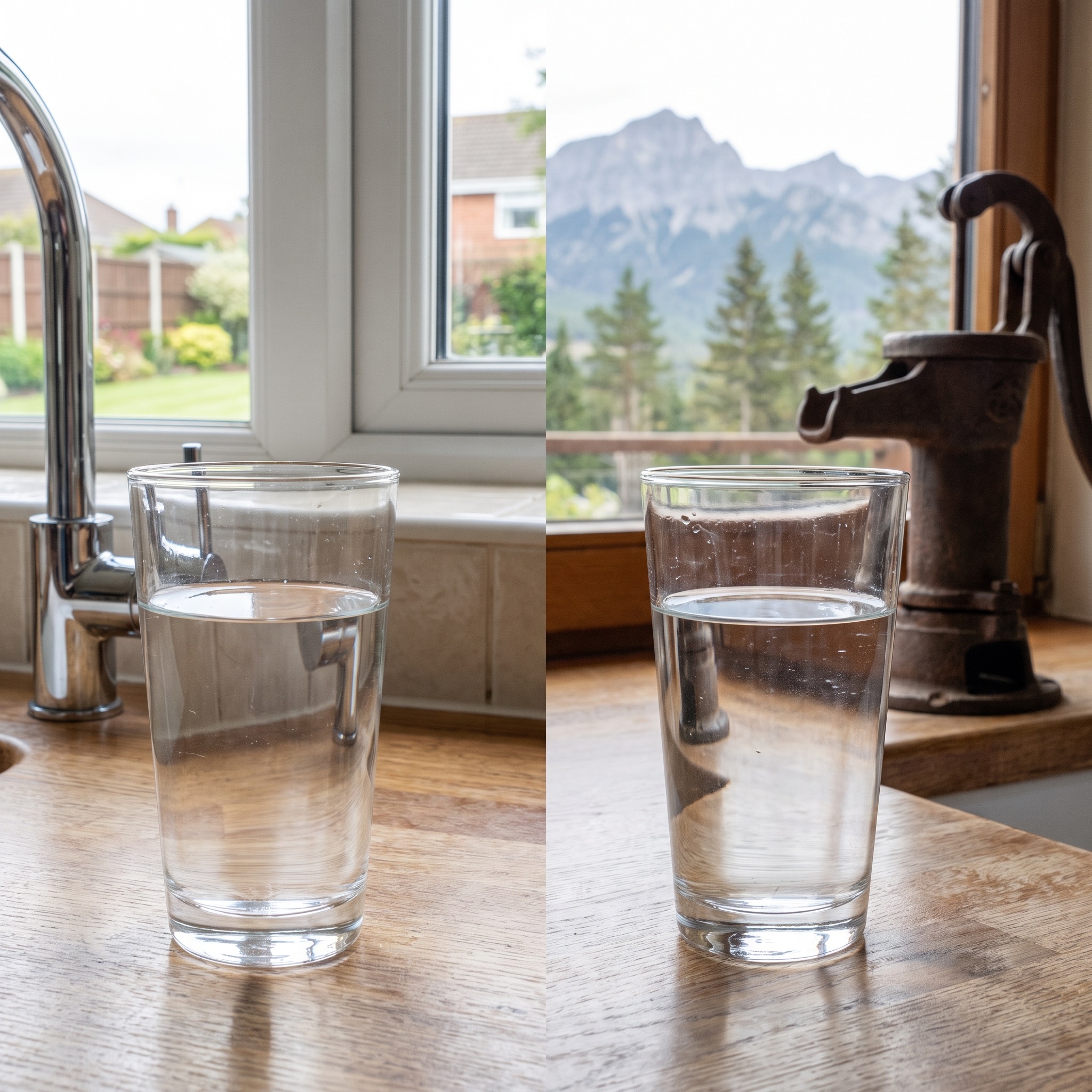
How Well Water Differs From City Water
City water is regulated by the EPA under the Safe Drinking Water Act — tested, treated, and monitored by a public utility. Well water is not. Private wells fall outside federal regulation, which means you're responsible for testing and treating your own water.
That's not a burden — it's an opportunity. Treated well water can be cleaner, softer, and better-tasting than municipal water, which picks up chlorine, disinfection byproducts, and lead from aging distribution lines on its way to your tap. But the only way to know what's in your well is to test it.
Stay ahead of it
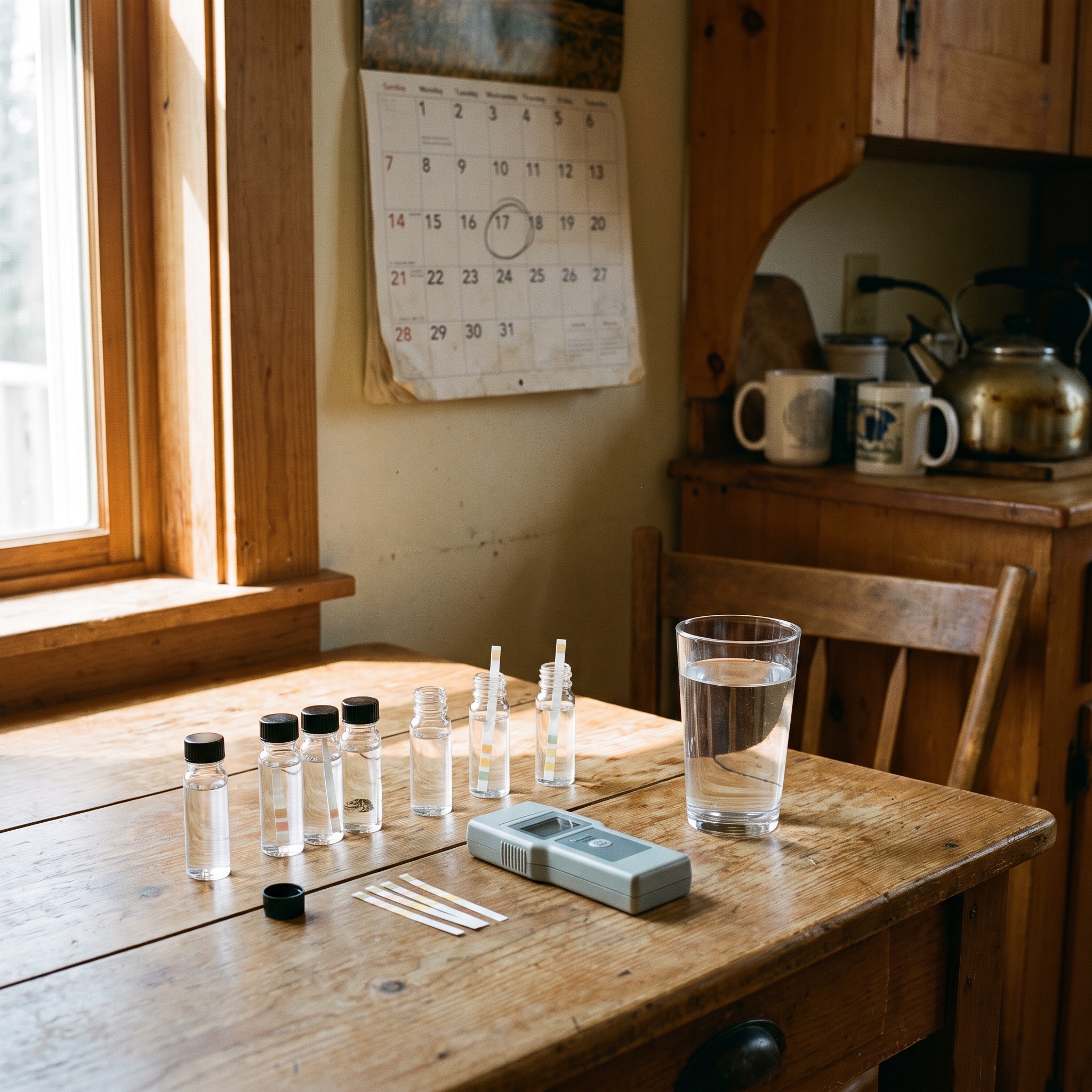
Well Water Testing Frequency
Private well water should be tested at least once each year — more often if any of these apply:
We conduct the analysis, walk you through the results, and design treatment around what your well actually needs.
- Contaminants have been detected before
- There are known water issues in your area
- Your water changes in odor, taste, or color
Our process
Well Water Treatment Installation Process
No two wells are alike, so no two systems we install are either. The analysis comes first, always.
Analyze your well water
We test your well to identify exactly which contaminants and minerals are in it — the results drive everything else. No two wells are alike.
Design the treatment
Based on the analysis and your preferences, we design a solution — point-of-use for one tap, or point-of-entry for the whole house. Most wells need a combination.
Install the system
Our technicians install the equipment and verify the treated water meets the mark at every point it's used.
Retest and maintain
Well water should be tested at least once a year. We keep your system serviced and your water verified season after season.
Resources
Well Water Treatment Spec Sheets & Equipment Data
The spec sheets below are from Aldex, Hydronix, and ResinTech — among the manufacturers we work with. All have certified performance data. Download the spec sheets below to compare removal capacities, UV specs, and media options.
- Iron & Manganese Removal Spec SheetAldex CR26 resin for iron, manganese, hydrogen sulfide, and arsenic removal — capacity, flow rates, and operating specs for well water.
- Nitrate Removal Resin Spec SheetAldex NSR nitrate-selective resin — designed for well water with elevated nitrate levels from agricultural runoff.
- UV Disinfection Spec SheetHydronix UV system specifications for well water — bacteria and virus inactivation rates, flow capacity, and lamp life.
- Arsenic Removal Spec SheetResinTech ASM-10HP arsenic removal media — application bulletin for well water with naturally occurring arsenic.
Well Water Treatment FAQs
Is well water safe to drink?
Yes — as long as you know it's safe. There's nothing wrong with drinking well water that's been tested and, where needed, treated. Families across rural Colorado do it every day. The risk is in not knowing. Contaminated well water can cause gastrointestinal illness and, over time, more serious harm — which is why treatment decisions should always start from a real analysis of your well.
What contaminants are most common in Colorado well water?
The most common well water contaminants in Colorado are iron and manganese (staining), hydrogen sulfide (rotten-egg smell), hardness minerals, nitrates from fertilizer runoff (especially in El Paso County), coliform bacteria, and naturally occurring arsenic. The only way to know what's in your well is a water test.
How often should I test my well water?
Private well water should be tested at least once each year. Test more often if contaminants have been detected before, if there are known water issues in your area, or if your water changes in smell, taste, or color. The CDC recommends annual testing for coliform bacteria, nitrates, total dissolved solids, and pH.
What's the difference between point-of-use and point-of-entry treatment?
Point-of-use (POU) systems treat water at a single location, like the kitchen tap — typically for drinking and cooking. Point-of-entry (POE) systems treat all the water entering your home, so every tap, shower, and appliance gets treated water. Which is right depends on what's in your water and how you use it. Most well water setups use POE for whole-house filtration and POU for drinking-water RO.
How much does well water treatment cost in Colorado?
It depends entirely on what your water test finds. A basic sediment filter and softener might run $1,500–$3,000, while a comprehensive system with iron removal, UV disinfection, and RO for drinking water could be $4,000–$8,000+. The only honest answer comes after a water test — we'll explain exactly what you need and why.
Can you treat well water with high iron content?
Yes. Iron is one of the most common well water problems in Colorado. We use specialized iron removal media (like Aldex CR26 resin) that handles both dissolved and oxidized iron. The system is sized to your iron level and water volume, and the media is backwashed automatically to keep it performing.
What about well water that smells like rotten eggs?
That's hydrogen sulfide — produced by sulfur-reducing bacteria in the well. It's not dangerous at typical levels, but it makes water unpleasant to drink and bathe in. We treat it with oxidation filtration (air injection or chlorine injection followed by carbon filtration) that converts the dissolved gas to a solid particle and filters it out.
Does well water need to be disinfected?
If your water test shows coliform bacteria or other microorganisms, yes. UV disinfection is the most common residential approach — it neutralizes bacteria and viruses without adding chemicals to your water. Chlorination is an alternative for wells with persistent bacterial contamination. We recommend annual testing to determine if disinfection is needed.
From the blog
Well Water Treatment Articles

Water Works can be accessed at one of our four convenient locations:
Denver Metro:
Northern Colorado:
Colorado Springs Metro:
Pueblo and S Colorado:
Know What's in Your Well
Schedule a well water analysis with any of our four regional offices. We'll identify what's in your water and design a treatment system around the results — and your preferences.
Get a quote- Denver Metro(303) 248-3390
- Northern Colorado(970) 381-4493
- Colorado Springs Metro(719) 694-2650
- Pueblo & S Colorado(719) 836-8118