
 Pfas Removal
Residential & Commercial · Drinking water
PFAS Removal in Colorado
PFAS — the 'forever chemicals' used in everything from nonstick coatings to firefighting foam — have been detected in drinking water sources across Colorado. They don't break down in the environment or in the human body. Water Works designs and installs residential and commercial filtration systems that bring PFAS levels below detection.
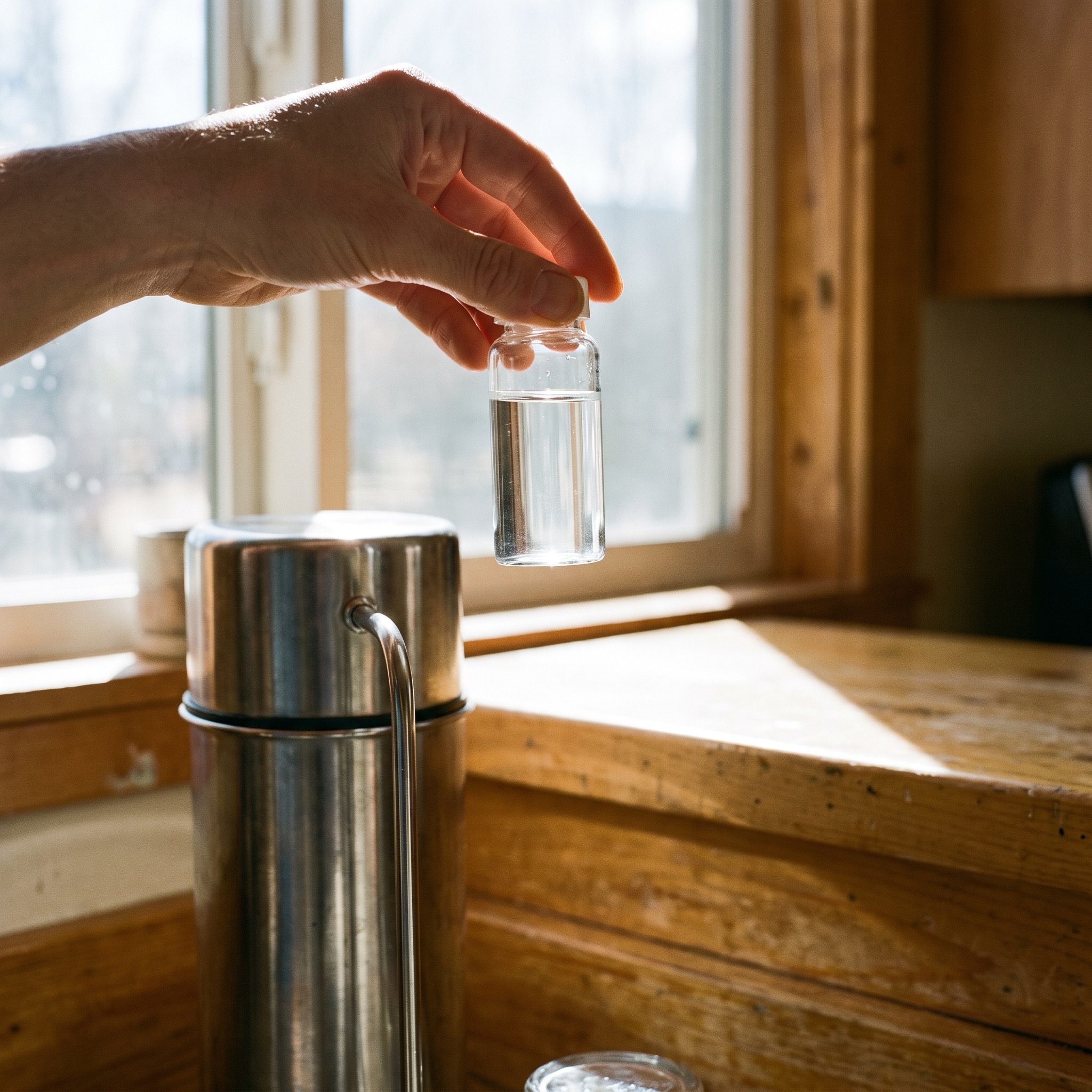
- Forever ChemicalReduce PFAS exposure
- Advanced FiltrationTarget harmful contaminants
- Safer DrinkingCleaner, healthier water

The contaminant
What PFAS Is and Why It's in Your Water
PFAS is a class of more than 12,000 human-made chemicals used since the 1940s for their water-, stain-, and heat-resistant properties. They're in nonstick cookware, waterproof clothing, food packaging, and firefighting foam. The same properties that make them useful in products make them nearly impossible to break down once they're in the environment — which is how they end up in source water, drinking water, soil, and people. Effective PFAS removal in Colorado requires filtration specifically designed for these compounds.
Colorado has documented PFAS detections in both municipal supplies and private wells, with particular concern in Southern Colorado. PFAS removal starts with knowing what's in your water. The most common sources are:
- Industrial discharges into waterways and wastewater
- AFFF firefighting foam near military bases, airports, and training sites
- Landfill leachate and biosolids applied to agricultural land
- Breakdown of consumer products that contain PFAS compounds
Why it matters
Health Effects of PFAS Exposure
The health effects of PFAS are still being studied, but the evidence has grown substantially. Most of the concern is around long-term, low-level exposure — the kind that builds up over years of drinking contaminated water.
Immune system impact
PFAS exposure has been linked to reduced antibody response — including lower effectiveness of vaccines in people with elevated blood levels.
Liver and kidney effects
Long-term exposure is associated with elevated liver enzymes and measurable changes in kidney function over time.
Hormonal disruption
Several PFAS compounds interfere with thyroid and reproductive hormone regulation, even at low exposure levels.
Cancer risk
Some PFAS — including PFOA — are classified as likely carcinogens, with links to kidney and testicular cancer in particular.
Developmental effects
Prenatal and early-childhood exposure is associated with lower birth weight and developmental delays in infants and children.
Bioaccumulation
PFAS don't break down easily in the environment — or in the human body. They accumulate over time, which is what makes ongoing exposure a concern.

The regulations
EPA PFAS Drinking Water Standards
In April 2024, the EPA finalized the first-ever national drinking water standards for PFAS. The rule sets enforceable maximum contaminant levels (MCLs) for six individual PFAS compounds and a hazard index for combined exposure. Public water systems must complete initial monitoring by 2027.
For private wells, the standards don't apply directly — but the same targets are a sensible benchmark for what your home system should achieve. If your water test shows PFAS above these levels, treatment is warranted.
MCLs
PFAS Maximum Contaminant Levels
The EPA's enforceable limits for PFAS in drinking water, finalized April 2024. These are the benchmarks we design treatment systems around.
PFOA — 4.0 ppt
Enforceable maximum contaminant level. Linked to cardiovascular, immune, and liver effects; kidney and testicular cancer.
PFOS — 4.0 ppt
Enforceable maximum contaminant level. Linked to liver cancer, developmental effects, and immune system impact.
GenX (HFPO-DA) — 10 ppt
Enforceable MCL. Immune, liver, and kidney effects; potential cancer concern.
PFHxS — 10 ppt
Enforceable MCL. Immune, thyroid, and liver effects; developmental effects.
PFNA — 10 ppt
Enforceable MCL. Elevated cholesterol; immune and liver effects.
Hazard Index
Unitless risk measure for combined low-level exposure to GenX, PFBS, PFHxS, and PFNA. MCL of 1.0.
The solution
Reverse Osmosis for PFAS Removal
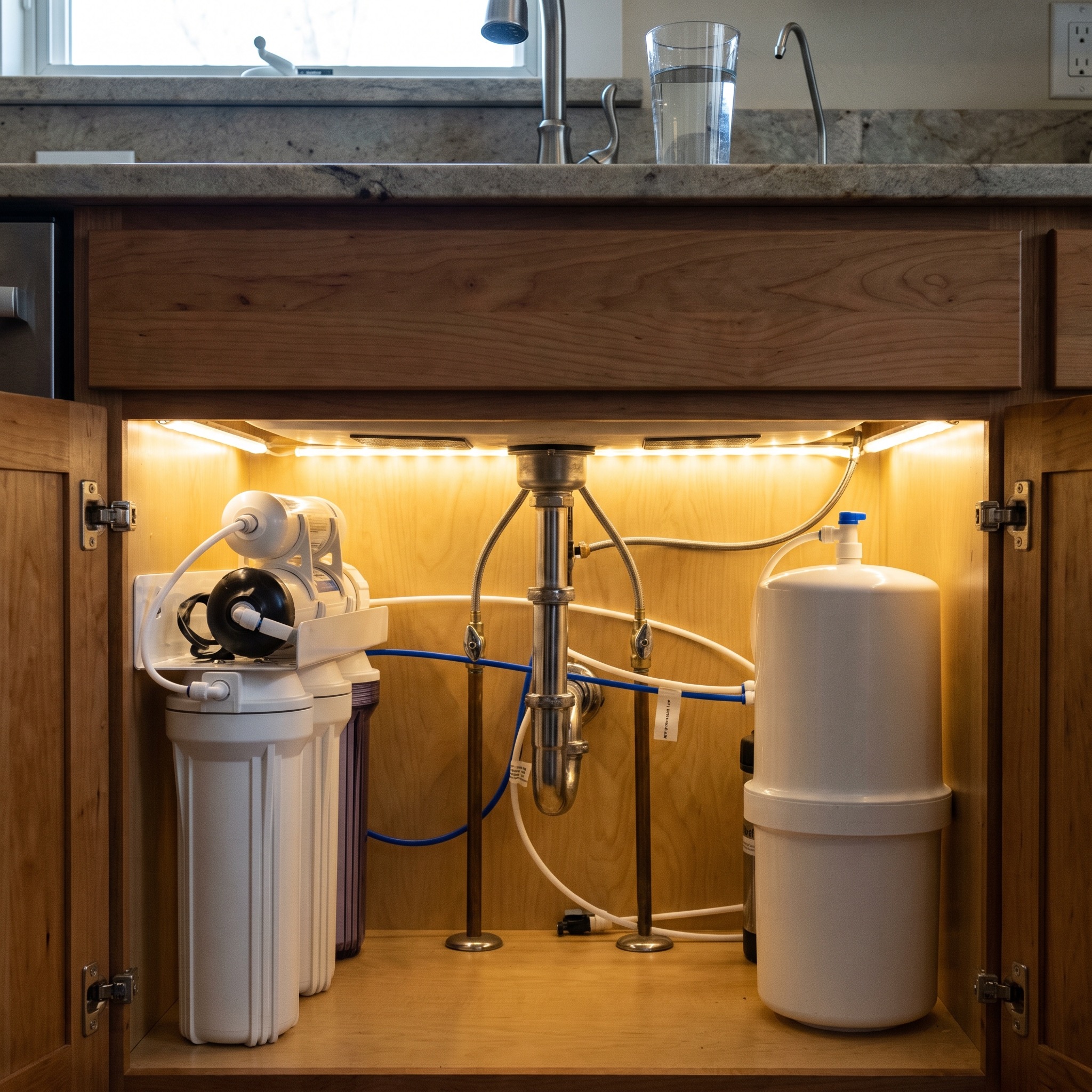
For most homes dealing with PFAS removal in Colorado, reverse osmosis is the right answer. A semi-permeable membrane blocks PFAS compounds — along with the rest of the long list of dissolved contaminants RO is known for — at the molecular level. Properly specified, an RO system will bring total PFAS below the EPA's drinking water standards and often below laboratory detection limits entirely.
The standard setup uses a pre-filter to protect the membrane, the membrane itself to do the work, and a post-filter to polish taste. For homes with higher PFAS levels, we add a carbon pre-stage to extend membrane life.
- Pre-filter removes sediment and chlorine that can foul the membrane
- RO membrane blocks PFAS compounds at the molecular level
- Post-filter polishes taste and removes any residual carry-through
- Often brings total PFAS below lab detection limits
The options
Filtration Methods That Target PFAS
Reverse osmosis is the gold standard for PFAS removal, but other technologies can also reduce PFAS — especially when they're specified and tested against your specific water.
Reverse osmosis
The most effective residential option. The semi-permeable membrane blocks PFAS compounds at the molecular level, often bringing levels below detection.
Explore reverse osmosisGranular activated carbon (GAC)
Adsorbs many PFAS compounds onto the carbon surface. Effective for some compounds, less so for the shorter-chain PFAS that newer formulations use.
Ion exchange
Exchanges PFAS ions for less harmful ones in the water stream. Effective against several common PFAS compounds, but media needs regular replacement.
Activated alumina
Adsorptive media that captures PFAS on the alumina surface. Has a limited service life and is more commonly specified as a polishing stage than a primary filter.
Our process
From PFAS Test to Filtered Water
PFAS removal only works when the system is specified against what's actually in your water. We start with the test, not the catalog.
Test for PFAS specifically
PFAS isn't part of a standard water test — it has to be ordered separately. We arrange the right panel for your supply and walk through the results with you.
Specify to the result
Different PFAS compounds respond to different filters. We size the system — usually RO, sometimes with carbon pre- and post-stages — to the compounds your water actually contains.
Install and verify
Our technicians install the system, plumb the drain and faucet where needed, and verify treated water at the tap before the job is done.
Retest on a schedule
PFAS levels can shift over time as source water changes. We recommend annual retesting, and we keep your system serviced so the filtration stays on spec.
Resources
PFAS Removal Spec Sheets & Performance Data
The spec sheets below are from Calgon Carbon and AXEON — among the manufacturers we work with. Download to compare carbon adsorption capacity, RO rejection rates, and filter specifications.
- Activated Carbon Data SheetCalgon Carbon Filtrasorb 400 data sheet — adsorption capacity and performance data for PFAS removal with granular activated carbon.
- Activated Carbon Spec SheetCalgon Carbon Filtrasorb 400 spec sheet — technical specifications, flow rates, and bed depth requirements for PFAS treatment.
- RO Membrane Rejection RatesAXEON RO membrane ion rejection rates — contaminant-specific rejection data including PFAS compounds and dissolved chemicals.
- Carbon Filter Spec SheetCalgon Carbon WPC15 spec sheet — point-of-use carbon filter specifications for chlorine and PFAS reduction at the tap.
PFAS Removal FAQs
What exactly is PFAS?
PFAS stands for per- and polyfluoroalkyl substances — a large group of human-made chemicals used since the 1940s for their water-, stain-, and heat-resistant properties. The most studied are PFOA and PFOS, but the category includes thousands of related compounds. They're sometimes called 'forever chemicals' because they don't break down easily in the environment — or in the human body.
How does PFAS get into Colorado drinking water?
PFAS reaches drinking water through industrial discharges, wastewater outflow, firefighting foam (especially near military bases and airports), and the breakdown of products that contain them. Colorado has documented PFAS detections in both municipal supplies and private wells across multiple watersheds, with particular concern in Southern Colorado.
How do I know if my water has PFAS?
PFAS isn't part of a standard water quality test — it has to be requested specifically. We arrange a PFAS panel through a certified lab, which tests for the most common compounds (PFOA, PFOS, GenX, and others) down to parts-per-trillion levels. If you live near a known contamination source or use well water near industrial or agricultural land, testing is a sensible precaution.
Which filter actually removes PFAS?
Reverse osmosis is the most effective residential option — it brings most PFAS compounds below detection. Activated carbon (especially in tank-style GAC filters) is the second-most effective, with stronger performance against long-chain PFAS. NSF/ANSI 53 or 58 certified systems are what to look for if you want a tested-and-verified claim.
Does a pitcher filter remove PFAS?
Most pitcher filters are not certified for PFAS reduction, and the ones that are have limited effectiveness — particularly against shorter-chain PFAS compounds. For meaningful PFAS reduction, point-of-use RO or a certified carbon block system is the more reliable answer.
What are the EPA's PFAS regulations?
The EPA finalized the first national PFAS drinking water standards in April 2024, setting enforceable maximum contaminant levels of 4.0 parts per trillion for both PFOA and PFOS. The EPA's PFAS regulation page outlines the full standard, including limits for GenX, PFHxS, PFNA, and a hazard index for combined exposure. Public water systems must complete initial monitoring by 2027.
Are there health effects from PFAS exposure?
Yes. The CDC/ATSDR has documented associations between PFAS exposure and immune system effects, liver and kidney changes, hormonal disruption, developmental effects, and certain cancers. Most of the concern is around long-term, low-level exposure — the kind that builds up over years of drinking contaminated water.
Does boiling water remove PFAS?
No — boiling water does not remove PFAS. In fact, boiling can slightly concentrate PFAS because water evaporates while the chemicals remain. PFAS removal requires filtration — specifically reverse osmosis, activated carbon, or ion exchange media designed and certified for PFAS reduction. No amount of boiling, freezing, or letting water sit will reduce PFAS levels.
How often should I test for PFAS?
We recommend annual PFAS testing if you're on a private well or live near a known contamination source. For municipal water customers, the utility is now required to test and report PFAS levels — but if you want to verify what's coming out of your specific tap, an independent test is the only way to know for sure.
Can PFAS be removed from the whole house or just the kitchen tap?
Whole-house PFAS removal is possible but significantly more expensive than point-of-use treatment. Most homeowners choose an under-sink RO system at the kitchen tap — that's where nearly all drinking and cooking water comes from. If you want whole-house treatment, we can design a system, but the cost and maintenance are substantially higher.


Water Works can be accessed at one of our four convenient locations:
Denver Metro:
Northern Colorado:
Colorado Springs Metro:
Pueblo and S Colorado:
Find out what's in your water
If you live near a known PFAS source, draw from a private well, or just want to verify your municipal supply, Water Works can arrange the right test panel and design a system around the results. We handle testing, installation, and ongoing service across Colorado.
Get a quote- Denver Metro(303) 248-3390
- Northern Colorado(970) 381-4493
- Colorado Springs Metro(719) 694-2650
- Pueblo & S Colorado(719) 836-8118