 Residential Water Softeners
Residential & Commercial · Service
Water Filtration Maintenance & Repair in Colorado
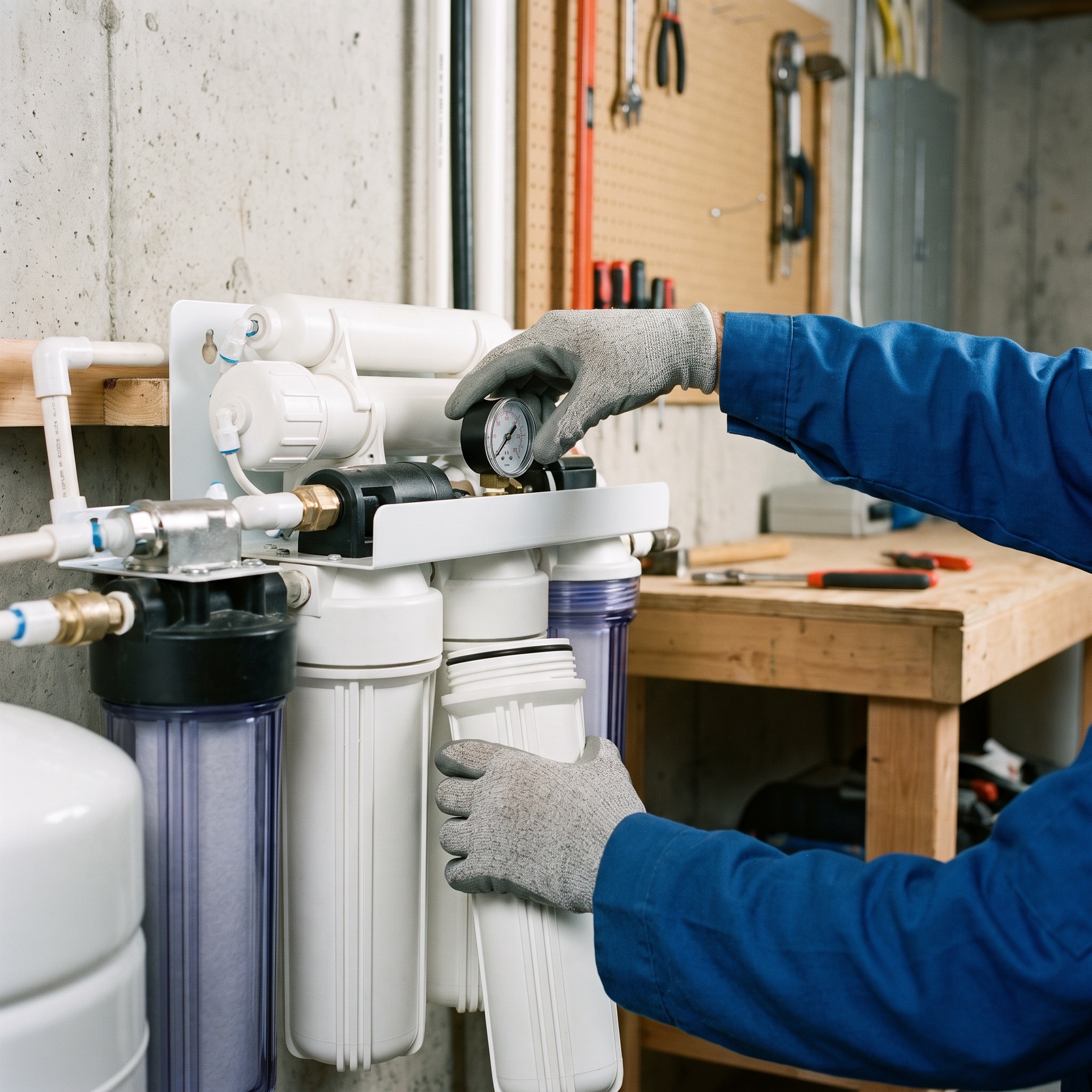
Water filtration maintenance keeps residential and commercial systems performing the way they were designed to. Water Works provides maintenance, repair, and diagnostic services across Colorado — for systems we installed and systems we didn't.
- Peak PerformanceKeep systems efficient
- Expert ServiceFast professional repairs
- Extended LifespanProtect your investment
Why it matters
Why Water Filtration Maintenance Matters
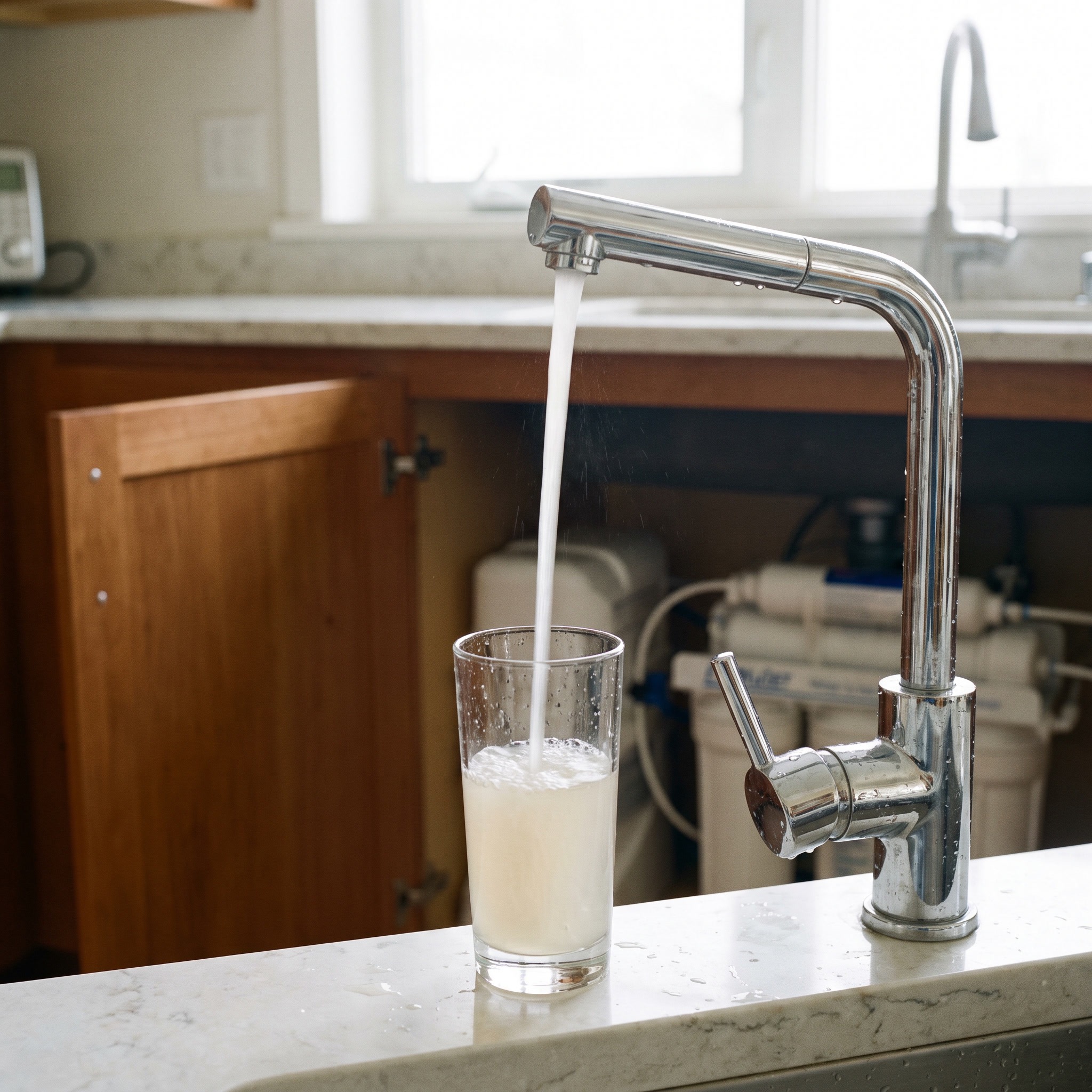
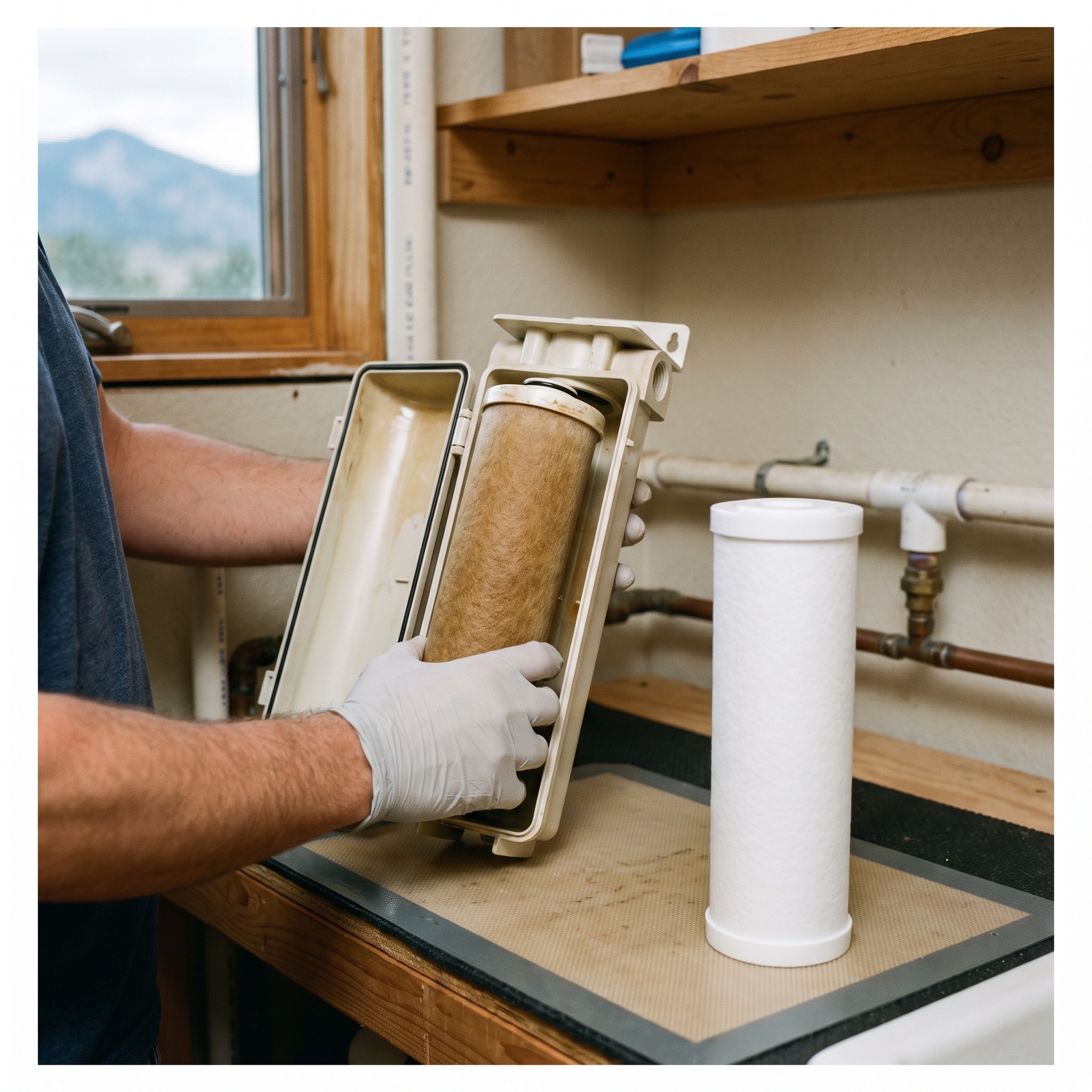
Water filtration systems are easy to forget about — they sit in a basement, under a sink, or beside a water heater and do their job without complaint. But like anything mechanical, they need regular attention. Filters load up, membranes foul, valves wear, and seals dry out. A system that's overdue for water filtration maintenance usually doesn't announce it loudly — it just slowly stops doing what it was designed to do.
The EPA's home drinking water filtration fact sheet recommends regular maintenance — including filter replacement on the manufacturer's schedule — to keep treatment systems performing effectively. Skipping maintenance doesn't just reduce water quality; it can allow contaminants to pass through a filter that's no longer doing its job.
- Catch small issues before they become expensive repairs
- Keep water quality consistent over the life of the system
- Extend the lifespan of filters, membranes, and tanks
- Protect appliances downstream from mineral and sediment damage
Warning signs
Signs Your Water System Needs Service
Most water system problems announce themselves in small ways first. Any of these is worth a service call before the underlying issue gets worse.
Drop in water pressure
A noticeable drop in flow usually means a clogged filter, fouled membrane, or sediment buildup inside the system.
Off taste or smell
Water that suddenly tastes flat, metallic, or carries a chlorine bite means a filter has reached the end of its life and needs swapping.
Discoloration or particles
Cloudy water, black flecks, or floating sediment point to a filter that's no longer catching what it's supposed to.
Unusual noises
Hissing, banging, or gurgling from the system or drains often signals a valve, pump, or pressure issue worth a service call.
Leaking RO membrane or fittings
Visible drips around the membrane housing, fittings, or storage tank mean seals need attention before bigger damage sets in.
Water that goes off after a few seconds
RO faucets that trickle and stop are usually a sign of low tank pressure, a clogged post-filter, or a membrane past its service life.
What we cover
Service Across All Major Water System Brands
Water Works provides water filtration maintenance in Colorado across all major brands — the ones we install, the ones put in by builders, and the ones inherited from a previous owner. If it's plumbed into your water supply, we can usually diagnose and service it.
- Residential and commercial water filtration
- Reverse osmosis systems of any brand
- Water softeners — salt-based and salt-free
- Whole-house, point-of-use, and under-sink filters
- Well water treatment systems
What we do
What a Service Visit Covers
Routine inspections
Scheduled checkups to verify water quality, pressure, and system performance — and catch small issues before they become big ones.
Filter and cartridge replacement
On-schedule swaps for pre-filters, post-filters, carbon, sediment, and specialty media — manufacturer-recommended intervals.
Reverse osmosis service
Membrane replacement, tank pressure checks, faucet and drain line inspection, and full system sanitization on RO systems of any brand.
Explore RO systemsWater softener service
Salt top-offs, resin cleaning, valve and brine tank checks, and full system rebuilds when components wear out.
Explore water softenersDiagnostic and repair visits
When something's off and you can't tell why — pressure drops, leaks, taste changes, error codes. We diagnose and fix in one trip when we can.
Water testing and analysis
Periodic water tests to confirm the system is still doing its job — and to flag new contaminants that might warrant a system change.
Replacement schedule
Water Filter Replacement Schedule
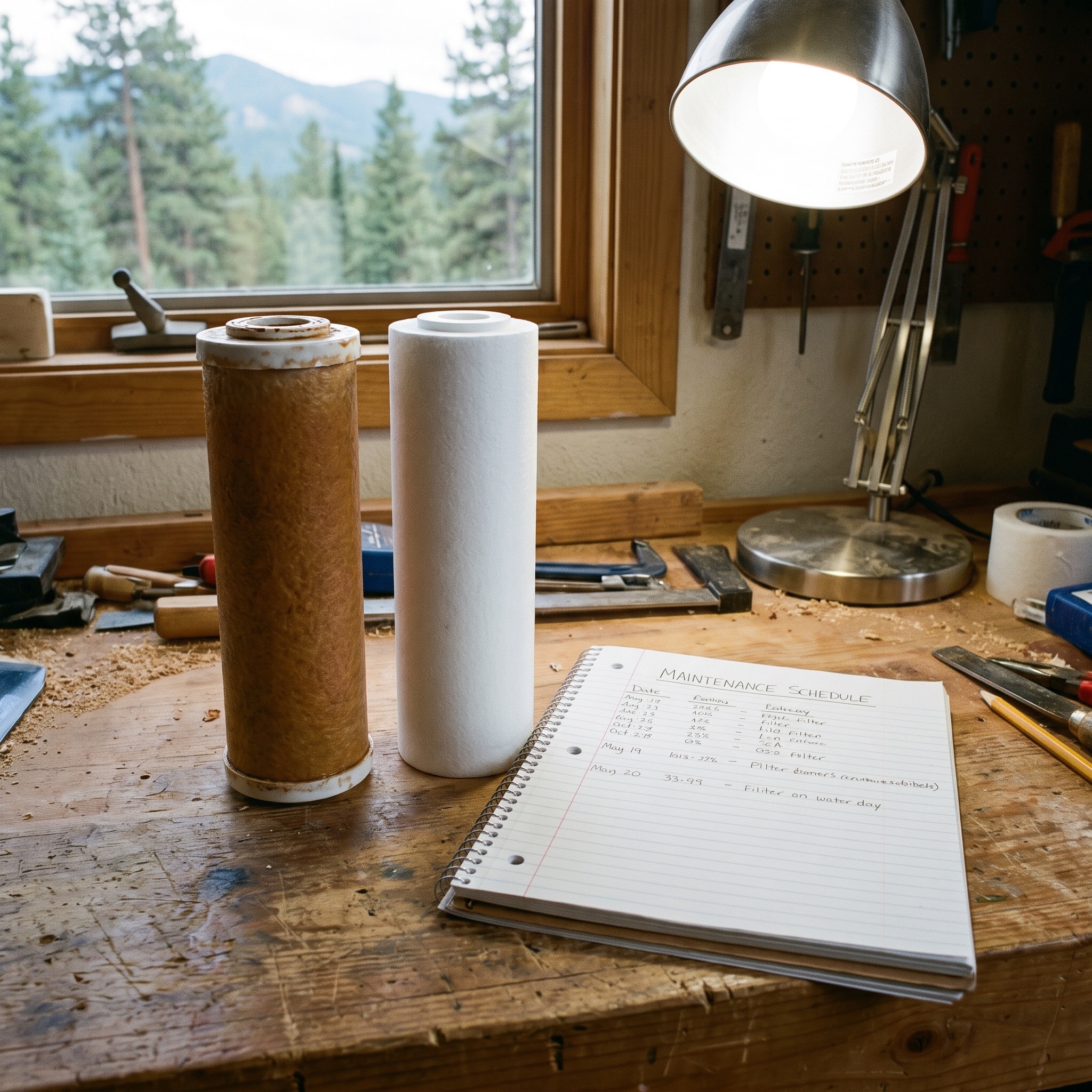
Different filter media have different lifespans. Sediment filters catch the most material and load up fastest. Carbon filters lose adsorption capacity gradually. RO membranes foul slowly but are the most expensive to replace. Staying ahead of the replacement schedule protects every downstream component — and keeps your water quality consistent. This is the core of water filtration maintenance: catching each component before it fails.
Here's the general schedule for the most common filter types. Your actual intervals depend on your water quality and daily usage — we'll give you the exact schedule for your system after the first inspection.
| Component | Replacement Interval | Why It Matters |
|---|---|---|
| Sediment pre-filters | Every 3-6 months | These capture sand, silt, and rust before they reach finer filters. The first to load up because they catch the most material. |
| Carbon filters | Every 6-12 months | Activated carbon loses adsorption capacity over time. Once it's saturated, chlorine and taste/odor compounds pass through. |
| RO membranes | Every 2-5 years | Membranes foul gradually as dissolved solids accumulate. Pre-filter changes extend membrane life significantly. |
| UV lamps | Annually | UV lamps lose output intensity over time even when they still appear lit. After 12 months, the dose may not be enough to neutralize microorganisms. |
| Water softener resin | Every 10-15 years | Resin beads lose capacity over time through chlorine damage and iron fouling. We test resin condition during annual inspections. |
| Salt / brine tank | Salt topped up monthly; tank cleaned annually | Brine tank cleaned annually to remove sludge and salt bridges that block regeneration. |
Our process
From First Call to Verified Working Water
Most service calls follow the same arc. The one constant is that you hear from us when we say we will, and the water is right before we leave.
Call or schedule online
Tell us the system, the symptoms, and when you're available. For routine service, we set a recurring schedule so you don't have to remember.
Diagnose on-site
A technician comes out, inspects the system, checks pressure and water quality, and identifies what's failing or about to.
Repair or replace
We complete the work on the spot when possible — filter swaps, valve rebuilds, minor repairs. Bigger jobs get a clear quote before any work starts.
Verify and follow up
We confirm water quality at the tap before we leave, and we keep your service history on file so next time is even faster.
Resources
Maintenance Spec Sheets & Service Documents
The documents below are from AXEON and Clack — among the manufacturers we work with. Download for troubleshooting guides, operating logs, valve service manuals, and warranty terms.
- RO Membrane Troubleshooting MatrixAXEON RO membrane troubleshooting guide — diagnostic reference for pressure drops, low rejection, and membrane performance issues.
- RO System Operating LogAXEON RO system operating log template — track pressure, flow, and performance readings between service visits.
- Softener Valve Service ManualClack WS1/WS1.25 valve service manual — rebuild procedures, parts reference, and troubleshooting for water softener valves.
- System WarrantyAXEON system warranty documentation — coverage terms, conditions, and service requirements for maintaining warranty validity.
Maintenance & Repair FAQs
How often should I have my water system serviced?
It depends on the system, but most residential setups benefit from an annual inspection. Filters are swapped on a tighter schedule — typically every 3-6 months for sediment pre-filters, 6-12 months for carbon filters, and every 2-5 years for RO membranes. We keep the schedule on file and remind you.
Do you service systems you didn't install?
Yes. Most of our service work is on systems put in by someone else — a previous homeowner, a builder, or another company. We diagnose, repair, and maintain water filtration, softening, and RO systems from every major manufacturer.
What if I don't know what system I have?
That's more common than you'd think. Send us a photo when you schedule and we'll identify it from the photo. If we can't, a tech will identify it on the first visit.
How long does a typical service visit take?
Most routine filter swaps and inspections take under an hour. Diagnostic visits and repairs vary — a leaking fitting is a 20-minute fix, a full system rebuild can take half a day. We give you a realistic window when you book.
Can regular maintenance save money?
Yes, usually. Filters changed on schedule keep the system running at spec, which means appliances downstream last longer, water quality stays consistent, and you're not paying emergency rates for a repair that would've been a routine filter swap if caught early. A pre-filter that costs a few dollars protects an RO membrane that costs hundreds. That's the value of water filtration maintenance — small investments that prevent expensive failures.
Do you offer service plans?
Yes. We set up recurring annual or semi-annual service for residential and commercial customers, with the filters and labor bundled into a predictable annual cost. It's the easiest way to keep a system healthy without having to track the schedule yourself.
What happens if I skip filter replacements?
The system doesn't stop working — it just loses effectiveness gradually. A clogged sediment filter reduces water pressure. A saturated carbon filter stops removing chlorine. A fouled RO membrane lets contaminants through. No damage occurs immediately, but water quality declines and downstream components work harder, shortening their life.
How do I know if my RO membrane needs replacing?
The signs are gradual — slower water production, lower tank pressure, and a change in taste. But the most reliable check is a TDS (total dissolved solids) reading at the tap. If the TDS reading starts climbing, the membrane is losing rejection capacity. We test this during every RO service visit and tell you before it becomes a problem.
Can you service commercial water systems?
Yes — we service commercial RO, softening, and filtration systems across Colorado. Commercial systems have higher flow rates, larger media volumes, and tighter maintenance schedules. Learn more about our commercial water purification services.
From the blog
Maintenance & Repair Articles

Water Works can be accessed at one of our four convenient locations:
Denver Metro:
Northern Colorado:
Colorado Springs Metro:
Pueblo and S Colorado:
Get your water system back to spec
Whether it's a filter swap, a softener that's stopped regenerating, an RO system with low pressure, or a system you inherited and want assessed — Water Works handles water filtration maintenance and repair across Colorado. Call any of our four regional offices to schedule a visit.
Get a quote- Denver Metro(303) 248-3390
- Northern Colorado(970) 381-4493
- Colorado Springs Metro(719) 694-2650
- Pueblo & S Colorado(719) 836-8118