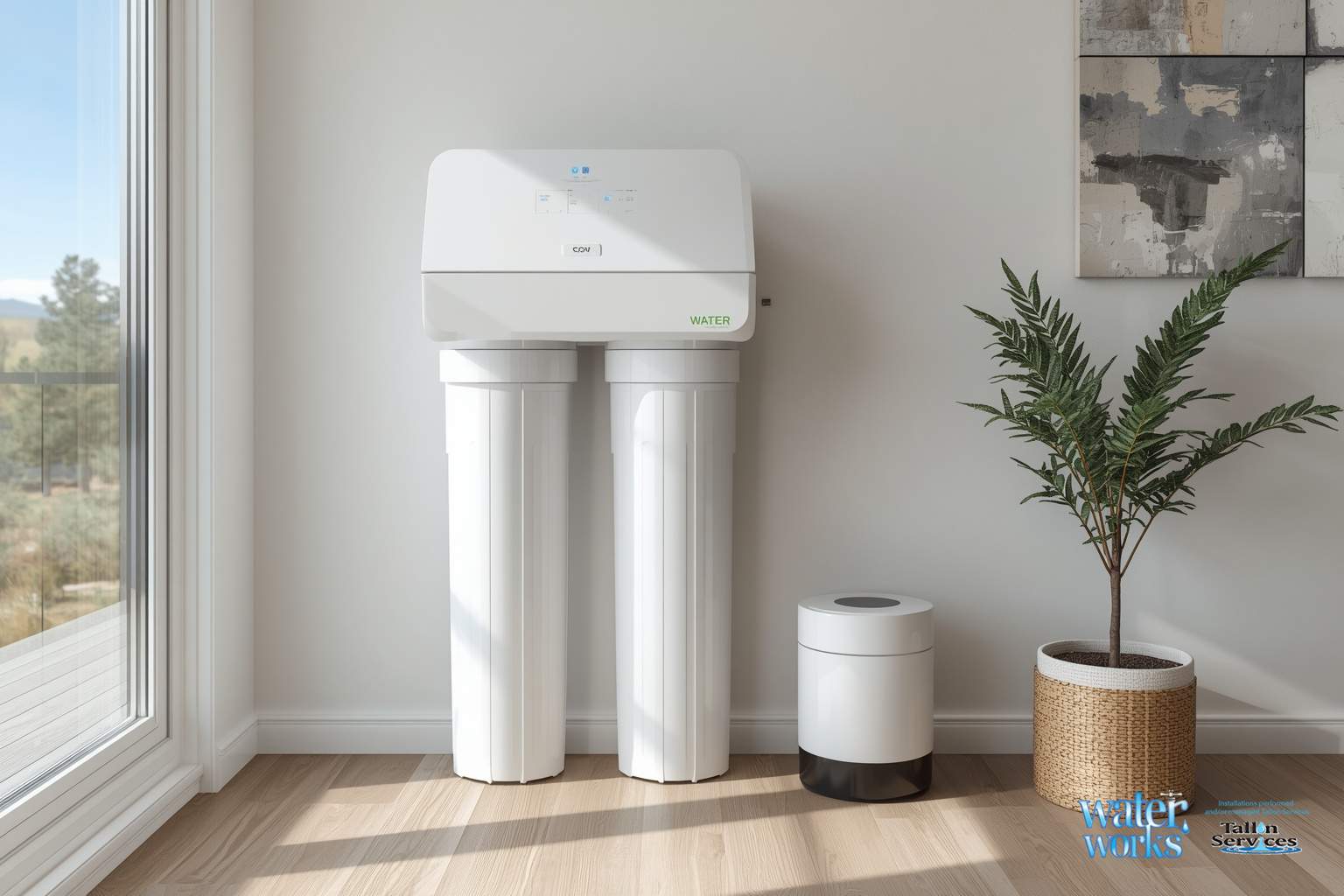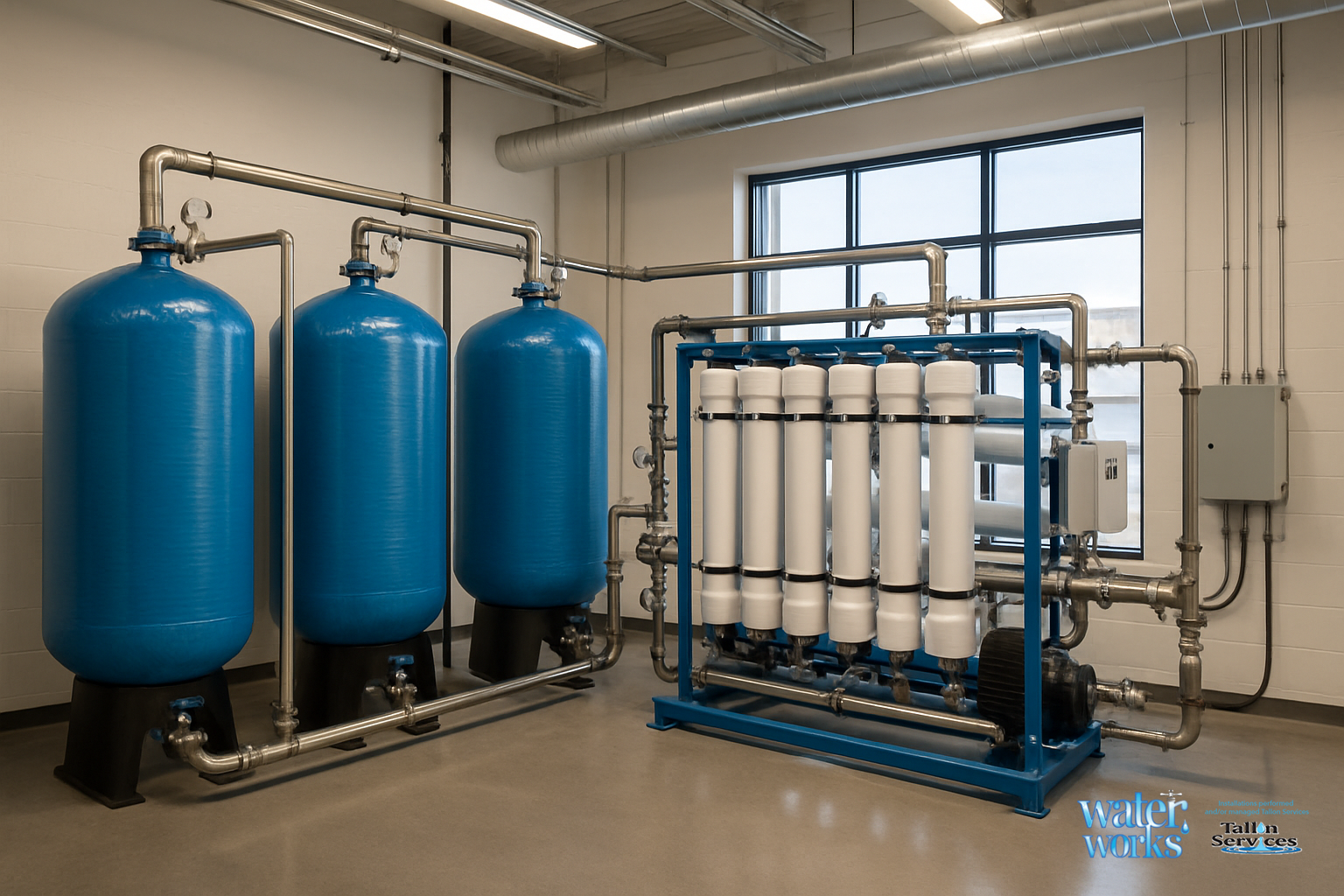
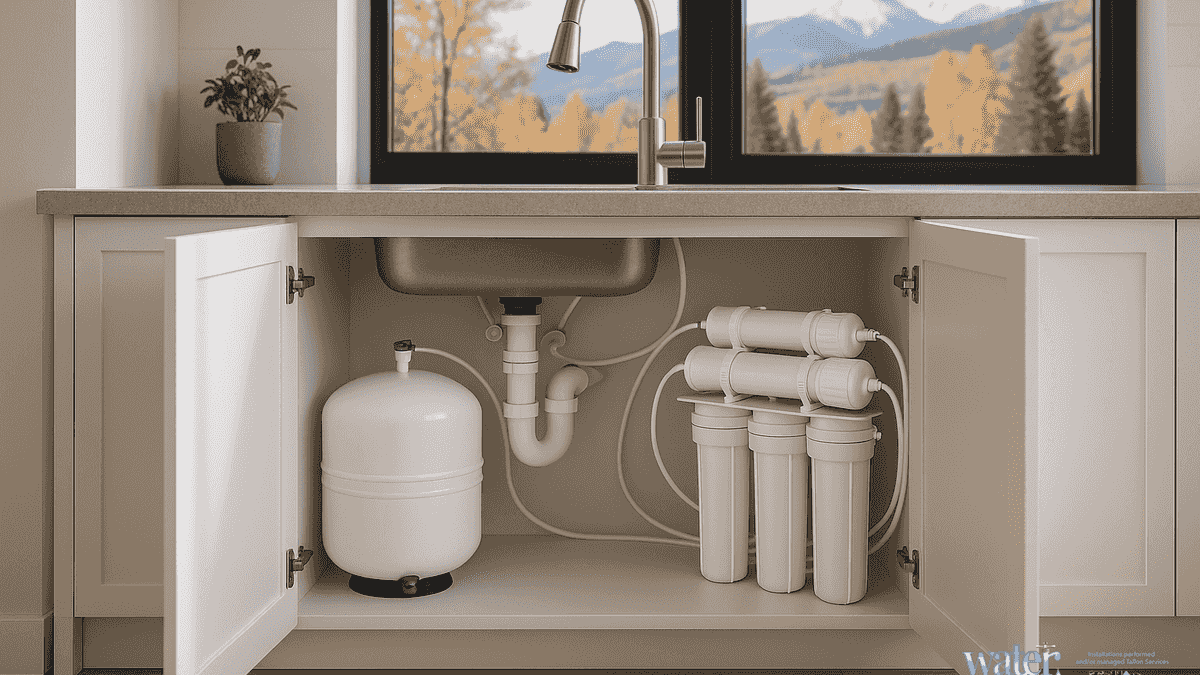
 Reverse Osmosis
Service area · Eastern Plains
Byers water treatment built for Eastern Plains well water
Byers sits about 35 miles east of Denver on I-70, surrounded by ranching and dryland-agriculture acreage in Arapahoe County — and there is no municipal surface-water treatment plant inside the town. Almost every home, ranch, and farm tap in the area draws from a private well tapping the local Eastern Plains aquifer. The water is hard, iron-bearing, and well-known for picking up nitrates from fertilizer and feedlot runoff. The treatment that actually works here is the treatment designed around what your specific well delivers — not the treatment designed for someone else's water.
- Eastern Plains AquiferAlmost entirely private wells
- Hard + Iron + NitratesCommon in ranch and farm taps
- Free On-Site TestingFree water analysis, scheduled fast
The Eastern Plains water story
Why Byers well water needs to be tested — not assumed
Byers sits in the open country east of Denver where the Front Range flattens into the Eastern Plains, and the land has been ranching and dryland-ag country for generations. There is no big municipal treatment plant here — water supply is overwhelmingly private wells tapping the shallow alluvial aquifer that runs beneath the surrounding farmland, with a small community system serving the densest part of town on the same source. Both have the same starting problem: plains groundwater is hard and iron-bearing by nature, and the surrounding land use puts more on top.
Sulfates are common in the deeper aquifer material, and nitrates from fertilizer application and feedlot runoff show up often enough to matter where irrigated cropland or concentrated animal operations sit upgradient of a wellhead. Coliform bacteria are an event-driven problem — heavy rain, snowmelt, or flooding pushes surface contamination down through the soil profile, and shallow wells feel it first. Older septic systems and any nearby commercial sites can contribute VOCs, and aging well casings on long-established ranches tend to deliver some sediment along with the groundwater itself.
A treatment system designed for someone else's water almost never fits yours. We start every Byers job with a real on-site analysis — hardness, iron, manganese, sulfates, nitrates, coliform, anything else the aquifer might be delivering at your address — and design from the results, including the higher service flow and harder water that ranch and acreage homes typically need.
- Hardness, iron, and manganese in the Eastern Plains aquifer material
- Sulfates from the deeper alluvial and Cretaceous-age formations
- Nitrates from fertilizer and feedlot runoff across the surrounding cropland
- Coliform bacteria after heavy rain, snowmelt, or flooding events
- Occasional VOCs near older septic systems or commercial sites
- Sediment from aging well casings on older ranches and acreage homes
How Water Works helps
Treatment designed around what your Eastern Plains well water actually contains
For most Byers homes and ranches, the right answer is a layered system: a softener at the point of entry to handle the plains hardness and protect appliances, plus a reverse osmosis unit or under-sink filter for the kitchen tap where you actually drink and cook. Wells with iron, manganese, sulfates, or detectable nitrates usually need a dedicated pre-filter ahead of the softener — a greensand, catalytic-carbon, or anion-exchange unit sized for the specific contaminant and flow rate of that well. Properties with coliform risk pair the rest of the system with a UV disinfection stage so bacteria don't make it to the tap.
We design the system, install it, and verify the treated water meets the mark at every tap it's used. Then we come back: well water should be tested at least once a year, and we keep your system serviced and your water verified season after season — including a retest after major weather, after changes in nearby land use, and after any work on the well or plumbing that could shift the profile. Coverage runs out of our Denver Metro office across the I-70 corridor, with statewide dispatch out of our four regional offices for anything further out.
- Free on-site water analysis
- Water softeners sized to Eastern Plains hardness
- Reverse osmosis for drinking-water taps
- Iron, manganese, and sulfate filtration
- UV disinfection for bacteria
- Annual testing and ongoing service
Coverage across the Eastern Plains
Service routes into the I-70 corridor east of Denver
Byers' position on the map is what determines how service routes to it. The town sits roughly 35 miles east of Denver on I-70, far enough out that it lives outside any metro water district but close enough that the Denver Metro office treats the run as a routine day. Our service techs leave Denver, run east on I-70 past Strasburg and Bennett, and arrive in Byers as a normal scheduled stop — not a special trip. That matters more than people expect, because most of the surrounding acreage and ranch customers are on private wells that nobody but us is testing.
Coverage out of the Denver Metro office runs the I-70 corridor east through Arapahoe County and into the western edge of Adams County — Deer Trail to the southeast, Agate to the south, Bennett and Strasburg to the west, Leader to the east, and the rural ranch and farm properties scattered between. On-site well testing, softener and reverse osmosis installs, and iron-and-manganese filtration work on acreage homes are routine jobs for that crew. For the further-out ranches east of Byers along the I-70 corridor and across the wider Eastern Plains, statewide dispatch out of our four regional offices covers the gap, and a service run into that country is a normal ask, not an exception.
What Eastern Plains installs require is a little different from in-town work. Larger ranch and acreage properties run higher treatment demand — bigger service flow, more bathrooms and outbuildings on the same plumbing, longer runs between the wellhead and the house — and the right system for a 5-acre Byers lot is rarely the right system for a 160-acre one. Our techs size softeners, pre-filters, and reverse osmosis units to the actual well, the actual household, and the actual number of taps (human and livestock) on the system, not a generic spec. And because the contamination profile on Eastern Plains wells tends to shift with seasonal runoff and nearby land use, we keep every install on an annual testing cycle so we catch a trend before it shows up in your tap.
- Denver Metro office — east on I-70 into Arapahoe and Adams counties
- Statewide dispatch for the further-out ranches and farms east along the I-70 corridor
- Scheduled routes to Deer Trail, Agate, Bennett, Strasburg, and Leader
- On-site well testing, softener installs, and RO work on ranch and acreage properties
- Higher service flow and longer plumbing runs sized into every install
- Annual testing programs across the Eastern Plains
Byers water treatment FAQs
Is Byers' tap water safe to drink?
Byers doesn't have a municipal surface-water treatment plant inside the town. The water supply is overwhelmingly private wells drawing from the local aquifer — and the few homes on a small community system rely on the same Eastern Plains groundwater, just disinfected and distributed from a small central tap. 'Safe by the standard' and 'good at your kitchen sink' are not the same thing. Hardness, iron, sulfates, nitrates from fertilizer and feedlot runoff, and coliform bacteria after heavy rain or flooding all show up in well water that hasn't been tested at the actual tap. The only way to know what's coming out of your faucet is a real on-site analysis.
What contaminants are most common in Byers well water?
Eastern Plains wells across the Byers area routinely test high for hardness, iron, and manganese — the rule on plains groundwater, not the exception. Sulfates are common in the deeper aquifer material, and nitrates from fertilizer and feedlot runoff show up often enough to matter where irrigated cropland or concentrated animal operations sit upgradient of a wellhead. We've also seen coliform bacteria after heavy rain or flooding events, occasional VOCs near older septic systems or commercial sites, and sediment from aging well casings. A genuine on-site analysis is the only way to know which of these your well actually has — the water table varies block by block across Arapahoe County's eastern reach, and guessing isn't a strategy.
How often should I test my water in Byers?
At least once a year for any private well — more often if you've ever had a positive result, if your area has known nitrate or coliform issues, if your well sits close to irrigated cropland or a feedlot, or if your water changes in taste, smell, or color. After heavy rain or flooding, after a drought cycle that drops aquifer levels, and after any work on the well or plumbing, test before you drink it. Nitrates and coliform are seasonal and event-driven, which is exactly why annual testing alone isn't always enough — a wet spring after a dry summer is the classic window for a positive result to appear.
Do Byers homes really need a water softener?
Yes. Eastern Plains groundwater is hard by nature, and Byers is no exception. You'll see it as spotting on glassware, scale on faucets, shower glass, and tile, and as shortened lifespans for water heaters, dishwashers, washing machines, and ice makers. A softener isn't luxury — it's the difference between appliances that last 15 years and ones that last 6. Salt-free conditioners help with scale, but they don't actually remove the hardness minerals the way a proper ion-exchange softener does, and on plains water the difference shows up fast.
Can you service my home outside of Byers?
Yes. Our Denver Metro office covers Byers and the surrounding Eastern Plains communities — Deer Trail, Agate, Bennett, Strasburg, and Leader — and our service techs run regular routes across the I-70 corridor east of Denver into Adams and Arapahoe counties. On-site well testing, softener installs, and reverse osmosis work on acreage properties and ranch taps are routine jobs for that crew. Anything further out — including the outlying farms and rural communities along the I-70 corridor — is covered by statewide dispatch out of our four regional offices.
Get a free water analysis in Byers
Find out what's actually in your water — ranch tap, acreage well, or in-town service. We'll test on-site, walk you through the results, and design a treatment system around your source, your household, and your preferences. Reach the Denver Metro office at (303) 248-3390, or use statewide dispatch through any of our four regional offices.
Get a quote- Denver Metro(303) 248-3390
- Northern Colorado(970) 381-4493
- Colorado Springs Metro(719) 694-2650
- Pueblo & S Colorado(719) 836-8118
From the blog