 Boulder
Service area · Denver / Inner-ring core / Mile High City
Water treatment in Denver, CO
Colorado's capital — roughly 715,000 people at 5,280 feet — draws its drinking water from Denver Water, surface supply collected high in the South Platte and Colorado River headwaters west of the Continental Divide. Water treatment in Denver accounts for that mountain-source water, the chlorine residual that sits in the distribution main overnight, and the pre-1986 plumbing threaded through Capitol Hill, Baker, Wash Park, and Highland. Hardness runs about 97 mg/L (5.7 gpg) — moderately hard — and climbs in older homes. Downtown high-rises add a building-plumbing layer.
- Denver Water + WellsMunicipal surface supply inside the city, wells on airport and industrial edges
- Hard + ChlorineHardness ~97 mg/L, chlorine residual, HAA5, trihalomethanes, lead in pre-1986 plumbing
The Mile High City water story
What Denver Water sends down the pipe — and what your old plumbing adds
Water treatment in Denver means understanding what Denver Water delivers. The utility collects surface water from the South Platte and Colorado River headwaters west of the Continental Divide, treats and disinfects it with chlorine. What leaves the plant meets every federal and state standard.
What reaches the tap in the older in-fill neighborhoods — Capitol Hill, Five Points, Park Hill, Washington Park, Highland, and Baker — picks up a plumbing story: lead solder in pre-1986 copper pipe, brass fixtures, and long service runs show up as trace metals. The chlorine residual sitting in the main overnight generates haloacetic acids (HAA5) and trihalomethanes — the EPA limits HAA5 at 0.060 mg/L and total trihalomethanes at 0.080 mg/L, and Denver Water reports both in its annual report. Naturally occurring radium in the South Platte headwaters is the contaminant most homeowners ask about. The 2016 E. coli boil-water advisory proved distribution events happen. On the unincorporated slivers and the airport / industrial edges, a small share of homes draws from private wells — harder, more iron-bearing.
- Denver Water — surface supply from the South Platte and Colorado River headwaters west of the Divide
- Hardness ~97 mg/L out of the plant, climbing higher inside the older in-fill neighborhoods
- Chlorine residual on by design, with HAA5 and trihalomethanes forming in the main overnight
- Lead and copper pickup in pre-1986 homes — lead solder, brass fixtures, older galvanized service lines
- Naturally occurring radium in the South Platte headwaters
- Iron, manganese, and occasional arsenic on the rare well-driven properties on the city edges
Treatment for the Mile High City
Filtration and softening engineered for Denver's mountain supply and vintage plumbing
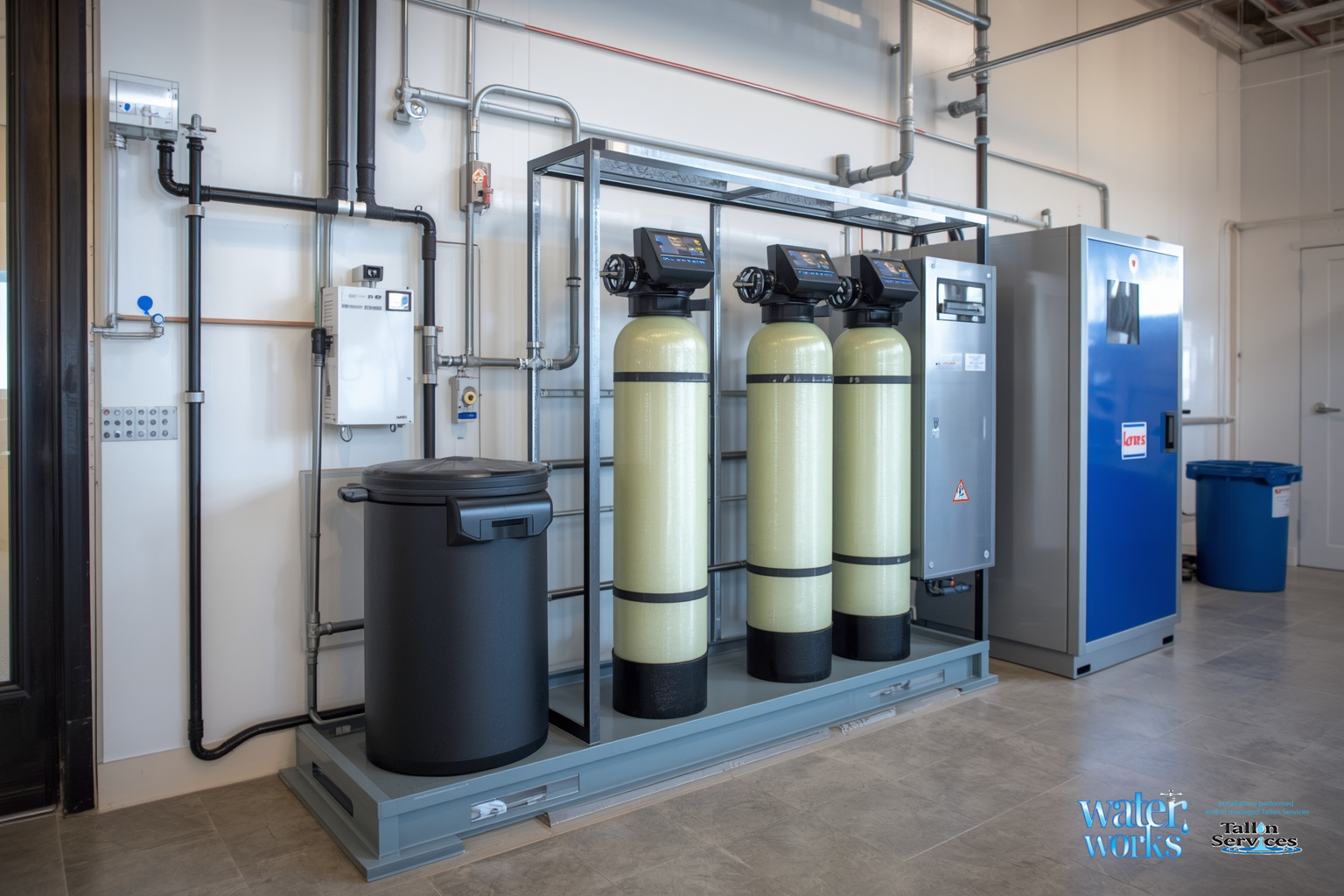
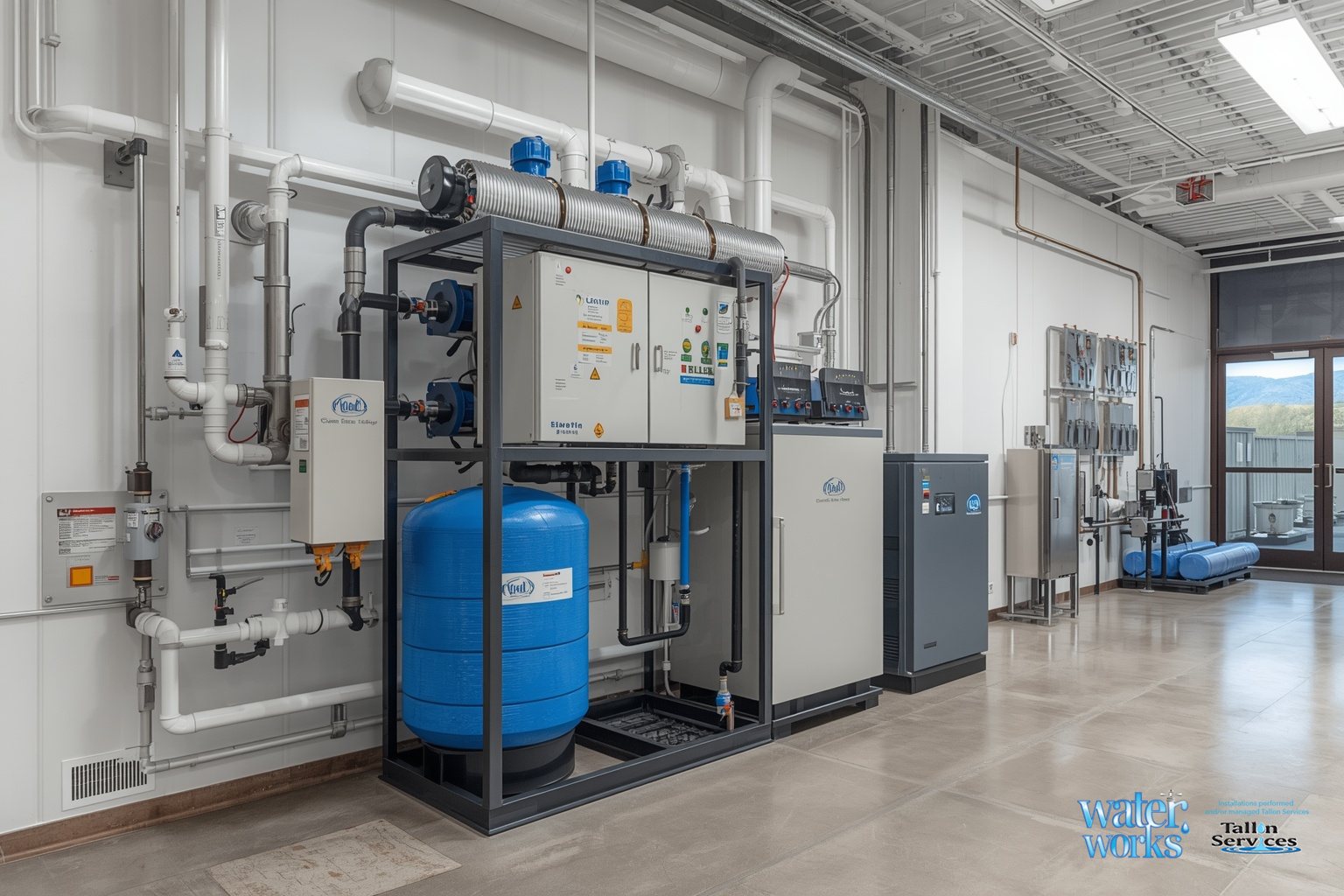
For most Denver homes on Denver Water, the right answer is a whole-home system tuned to the reading at your spigot — never a guess from a spec sheet. A water softener at entry handles the working hardness and protects appliances, plus a reverse osmosis unit under the sink pulls trace metals, disinfection byproducts, and any residual radium to drinking-water levels at the one tap your family drinks from. Older homes in Capitol Hill, Baker, Wash Park, and Highland with lead solder or brass-fixture concerns pair the treatment with a whole house water filter at entry and a point-of-use lead-certified filter at the kitchen tap until the plumbing can be replaced. Downtown high-rises add long internal runs and storage tanks that give byproducts more time to form.
For the rare well-driven properties on the unincorporated slivers and airport / industrial edges, the system shifts: iron and manganese need an oxidation or greensand stage, arsenic gets anion-exchange where the rock delivers it, and shallow wells with coliform risk pair with UV. Salt-free water conditioners are an option where a homeowner wants scale control without sodium exchange. We design, install, verify at every tap, then return yearly — Denver Water shifts with spring runoff, and what tested clean in May can move by October.
- Complimentary on-site water test
- Water softeners sized to Denver Water hardness and the older homes where working hardness climbs
- Reverse osmosis for drinking-water taps (city and well)
- Carbon filtration for chlorine taste, odor, and disinfection byproducts
- Point-of-use lead-certified filters for pre-1986 homes with solder concerns
- Iron, manganese, and arsenic filtration for well-driven properties on the city edges

Coverage across the Denver Metro core
Service routes across Denver and the inner-ring core
Denver sits at the convergence of I-25, I-70, and I-76, with the Denver Metro office in the inner-ring core — close enough that a Capitol Hill in-fill or a Baker bungalow is a routine stop. Coverage runs the inner-ring core — Lakewood, Wheat Ridge, Englewood, Arvada, Westminster, Thornton, Commerce City, Aurora, and Centennial. On-site testing, softener and reverse osmosis installs, and lead-and-copper filtration work on pre-1986 plumbing are routine. We keep every install on a yearly check-back schedule — covering water filtration maintenance and PFAS removal follow-ups. The EPA set enforceable limits of 4.0 ppt for PFOA and PFOS in April 2024, and Colorado has documented contamination in areas with industrial or firefighting-foam history. For jobs further out, statewide dispatch out of four regional offices covers the gap.
- Denver Metro office — inner-ring core anchored on the I-25, I-70, and I-76 corridors
- Scheduled routes to Lakewood, Wheat Ridge, Englewood, Arvada, Westminster, Thornton, Commerce City, Aurora, and Centennial
- On-site testing, softener installs, and RO work in older in-fill homes with pre-1986 plumbing
- Statewide dispatch for anything further out along the I-70 corridor east or the foothills belt west
Water treatment in Denver — questions from Mile High City homeowners
Is Denver's tap water safe to drink?
Denver Water meets every federal and state standard — surface supply from the South Platte and Colorado River headwaters, treated and disinfected with chlorine. But chlorine residual is on by design, disinfection byproducts form in the main overnight, and the older in-fill neighborhoods — Capitol Hill, Five Points, Park Hill, Washington Park, Highland, and Baker — carry pre-1986 copper with lead solder and brass that pick up trace metals. A real on-site test is the only way to know.
What contaminants are most common in Denver water?
Denver Water's supply runs moderately hard out of the plant — about 97 mg/L — and climbs higher inside older homes from mineral pickup in service lines. The contaminants the city's reports surface most often are haloacetic acids (HAA5), total trihalomethanes, chloroform, lead (from solder and brass in older homes, not the source), and naturally occurring radium in the South Platte headwaters granite. The 2016 E. coli boil-water advisory proved distribution events happen. On rare well-driven properties on the city edges, iron, manganese, occasional arsenic, and coliform after heavy rain round out the list.
How often should I test my water in Denver?
For homes on the Denver Water supply, test at least yearly for hardness, chlorine residual, pH, total dissolved solids, lead and copper (especially if your home was built before 1986), and any radium you want confirmed against the city's number. For rare well-driven properties on the city edges, test annually for coliform, nitrates, iron, and manganese, plus an arsenic check where the alluvium runs that way. Retest after a major storm, after a boil-water advisory, after work on the well or plumbing, and after remodeling in a pre-1980 home where you disturbed solder.
Do Denver homes really need a water softener?
Most do. Denver Water's finished supply comes out of the plant at about 97.3 mg/L (5.7 gpg) — moderately hard on the USGS scale. Inside many homes the working hardness climbs higher from mineral pickup in older service lines and the long runs to the in-fill neighborhoods. You'll see it as scale on faucets and shower glass, spotting on glassware, and wear on water heaters, dishwashers, washing machines, and ice makers. A properly sized ion-exchange water softener removes the calcium and magnesium that drive the damage. Salt-free conditioners help with scale control but do not pull the hardness minerals out.
Can you service my home outside of Denver?
Yes. Our Denver Metro office at (303) 248-3390 covers Denver and the inner-ring communities — Lakewood, Wheat Ridge, Englewood, Arvada, Westminster, Thornton, Commerce City, Aurora, and Centennial — with techs running scheduled routes along the I-25, I-70, and I-76 corridors year-round. On-site testing, softener and reverse osmosis installs, and filtration work on older in-fill homes with pre-1986 plumbing are routine, and well-edge properties see regular service. Statewide dispatch out of four regional offices covers anything further out.
Is reverse osmosis in Denver worth it for drinking water?
For most Denver homes, yes. Denver Water meets standards at the plant, but chlorine residual, disinfection byproducts, trace metals from older plumbing, and naturally occurring radium are still present at the tap to some degree. A reverse osmosis system pulls those down to drinking-water levels at the one tap your family drinks from. An under-sink RO unit with a carbon stage ahead of the membrane is the standard setup for Denver Water supply homes. For outer-well properties on the city edges, RO also handles nitrates and any arsenic the well delivers.
Your Denver water test — no charge, on-site
Denver Water tap in the older in-fill neighborhoods, a pre-1986 home with solder concerns, or a well-driven property on the city edges — we test on-site, walk you through the results, and design a treatment system around your source and household. Schedule with our Denver Metro office at (303) 248-3390 for fast coverage across Denver and the inner-ring communities along the I-25, I-70, and I-76 corridors, with statewide dispatch for anything further out.
Get a quote- Denver Metro(303) 248-3390
- Northern Colorado(970) 381-4493
- Colorado Springs Metro(719) 694-2650
- Pueblo & S Colorado(719) 836-8118