 Commercial Water Softeners
Service area · Englewood / Inner-ring south Denver Metro
Water treatment in Englewood, sized to your tap
Englewood's reputation for hard water is earned — the city's own numbers run 100–300 ppm, and anything over 180 ppm is very hard. Water treatment in Englewood starts at the tap, not at the plant. The city is a tight inner-ring suburb of roughly 35,000 in Arapahoe County, just south of Denver along Santa Fe Drive and the South Platte, framed by the Arapahoe Acres, South Broadway Heights, and Centennial Acres neighborhoods. Drinking water is managed by the City of Englewood Utilities, drawn from Meadow Creek, Chatfield, and McLellan reservoirs and treated at the Allen Water Treatment Plant. The water is hard, disinfected, and tested — and the older in-town plumbing is where the gap between treated and what reaches your faucet shows up first.

- Englewood UtilitiesCity of Englewood Utilities — Allen Water Treatment Plant
- Very Hard 100–300 ppmHardness, uranium, HAA5, trihalomethanes, lead in pre-1986 plumbing
- Free On-Site TestingWater analysis scheduled fast

Englewood's supply, from reservoir to tap
How Englewood's reservoir supply becomes the water at your tap
Englewood sits just south of Denver along Santa Fe Drive, framed by the South Platte to the north. The city is small — roughly 35,000 residents in a tight inner-ring footprint. Drinking water is managed by the City of Englewood Utilities Department, drawing snowmelt from Meadow Creek, Chatfield, and McLellan reservoirs, then treated and disinfected at the Allen Water Treatment Plant before distribution. The city publishes an annual water-quality report.
What reaches the faucet still carries the working hardness and chlorine residual of any treated surface supply. Englewood is well known for very hard water — the city's own numbers run 100–300 ppm, with anything over 180 ppm considered very hard. Haloacetic acids and trihalomethanes form as the chlorine residual sits in the main overnight — the EPA limits HAA5 at 0.060 mg/L and total trihalomethanes at 0.080 mg/L, and Englewood reports both in its annual report. Bromodichloromethane and dibromochloromethane show up there too, and the naturally occurring uranium and arsenic carried in from the watershed rock are the contaminants homeowners ask about most. The older in-town homes — Arapahoe Acres, the South Broadway Heights blocks (homes built 1905 to 2017), and Centennial Acres (1954–1976) — predate the 1986 lead ban, so the lead and copper at the tap come from solder and brass fixtures, not the distribution system. Every Englewood job starts with a real on-site test at your address.
- Hard water averaging 100–300 ppm, anything over 180 ppm considered very hard
- Disinfection byproducts (HAA5 and trihalomethanes) from the chlorine residual
- Lead and copper in pre-1986 homes — Arapahoe Acres, South Broadway Heights, Centennial Acres
- Naturally occurring uranium and arsenic reported in the city's annual testing
Treatment matched to Englewood water
Water treatment in Englewood, built around very hard water
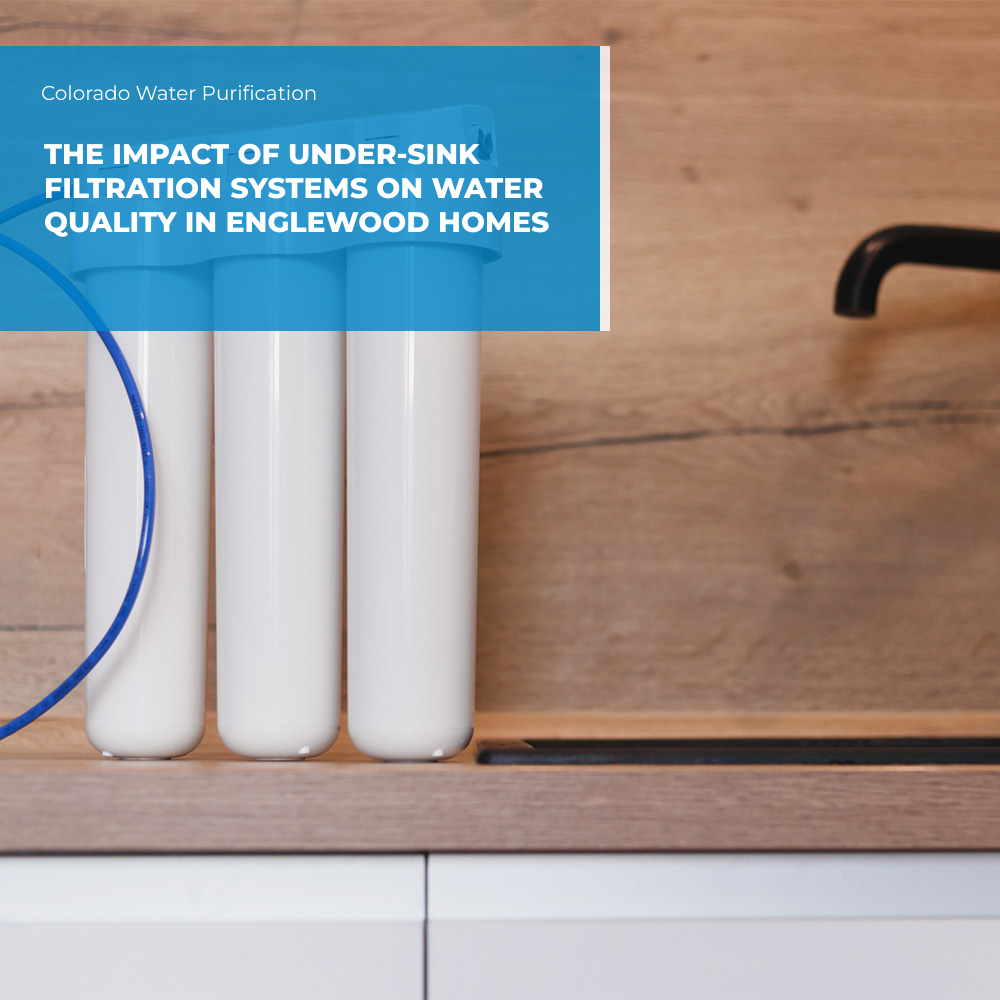
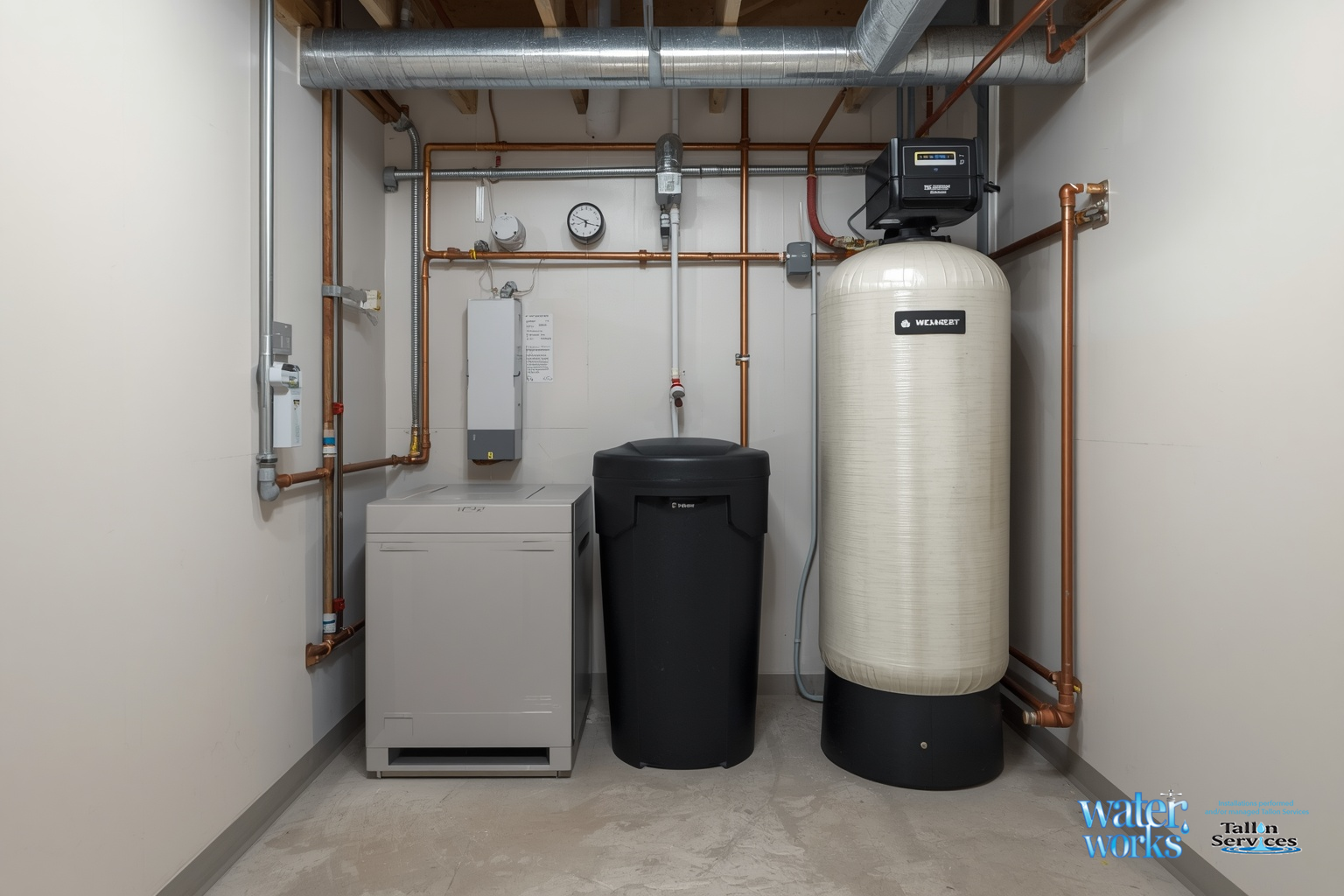
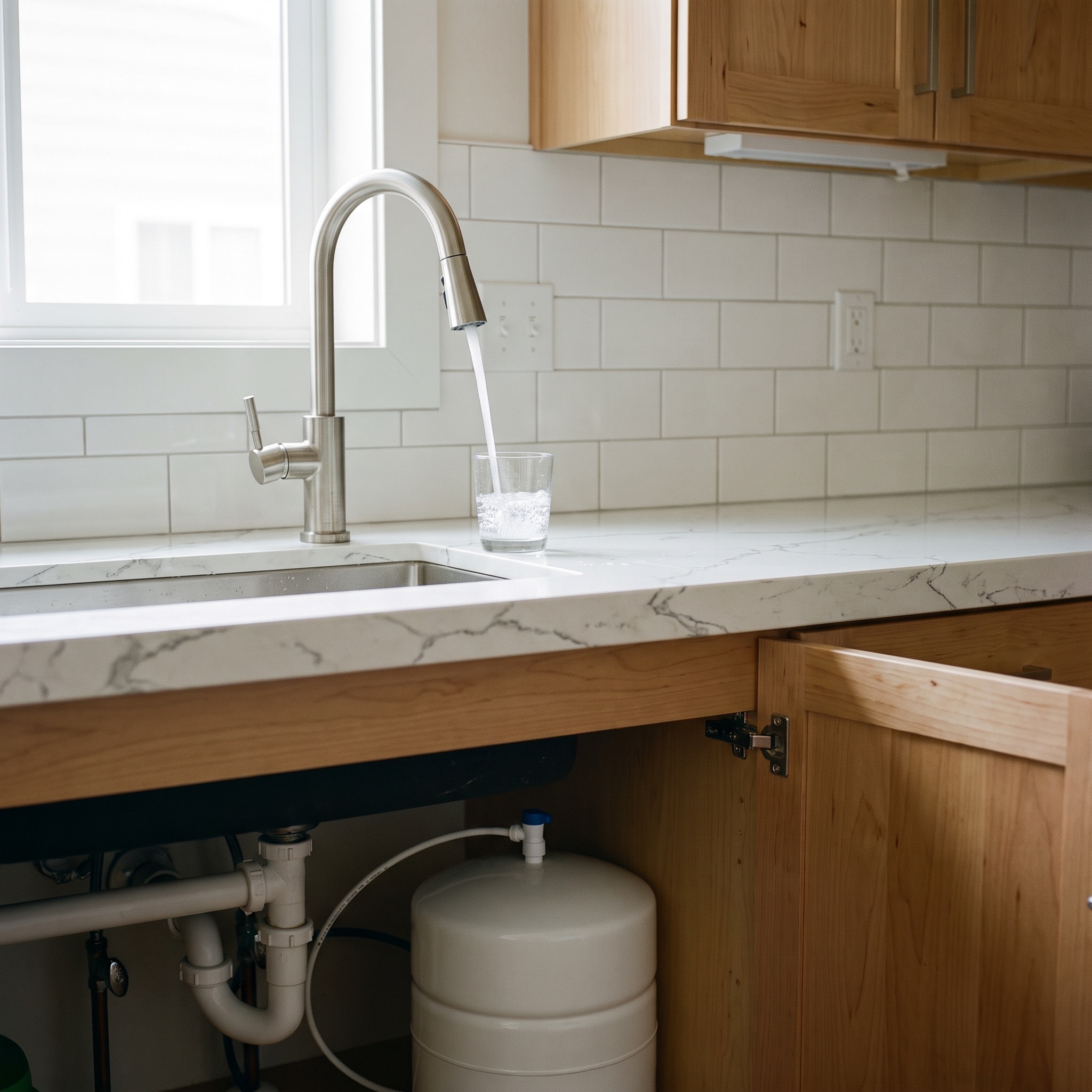
For most Englewood homes on the city supply, the answer is a system sized to the water at your tap, not a catalog page. A water softener at the point of entry handles the very hard water and protects appliances and plumbing; an under-sink water filter or reverse osmosis unit under the kitchen sink pulls trace metals, disinfection byproducts, uranium, and arsenic down to drinking-water levels. A carbon stage ahead of the RO polishes chlorine taste and odor. Homes in Arapahoe Acres, South Broadway Heights, and Centennial Acres with lead solder or brass-fixture concerns often add a point-of-use lead-certified filter at the kitchen tap until the plumbing is replaced.
We design, install, and verify the treated water at every tap, then return each year — Englewood water should be tested at least once a year — for water filtration maintenance after remodeling in a pre-1980 home, after fixture replacements, and any time the water changes in taste, smell, or color. Where you want scale control without sodium exchange, salt-free water conditioners are an option, though on very hard Englewood water they protect fixtures rather than removing the hardness minerals. A whole house water filter at the point of entry rounds out the chlorine and particulate side.
- No-cost on-site water testing
- Water softeners sized to Englewood's very hard 100–300 ppm water
- Reverse osmosis for drinking-water taps
- Point-of-use lead-certified filters for older pre-1986 homes
Routes into the inner-ring south
Getting to Englewood: Santa Fe Drive, the South Platte, and the south-metro belt
Water treatment in Englewood runs out of our Denver Metro office — the city sits just south of Denver along the Santa Fe Drive corridor, close enough that a run to an Arapahoe Acres ranch house, a South Broadway Heights in-fill, or a Centennial Acres block is a routine day, not a special trip. Techs run south on Santa Fe Drive past the South Platte and arrive in Englewood as a scheduled stop — north into Denver, southwest to Littleton, southeast to Centennial.
Coverage runs the inner-ring south corridor around Englewood plus the older in-fill homes in the historic core where pre-1986 plumbing is the rule. Those homes run tighter service runs and smaller equipment rooms than new-build suburbs, so techs size softeners, pre-filters, and reverse osmosis units to the actual water reading, household, and number of taps. We keep every install on an annual testing cycle, and PFAS removal consultations are part of the work — the EPA set enforceable limits of 4.0 ppt for PFOA and PFOS in April 2024, and Colorado has documented contamination in areas with industrial or firefighting-foam history. Statewide dispatch covers anything further out.
- Denver Metro office — Santa Fe Drive and South Platte corridors through inner-ring south
- Scheduled routes through Arapahoe Acres, South Broadway Heights, and Centennial Acres
- On-site testing, softener installs, and RO work on older pre-1986 homes
Englewood water — questions from the faucet
Is Englewood's tap water safe to drink?
For most of Englewood the tap water is municipal, treated, and tested — but that is not the same as being right for your house. Drinking water is managed by the City of Englewood Utilities, drawn from snowmelt in Meadow Creek, Chatfield, and McLellan reservoirs and treated at the Allen Water Treatment Plant before it reaches the tap. The city publishes an annual water-quality report. ‘Municipal and tested’ and ‘what your faucet delivers’ are not the same thing, though: Englewood is known for very hard water, hardness runs roughly 100–300 ppm with anything over 180 ppm considered very hard, and the older in-town homes — Arapahoe Acres, South Broadway Heights, Centennial Acres — were built when lead solder and brass fixtures were standard. The only way to know what is actually coming out of your tap is a real on-site test.
What contaminants are most common in Englewood water?
The city tests for and reports uranium, haloacetic acids (HAA5), total trihalomethanes, bromodichloromethane, dibromochloromethane, arsenic, and nitrate — the typical profile of a treated surface supply disinfected with chlorine, with naturally occurring uranium and arsenic from the watershed rock. Haloacetic acids and trihalomethanes form as the chlorine residual sits in the main overnight. Above all of that sits hardness: at 100–300 ppm the calcium and magnesium load is what homeowners feel first. Inside the older in-town homes the everyday concern is plumbing-side — lead solder in pre-1986 copper pipe and brass fixtures in the original Arapahoe Acres and Centennial Acres houses. A real on-site test is the only way to know which yours has.
How often should I test my water in Englewood?
For homes on the city supply, test at least once a year for the basics — hardness, chlorine residual, pH, total dissolved solids, lead and copper (especially in Arapahoe Acres, South Broadway Heights, or Centennial Acres where many homes predate the 1986 lead ban), uranium, and disinfection byproducts you want kept down. Test again after remodeling in a pre-1980 home that disturbed solder or joints, after a fixture replacement, and any time the water changes in taste, smell, or color. Once a year is the minimum — more often if your source or plumbing changes.
Do Englewood homes really need a water softener?
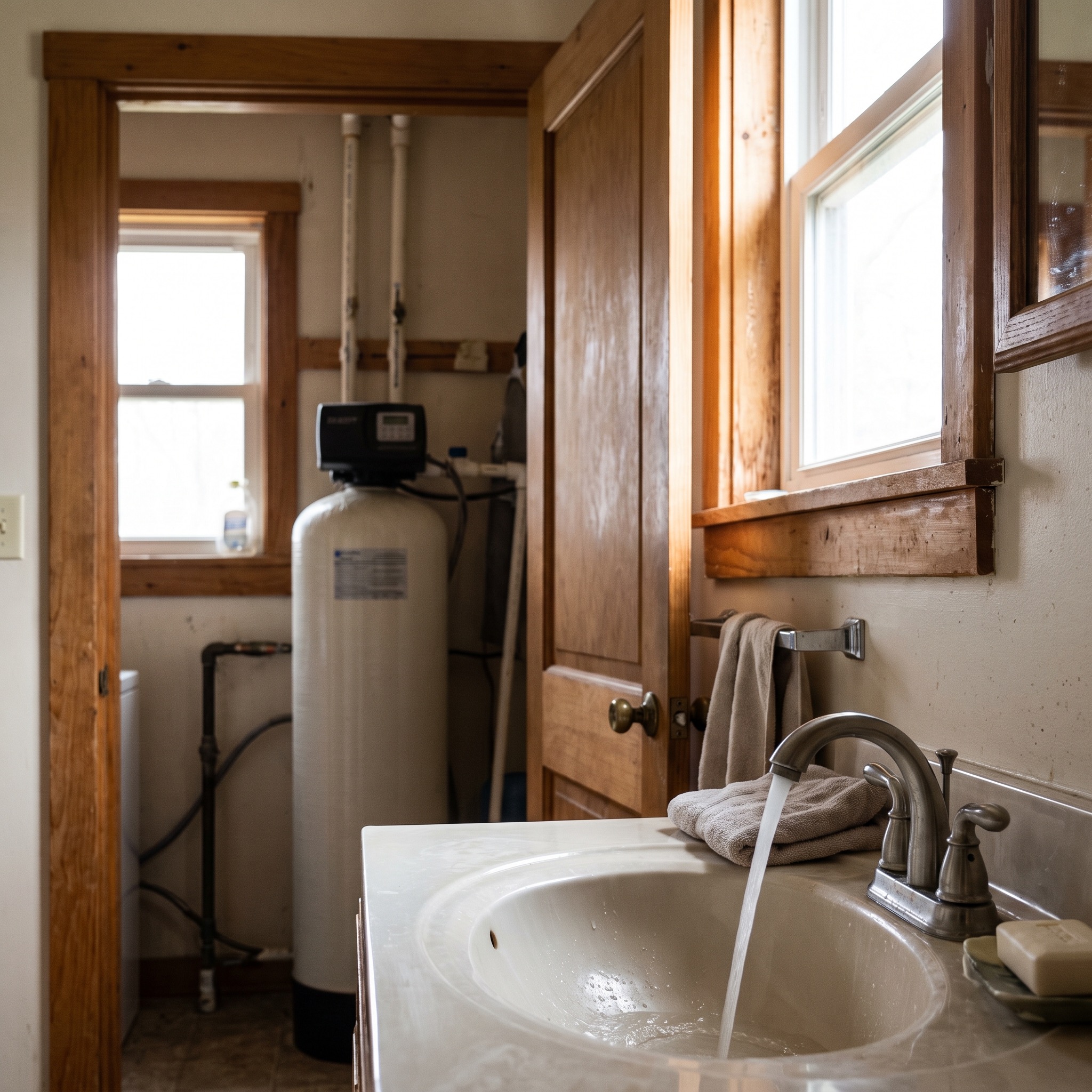
Almost always, yes. Englewood is well-known for very hard water — the city's own annual report lists finished hardness at 100.6 mg/L (5.9 gpg), moderately hard on the USGS scale, but working hardness inside homes runs 100–300 ppm and anything over 180 ppm is considered very hard. That shows up as spotting on glassware, scale on faucets and shower glass, mineral stains on laundry, and shorter lifespans for water heaters, dishwashers, washing machines, and ice makers. A properly sized ion-exchange softener removes the calcium and magnesium that drive the damage. Salt-free conditioners help scale cling less but do not pull the hardness minerals out, and on Englewood water the difference shows up fast on fixtures and appliances.
Can you service my home outside of Englewood?
Yes. Our Denver Metro office at (303) 248-3390 covers Englewood and the surrounding inner-ring south communities along the Santa Fe Drive and South Platte corridors — Denver north, Littleton southwest, Centennial southeast — with techs running scheduled routes across the south metro year-round. On-site testing, softener and reverse osmosis installs, and filtration work on the older in-town homes with pre-1986 plumbing are routine for that crew. Statewide dispatch out of our four regional offices covers anything further out.
Free Englewood water testing — book your visit
Your Englewood water deserves a real test — Englewood Utilities tap in town, an Arapahoe Acres ranch with original 1940s plumbing, a South Broadway Heights in-fill, or a Centennial Acres home from the 1950s or 1960s. We test on-site, walk you through the results, and design treatment around your source, household, and preferences. Schedule with our Denver Metro office at (303) 248-3390 for coverage across Englewood and the inner-ring south along the Santa Fe Drive and South Platte corridors — Denver north, Littleton southwest, Centennial southeast — with statewide dispatch for anything further out.
Get a quote- Denver Metro(303) 248-3390
- Northern Colorado(970) 381-4493
- Colorado Springs Metro(719) 694-2650
- Pueblo & S Colorado(719) 836-8118
From the blog