 Commercial Water Purification
Service area · Lafayette / Boulder County
Lafayette water treatment built for Boulder County municipal and well water
Lafayette sits at the south edge of Boulder County along the I-25 corridor — generally between about 5,200 and 5,500 feet, with the foothills rising to the west and the high plains spreading east toward I-25. Most homes run on Lafayette's municipal water system, which treats surface water from South Boulder Creek, Boulder Creek, and Coal Creek stored in three reservoirs — Baseline, Waneka, and Goosehaven. Rural-edge homes along the western county line still run on private wells. The treatment that works here is the treatment designed around what comes out of your tap — chlorination byproducts and lead in older in-town homes, hardness and iron on rural-edge wells.

- Boulder Creek WatershedSnow-melt-fed municipal source water
- Hard + Chlorine DBPsHaloacetic acids, trihalomethanes common
- Free On-Site TestingFree water analysis, scheduled fast
The Boulder County water story
Why Lafayette tap water needs to be tested — not assumed
Lafayette sits between roughly 5,200 and 5,500 feet at the south end of Boulder County, with the Front Range foothills rising to the west and the I-25 corridor running past the eastern edge of town. The municipal water supply is managed by the City of Lafayette Public Works Department and comes from snowmelt in the watershed, carried into South Boulder Creek, Boulder Creek, and Coal Creek and stored in three reservoirs — Baseline, Waneka, and Goosehaven — before it's treated and distributed to homes.
What changes between the plant and the kitchen tap is the distribution system itself — every meter of pipe adds reaction time, and the routine chlorination-byproduct profile shows up at the tap the way it does in most Front Range surface-water systems. Haloacetic acids, total trihalomethanes, bromodichloromethane, chloroform, and trichloroacetic acid are the contaminants the Lafayette water report publishes every year — the ones a household-level analysis sees at the kitchen sink.
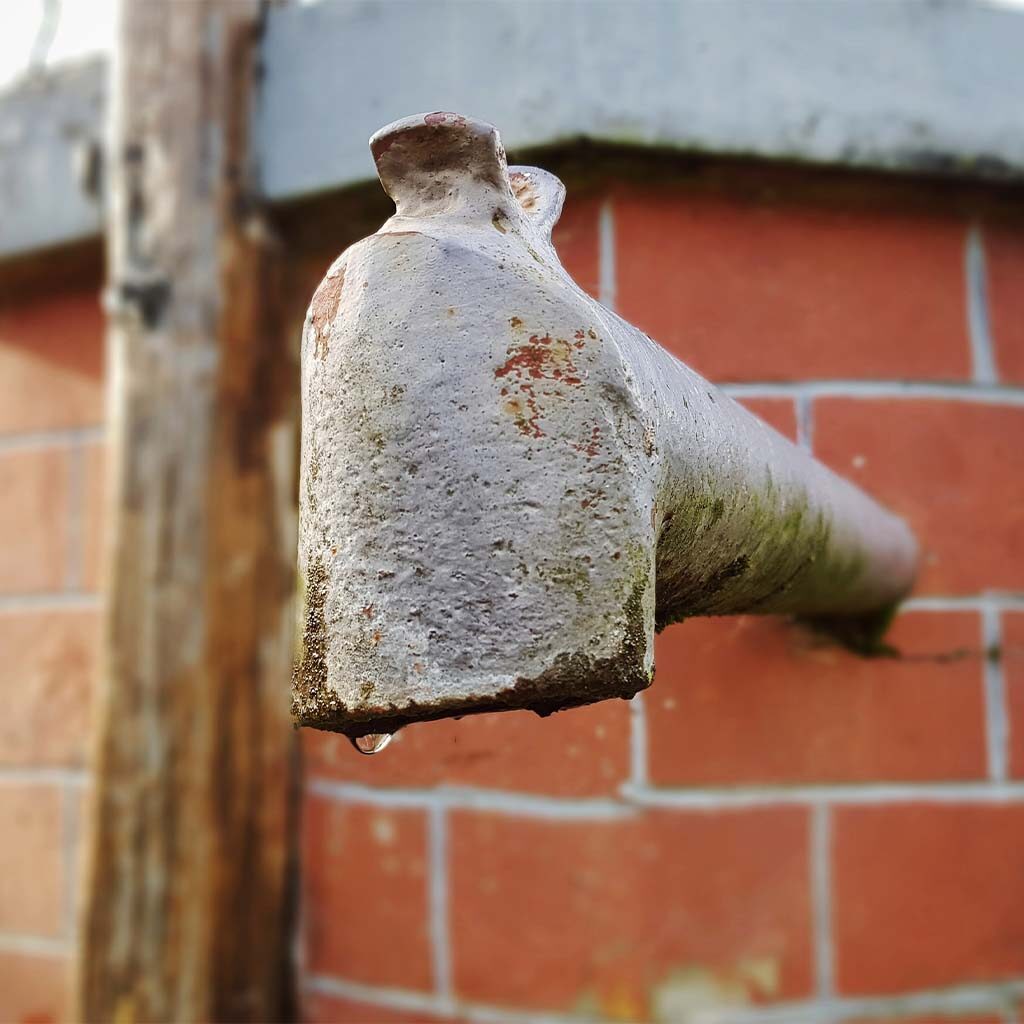
Housing stock adds its own overlay. Lafayette Heights and the older blocks of King Street carry homes from the 1920s through the 1970s with lead service lines and older solder that contribute lead and heavy metals to first-draw water. At the rural edges along the western county line toward the foothills, the supply shifts to private wells on the local aquifer — sediment, coliform after heavy rain, hardness, and the occasional iron and manganese profile. We start every Lafayette job with a real on-site analysis and design from the results.
- Haloacetic acids and trihalomethanes from chlorination along the distribution system
- Lead and heavy metals from older service lines in pre-1980 Lafayette homes
- Hardness that follows the watershed through the year, moderate-to-high by Front Range standards
- Sediment and turbidity after spring snowmelt and summer thunderstorms
- Sediment, coliform, and occasional iron on rural-edge private wells west of town
How Water Works helps
Treatment designed around what your Lafayette tap actually delivers
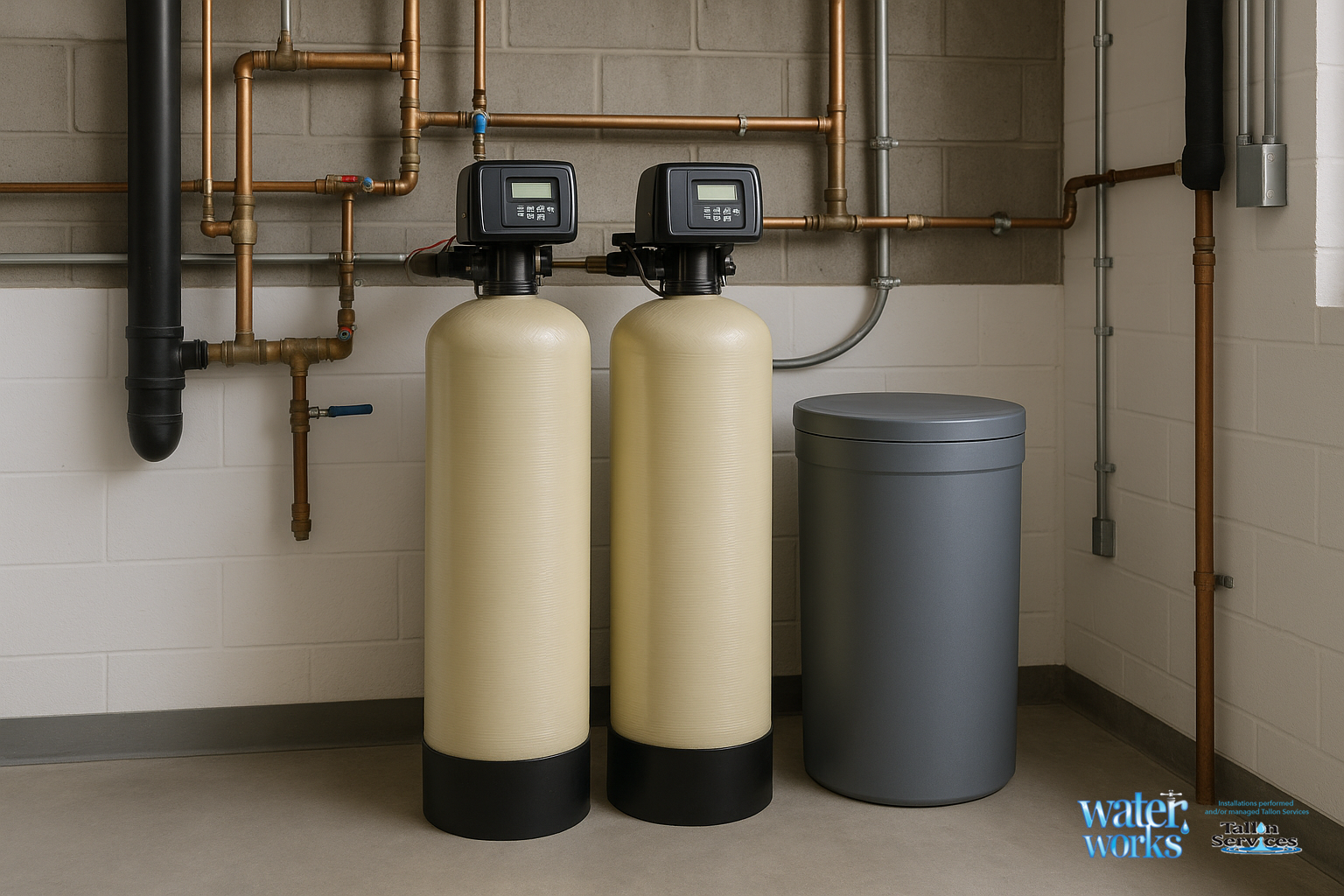
For most in-town Lafayette homes, the right answer is a layered system: whole-house carbon at the point of entry to pull chlorination byproducts and residual chlorine down to undetectable across every tap, paired with a softener for the watershed hardness. For drinking and cooking, a reverse osmosis unit at the kitchen tap pulls out trace contaminants — residual DBPs, lead, anything the carbon and softener have already reduced but not eliminated.
Older in-town homes need an additional layer. Lafayette Heights and the older King Street blocks carry lead and heavy-metal risk from service lines and solder that date to the 1960s and earlier, and a point-of-use filter rated for lead reduction at the kitchen tap is the single most important upgrade for those addresses. Pair that with whole-house carbon and a softener and you've covered the profile, the hardness, and the heavy-metal overlay.
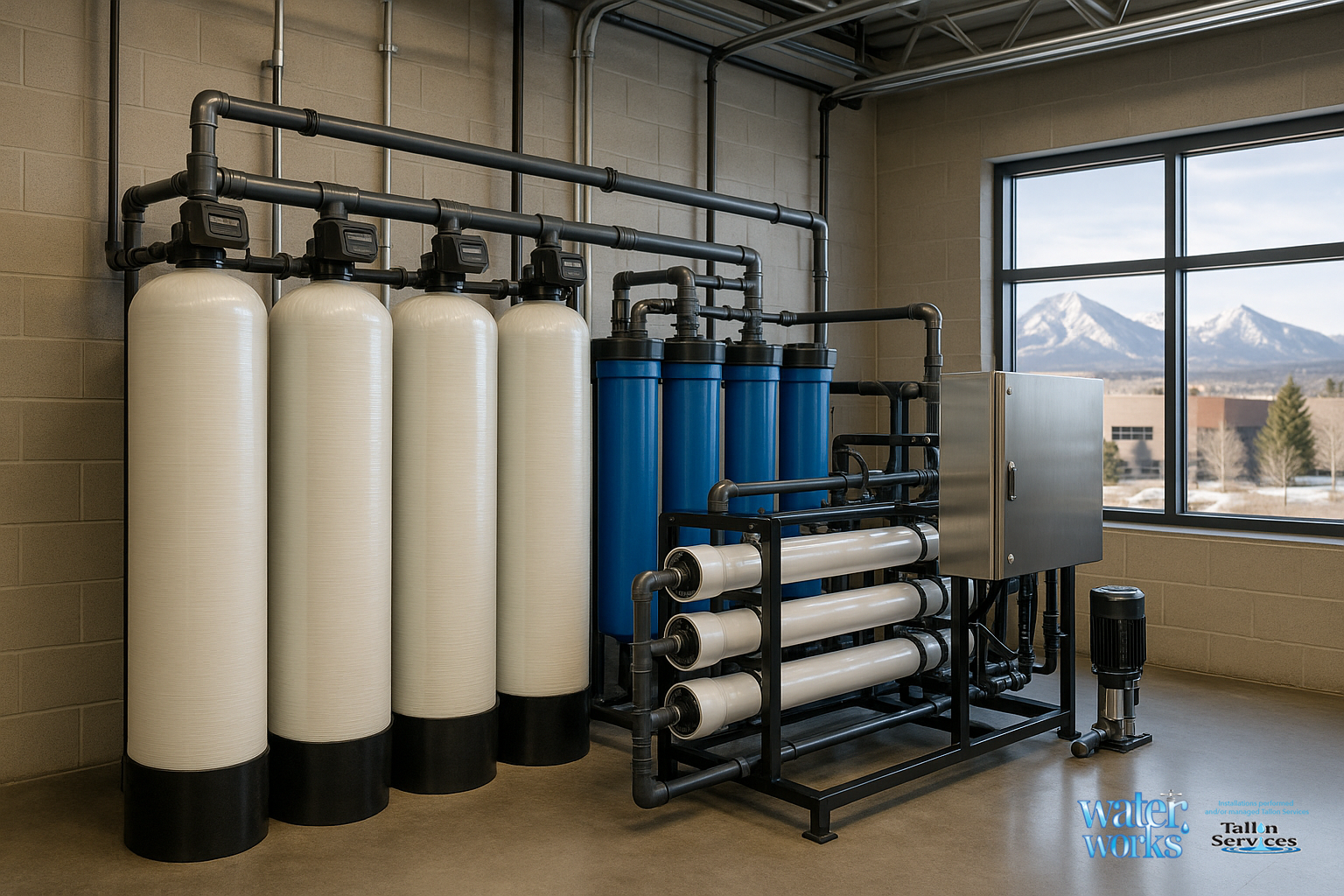
The rural-edge wells west of town follow a different playbook — sediment pre-filtration, an iron and manganese stage where the well analysis shows it, a softener for foothill hardness, UV disinfection for any coliform that spring snowmelt or a heavy storm pushes into the well, and a reverse osmosis unit at the kitchen tap. We design, install, and verify the treated water at every tap. Then we come back: both should be tested at least once a year, and we keep your system serviced — across Lafayette and the surrounding Boulder County communities, with statewide dispatch out of our four regional offices for anything further out.
- Free on-site water analysis
- Water softeners sized to Boulder County hardness
- Whole-house carbon for chlorination byproducts and residual chlorine
- Reverse osmosis for drinking-water taps
- Lead-reduction point-of-use filters for pre-1980 homes
- UV disinfection for rural-edge private wells
- Iron and manganese filtration for foothill-edge wells
Coverage across Boulder County
Service routes into Lafayette and the I-25 corridor
Lafayette's position on the map is what determines how service routes to it. The city sits at the south end of Boulder County along the I-25 corridor — close enough to the Northern Colorado office that a service run south lands in Lafayette as a normal scheduled stop. That matters because most of the surrounding households are on water that nobody but us is testing at the actual tap.
Coverage out of the Northern Colorado office runs the I-25 corridor south through Boulder County — Louisville and Superior to the north, Erie to the east and northeast, Gunbarrel to the northwest, and the small acreage and foothill-edge properties scattered along the western county line. On-site testing, softener and reverse osmosis installs, whole-house carbon for chlorination byproducts, and lead-reduction filters for older in-town housing are routine jobs for that crew. Statewide dispatch out of our four regional offices covers anything further out.
What Boulder County installs require is a little different from in-town work elsewhere. Older in-town homes carry the lead and heavy-metal overlay from pre-1980 plumbing, and the right point-of-use stage matters more than a generic softener spec. Rural-edge properties run higher treatment demand — bigger service flow, more buildings on the same plumbing, longer runs between the wellhead and the house. Because contamination profiles shift with seasonal runoff and any plumbing work on the house, we keep every install on an annual testing cycle.
- Northern Colorado office — south along the I-25 corridor into Boulder County
- Statewide dispatch for the further-out properties along the Front Range foothills
- Scheduled routes through Lafayette, Louisville, Superior, Erie, and Gunbarrel
- On-site testing, softener installs, and RO work on in-town homes and acreage properties
- Lead-reduction point-of-use filters for older in-town housing stock
Lafayette water treatment FAQs
Is Lafayette's tap water safe to drink?
Most Lafayette homes — virtually all in-town addresses — run on Lafayette's municipal water system, managed by the City of Lafayette Public Works Department. Surface water from South Boulder Creek, Boulder Creek, and Coal Creek is treated and stored in three reservoirs — Baseline, Waneka, and Goosehaven — before distribution. 'Treated to a standard' and 'good at your kitchen sink' are not the same thing, though. Disinfection byproducts form in the distribution system on the way to your tap, older plumbing adds lead and metals in pre-1980 homes, and the rural edges outside the municipal boundary run on private wells with their own profile. Only a real on-site analysis tells you what's actually coming out of your tap.
What contaminants are most common in Lafayette water?
Municipal Lafayette water is chlorinated, and the routine chlorine-disinfection byproduct profile shows up the way it does in most surface-water systems — haloacetic acids and total trihalomethanes, including bromodichloromethane, chloroform, and trichloroacetic acid. Hardness is moderate-to-high by Front Range standards. Older homes in Lafayette Heights (many built between the 1920s and the 1960s) and parts of King Street (pre-1980 housing stock) carry a lead and heavy-metal risk on top of the tap profile. Private wells at the rural edges add sediment and coliform after heavy rain, plus the foothill battery of hardness, iron, and occasionally manganese. A genuine on-site analysis is the only way to know which of these yours has.
How often should I test my water in Lafayette?
For municipal Lafayette water, an annual test makes sense for the routine profile — chlorination byproducts, hardness, residual chlorine, lead at any tap that hasn't been flushed — and after any city notification about a distribution issue. For homes in Lafayette Heights or on the older blocks of King Street, test more often for lead at the kitchen tap, and run the test on first-draw water that has sat in the plumbing overnight. For rural-edge homes on private wells, the standard well cadence applies: at least once a year, more often after heavy rain or spring snowmelt, after a drought cycle that drops the water table, and after any work on the well or plumbing before you drink it. Radon-in-water isn't routine in this part of Boulder County the way it is in the high country, but on a well, it's a one-time test worth running.
Do Lafayette homes really need a water softener?
Yes — Lafayette's source water picks up calcium and magnesium as it moves through the limestone and dolomite in the watershed, and the hardness that comes out of the tap is the rule here, not the exception. You'll see it as spotting on glassware, scale on faucets and shower glass, and shortened lifespans for water heaters, dishwashers, and washing machines — and Lafayette's housing stock has plenty of older plumbing where the scaling shows up first. Salt-free conditioners help with scale, but they don't actually remove the hardness minerals the way a proper ion-exchange softener does; on Lafayette water the difference between softened and conditioned shows up inside the first year.
Can you service my home outside of Lafayette?
Yes. Our Northern Colorado office covers Lafayette and the surrounding Boulder County communities along the Front Range foothills and the I-25 corridor — Louisville, Superior, Erie, and Gunbarrel — and our service techs run scheduled routes through the area year-round. On-site testing, softener installs, and reverse osmosis work on in-town homes, foothills acreage, and rural-edge properties west of town are routine. Statewide dispatch out of our four regional offices covers anything further out, including properties along the I-25 corridor and the Front Range.
Get a free water analysis in Lafayette
Find out what's actually in your water — in-town municipal tap, foothills acreage, or rural-edge well. We'll test on-site, walk you through the results, and design a treatment system around your source, your household, and your preferences. Reach the Northern Colorado office at (970) 381-4493 for fast coverage across Lafayette and the surrounding Boulder County communities along the Front Range foothills and the I-25 corridor, with statewide dispatch out of our four regional offices for anything further out.
Get a quote- Denver Metro(303) 248-3390
- Northern Colorado(970) 381-4493
- Colorado Springs Metro(719) 694-2650
- Pueblo & S Colorado(719) 836-8118
From the blog