 Centennial
Service area · Tri-Lakes Region
Monument water treatment designed for the Tri-Lakes and Palmer Divide
Monument is one of the fastest-growing communities on the Palmer Divide north of Colorado Springs — a town whose municipal water comes from the Town of Monument Water Department's wells tapping three Denver Basin aquifers, while most outlying properties still depend on private wells drawing from the same deep formations. The treatment that actually works here targets the specific contaminants those formations deliver: naturally occurring radium, heavy hardness, and iron that varies well by well across the basin.

- Denver Basin Aquifers3 well fields serving the Tri-Lakes
- Radium RiskNaturally occurring radionuclides in deep wells
- Free On-Site TestingFree water analysis, scheduled fast
The Tri-Lakes water story
Why Monument water needs to be tested — not assumed
Monument sits on the Palmer Divide — the high ground between the Arkansas and South Platte drainages — and the geology underneath the town is the Denver Basin: a stack of sandstone aquifers (Dawson, Denver, Arapahoe, and the deeper Laramie-Fox Hills) that the Town of Monument Water Department and its neighboring districts tap to serve the Tri-Lakes. Those same formations supply most of the private wells in the ranches, subdivisions, and unincorporated areas that ring the town.
The Denver Basin is not a uniform source. Wells only a few hundred feet apart can pull from different aquifers, and each one carries its own characteristic problems. The Dawson runs shallow and clean. The Denver adds hardness. The Arapahoe brings iron, manganese, and — the issue that has put the Tri-Lakes in the news repeatedly since 2016 — naturally occurring radium, which leaches from the surrounding rock as aquifers are drawn down. When demand rises, the radium signal rises with it.
A treatment system designed for someone else's water almost never fits yours. We start every Monument job with a real on-site analysis — radium, hardness, iron, manganese, sulfates, anything else the basin might be delivering at your address — and design the system from the results, block by block.
- Naturally occurring radium-226 and radium-228 from the Arapahoe and Laramie-Fox Hills aquifers
- Hardness, iron, and manganese common across the Palmer Divide
- Sulfates from the deeper Denver Basin formations
- Nitrates and coliform bacteria in shallow wells on smaller acreages
- Seasonal turbidity and sediment after heavy Palmer Divide runoff
- Lead and copper leached from older galvanized and brass plumbing
How Water Works helps
Treatment designed around what your Denver Basin water actually contains
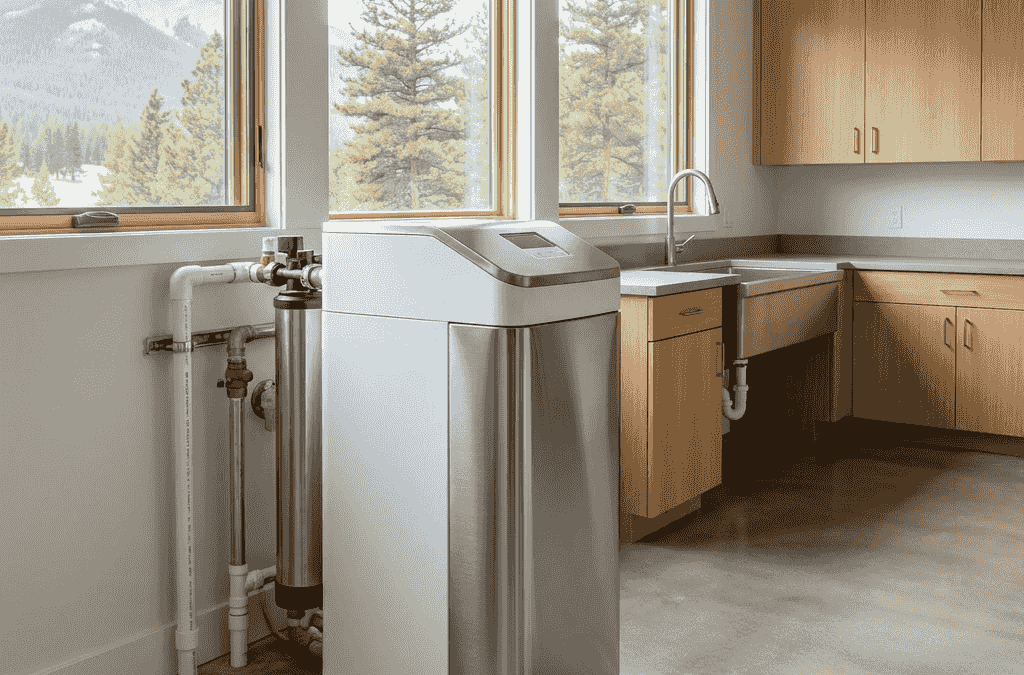
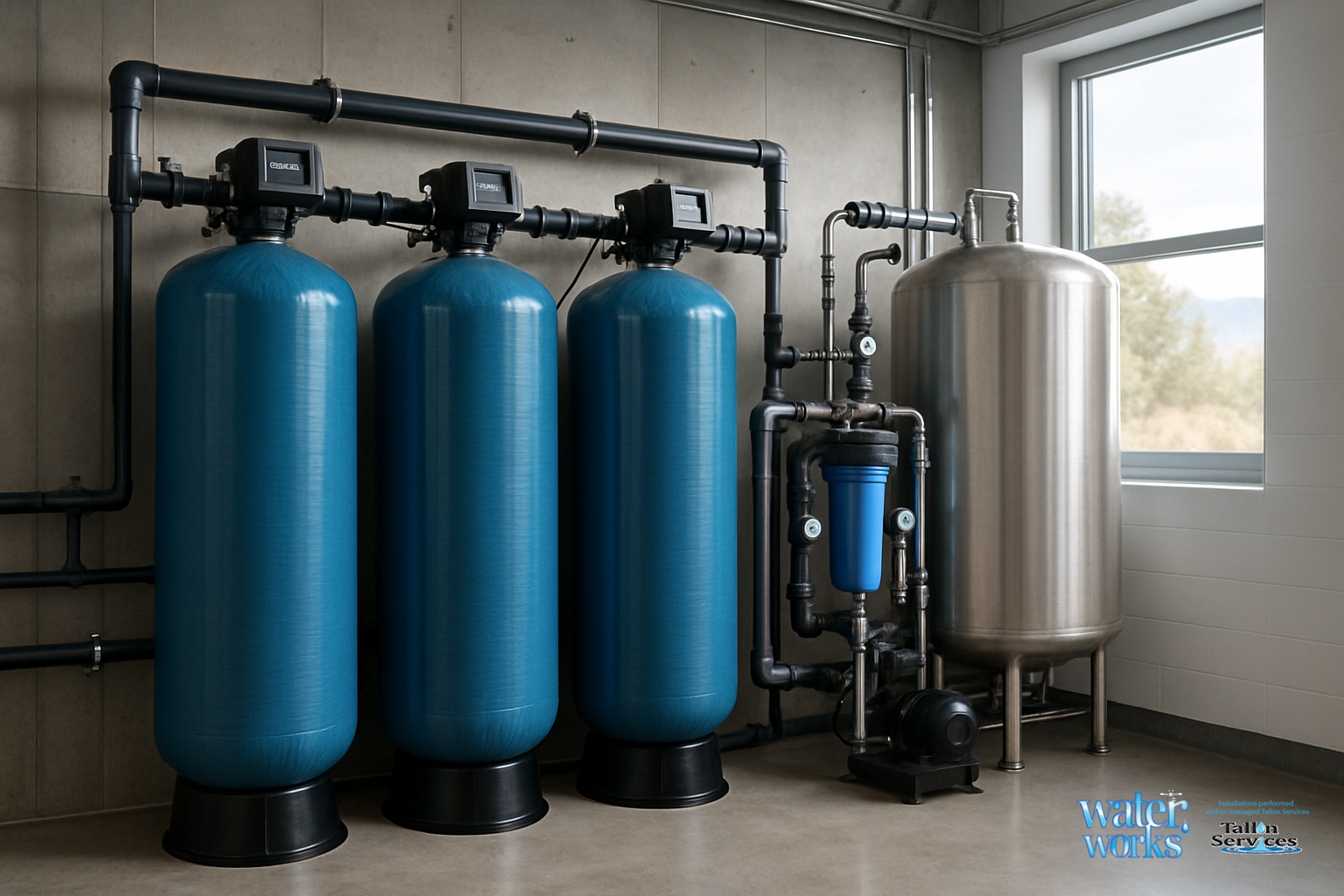
For most Monument homes, the right answer is a layered system: a softener at the point of entry to handle hardness and protect appliances, plus a reverse osmosis unit or under-sink filter for the kitchen tap where you actually drink and cook. Wells with iron, manganese, or detectable radium usually need a dedicated pre-filter — often a greensand or catalytic-carbon unit ahead of the softener — engineered for the specific contaminant and flow rate of that well. Municipal customers with chlorine-taste or sediment concerns often pair a softener with a small carbon polishing filter.
We design the system, install it, and verify the treated water meets the mark at every tap it's used. Then we come back: well water should be tested at least once a year, and we keep your system serviced and your water verified season after season — including a retest whenever basin conditions shift, demand climbs, or the CCR flags a change in your provider's source mix.
- Free on-site water analysis
- Water softeners sized to your hardness
- Reverse osmosis for drinking-water taps
- Iron, manganese, and radium filtration
- UV disinfection for bacteria
- Annual testing and ongoing service
Monument water treatment FAQs
Is Monument's tap water safe to drink?
Municipal water in Monument is supplied by the Town of Monument Water Department, which draws from eight active wells tapping three Denver Basin aquifers (the Dawson, Denver, and Arapahoe) and publishes an annual Consumer Confidence Report. That's real treatment and real testing — but it isn't the whole story. Radium is a recurring concern in the basin: the town has exceeded the federal combined-radium limit in past years, and neighboring districts like Donala have run over the same line, so radium mitigation is not theoretical here. Older homes in Monument can also still pull lead and copper from galvanized service lines and brass plumbing behind the meter. Safe by the standard and safe at your kitchen tap are not the same thing — only a real on-site analysis tells you what's actually coming out.
What contaminants are most common in Monument well water?
Denver Basin wells across the Tri-Lakes routinely test high for hardness, iron, and manganese, with naturally occurring radium-226 and radium-228 showing up in deep wells drawing from the Arapahoe and Laramie-Fox Hills formations. Sulfates are common in the deeper wells, and shallow wells on acreages can also show nitrates from landscaping and septic, plus coliform bacteria after heavy runoff. A genuine water analysis tells you which of these your well actually has — the basin varies block by block, and the same aquifer can deliver very different water half a mile away.
How often should I test my water in Monument?
At least once a year for any private well — and more often if you've ever had a positive result, if you're on a known radium-bearing well, or if your water changes in taste, smell, or color. After spring runoff, after drought cycles that drop aquifer levels, and after any work on the well or plumbing, test before you drink it. Radium-226/228 is a chronic-exposure contaminant, not an acute one, which is exactly why annual testing is the right cadence — you want to catch a trend, not a one-time event. Municipal customers in the Tri-Lakes should test at the tap every few years to catch plumbing-related contamination the utility doesn't see.
Do Monument homes really need a water softener?
Hard water is the rule on the Palmer Divide, not the exception. Denver Basin water is mineral-heavy — calcium and magnesium stack up fast on faucets, shower glass, and inside water heaters. You'll see it as spotting on glassware, scale on appliances, and shortened lifespans for water heaters, dishwashers, and ice makers. A softener isn't luxury — it's the difference between appliances that last 15 years and ones that last 6. Salt-free conditioners help with scale, but they don't actually remove the minerals, and they don't fix the underlying hardness load on the equipment.
Can you service my home if I'm outside the town of Monument?
Yes. Our Tri-Lakes coverage runs across the Palmer Divide and the surrounding communities — Woodmoor, Palmer Lake, Gleneagle, Black Forest, the Kings Deer and Higby Road ranches, and the rural properties north and west of town. Our service techs run scheduled routes through the Tri-Lakes out of the Colorado Springs Metro office, and on-site well testing, softener installs, and reverse osmosis work in those settings are routine jobs for our crews, including on acreages where flow rates and hardness run higher than in-town averages.
Get a free water analysis in Monument
Find out what's actually in your water — Denver Basin well or Town of Monument supply. We'll test on-site, walk you through the results, and design a treatment system around your source, your household, and your preferences. Schedule with the Colorado Springs Metro office for fast coverage across the Tri-Lakes.
Get a quote- Denver Metro(303) 248-3390
- Northern Colorado(970) 381-4493
- Colorado Springs Metro(719) 694-2650
- Pueblo & S Colorado(719) 836-8118